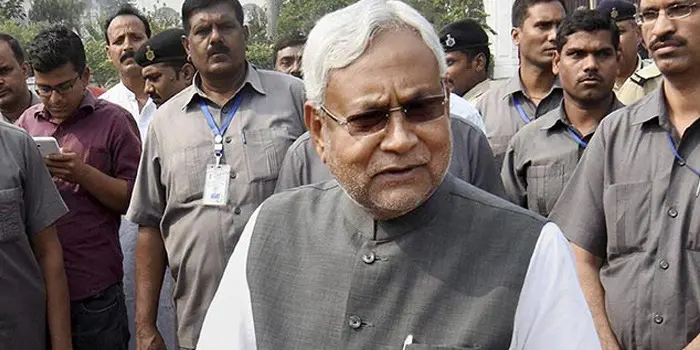
Patna: As Bihar heads toward a critical assembly election, Chief Minister Nitish Kumar finds himself navigating a complex and precarious political landscape. Despite being a key partner and a crucial facilitator of the Bharatiya Janata Party (BJP) at the national and state levels, Kumar continues to actively seek the support of the state’s substantial Muslim electorate. While his political supporters staunchly argue that his presence within the ruling coalition serves as a moderating force capable of containing the BJP’s more divisive policies, a growing chorus of disillusioned community members asks a direct and pertinent question: "Why did Nitish Kumar ditch us on the Waqf law?" This refers to the Modi government’s controversial amendment that major Muslim bodies fear will systematically strip them of historical and religious Waqf properties.
The political dynamics unfolding in Bihar highlight the tightrope walk that defines the veteran leader’s current career phase. With polling dates scheduled for November 6 and November 11, and the results anticipated on November 14, every demographic block carries immense weight. Muslims make up approximately 17.7 percent of Bihar’s population, and their presence is decisive in roughly 40 to over 50 assembly constituencies, particularly across the Seemanchal and Mithilanchal regions. For Kumar’s party, the Janata Dal (United), or JD(U), the electoral math is unforgiving, creating a tense intersection between approval and anger among minority voters who once viewed him as a dependable secular alternative within a non-Congress political framework.
Muslim Discontent and Broken Trust
The relationship between Nitish Kumar and Bihar’s Muslim community has weathered significant turbulence over the past decade. Despite widespread community acknowledgment of his historical contributions—such as specific welfare schemes implemented during his earlier years in office—minority voters have long harbored deep complaints regarding his political maneuvers and legislative U-turns. Critics point to his alignment with the BJP’s core ideological agenda, ranging from the passage of the Triple Talaq law to the implementation of the Citizenship Amendment Act (CAA). Furthermore, community leaders have expressed profound disappointment over his silence regarding polarizing rhetoric, including the controversial "infiltrators" remarks aimed at Muslims in Seemanchal by Prime Minister Narendra Modi and Union Home Minister Amit Shah.
These sentiments of betrayal are widely shared across generations, resonating from urban centers to rural constituencies. Young journalist Salman Ghani recently voiced this collective frustration online in response to public claims made by Kumar and his aides regarding the administration’s record on minority welfare. Writing on digital platforms, Ghani remarked that he often felt a sense of sorrow regarding the Chief Minister’s trajectory, noting that a series of controversial political decisions had effectively overshadowed years of administrative labor. He observed that while Muslims had previously accepted Kumar’s partnerships with the BJP with heavy hearts, the community ultimately felt profoundly let down on critical legislative fronts, stretching from the CAA to the ongoing disputes surrounding the Waqf amendments.
Between Approval and Anger
Political analysts and former supporters argue that Kumar is once again attempting to "hold with the hare and run with the hounds," trying to appease both his traditional secular base and his Hindu nationalist allies. Even as he manages the physical and political strains of leading the state in the twilight of his active career, Kumar remains acutely aware of how vital minority-dominated assembly seats are to his survival. The upcoming electoral contest represents a high-stakes gamble for the JD(U), which faces a razor-thin margin of error in a direct and polarized battle against the opposition Mahagathbandhan, comprising the Rashtriya Janata Dal (RJD), the Congress, and various Left parties.
This duality has created a fractured political environment where every nod of administrative approval is met with a furrowed brow of skepticism. From the traditional weavers of Bhagalpur to the small-scale traders and laborers scattered across Seemanchal, minority constituents express a deep-seated grievance over shifting political loyalties. The sharpest political sting in recent months occurred in March 2025, when major religious and social organizations, most notably Imarat Shariah, took the unprecedented step of boycotting Kumar’s traditional Iftar gathering. The boycott was a direct protest against his government’s tacit support for the BJP’s Waqf (Amendment) Bill, which community representatives view as a direct legislative assault on religious endowments and autonomy.
In a strongly worded open letter released during the boycott, organizers reminded the Chief Minister of his initial rise to power on promises of inclusive secularism, accusing him of aligning with political forces actively working to dilute minority rights. This friction stands in stark contrast to assertions occasionally made by Kumar’s inner circle that minority voters have historically supported not only his governance but also his broader NDA coalition due to personal goodwill—goodwill that critics argue has now been severely depleted, if not entirely lost.
This erosion of trust is also reflected in structural political representation. For the current assembly elections, the JD(U) has fielded only four Muslim candidates, a steep decline from the eleven candidates it nominated during the 2020 assembly elections. Across the broader National Democratic Alliance, the total number of Muslim candidates stands at just five, with zero nominees coming from the BJP and a single candidate representing Chirag Paswan’s Lok Janshakti Party faction. While senior JD(U) strategists attempt to defend this low representation on pragmatic grounds—noting that all eleven Muslim candidates fielded by the party in 2020 ultimately lost their respective races—other voices within the ruling establishment have made openly hostile remarks. Some party insiders have suggested that because the minority community does not reliably vote for the coalition, the administration has little incentive to prioritize their electoral representation. Such statements have only served to further alienate voters and inflict lasting damage on whatever personal capital Kumar had accumulated over decades in public office.
The Sushasan Babu at a Crossroads
At 74 years of age, Nitish Kumar—long celebrated by his supporters as "Sushasan Babu," or the embodiment of good governance, after steering Bihar through nearly two decades of administrative shifts—finds himself at a definitive political crossroads. His frequent political realignments, moving fluidly between the NDA and the Mahagathbandhan, have earned him the pejorative moniker "Paltu Ram" among his detractors. At the same time, growing anti-incumbency sentiments have intensified after a protracted period of NDA rule that critics argue has been marred by persistent economic stagnation, slow industrial growth, and unfulfilled promises of comprehensive regional development.
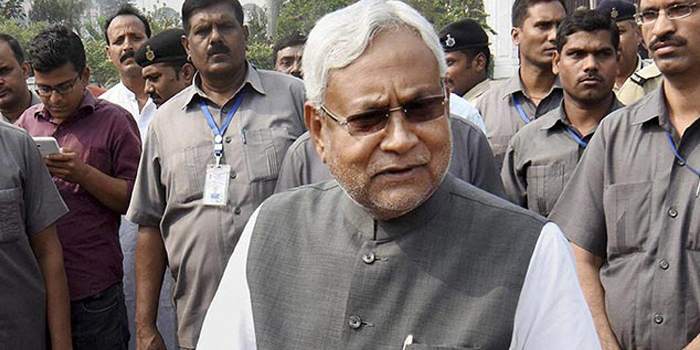
Despite these vulnerabilities, Kumar is doubling down on minority outreach in a state where demographic calculations remain paramount. His electoral pitch is unapologetically transactional, though it is consistently framed within a narrative of tangible administrative delivery and socio-economic upliftment. Speaking recently at an election rally in Purnea, Kumar sought to draw a sharp contrast between his tenure and the preceding administrations. He asserted that prior to 2005, minority populations were treated merely as a predictable vote bank that was courted during election season and promptly forgotten afterward, whereas his successive governments fundamentally transformed that dynamic through structured governance and targeted development.
To substantiate this claim, the administration regularly points to the expansion of minority welfare allocations. According to official figures, the state’s minority welfare budget has grown manifold since 2005, rising from a modest initial allocation of approximately two rupees crore to over six hundred crore rupees. These funds are channeled into various schemes, including post-matric scholarships, residential hostels for minority students, and skill development and training centers designed to empower Muslim youth. However, independent critics and social researchers point out that despite the overall nominal expansion of the budget, the proportional share allocated to the minority welfare department continues to lag behind similar outlays designated for other historically deprived socio-economic categories and neighboring states.
Furthermore, Kumar frequently highlights physical infrastructure projects, such as the construction of protective boundary walls around thousands of traditional Qabristans (graveyards) across the state, which his administration credits with significantly reducing local communal tensions and land disputes. Opponents, however, counter that the maintenance of law, order, and public property is the foundational duty of any state government rather than a special favor to a specific community, noting that the administration has simultaneously invested in infrastructure projects for majority community spaces as well. Similarly, while the government points to Madrassa modernization initiatives, increased teacher remuneration, and institutional reforms as evidence of its inclusive policies, educational representatives maintain that these measures remain inadequate. Salaries for Madrassa instructors continue to lag behind standard schoolteacher pay scales, and Urdu language education is perceived as suffering from systemic administrative neglect.
Why Nitish Still Seeks Muslim Votes
Given the accumulation of political discord, legislative betrayals, and rhetorical friction, observers frequently question why Nitish Kumar continues to invest political capital in wooing Muslim voters. According to a senior JD(U) strategist who spoke on condition of anonymity, the rationale is rooted entirely in electoral mathematics. The party’s core social coalition relies heavily on non-Yadav Other Backward Classes (OBCs), particularly Kurmis and Extremely Backward Classes (EBCs). However, party planners recognize that they need a portion of the minority vote to successfully offset the formidable and cohesive 14 percent Yadav vote bank that traditionally anchors the opposition RJD.
Without minority votes to bridge the gap, strategists warn that the opposition could secure a sweeping Muslim-Yadav consolidation, potentially collapsing the NDA’s prospects across key competitive seats. While major national partners like the BJP can absorb the loss of minority support and build winning coalitions through broader majoritarian consolidation, Kumar’s regional party lacks that demographic luxury. Senior journalist Abdul Qadir elaborates that a specific faction within the JD(U) continues to invoke Kumar’s historical legacy to appeal directly to Muslim voters. Qadir notes that Kumar has historically been deeply conscious of his public image, desiring to be remembered as a secular liberal who respected diverse beliefs rather than a polarizing figure. For many of his veteran socialist and pro-Mandal allies, preserving this moderate historical reputation remains a priority, and they remain hesitant to see his political legacy permanently defined by religious majoritarianism.
The Survival Pitch
Beyond broader ideological considerations, internal party insiders point to a more immediate and tactical concern: Kumar’s persistent wariness regarding the internal dynamics of the NDA, particularly the strategic ambitions of the BJP and Chirag Paswan’s party faction. While top national BJP leaders publicly refer to Kumar as the undisputed electoral face of the alliance in Bihar, they have consistently avoided explicitly confirming whether he would resume the Chief Minister’s office in the event of an NDA victory. This ambiguity creates friction at the grassroots level, potentially disrupting the seamless transfer of votes between the BJP’s upper-caste base and the JD(U)’s core support groups.
During the previous assembly election cycle, Chirag Paswan—who famously styled himself as Prime Minister Narendra Modi’s political Hanuman—waged a targeted campaign that directly resulted in the defeat of dozens of JD(U) candidates, allegedly with tacit or undeclared backing from lower-level elements within the broader coalition. Anticipating similar vulnerabilities and internal challenges this time around, Kumar remains determined to cultivate an independent channel of minority outreach to safeguard his political leverage.
Ultimately, observers suggest that Kumar’s current outreach has evolved into a pure survival pitch, stripped of ideological sentimentality and built entirely on cold electoral arithmetic. He requires a calculated fraction of the Muslim vote to neutralize the RJD’s electoral momentum, while simultaneously practicing a soft form of majoritarian politics to prevent his core EBC constituency from drifting entirely toward the BJP. As voters prepare to cast their ballots, this delicate balancing act will determine whether Kumar can successfully navigate the final major electoral test of his long political career.