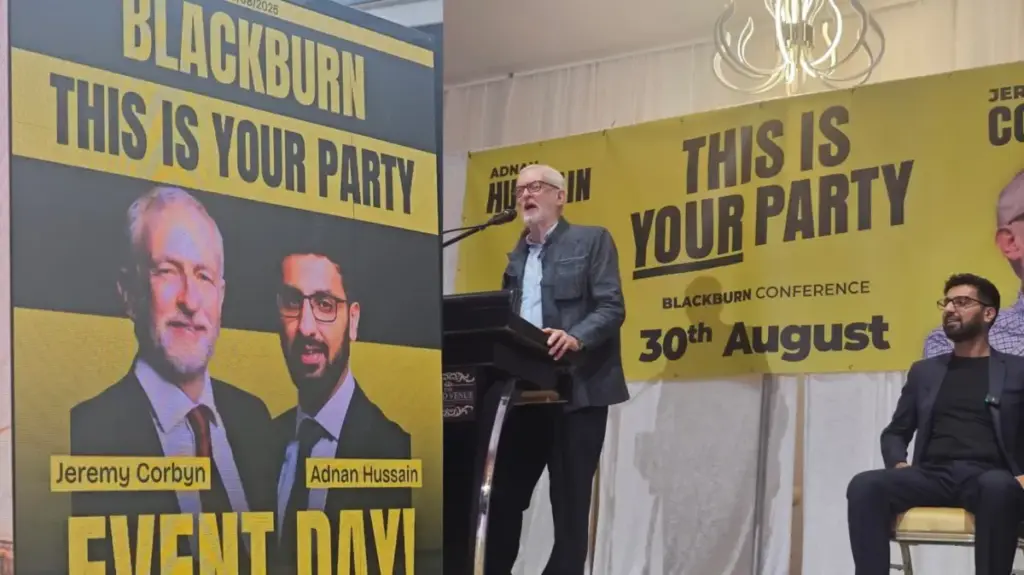
Over a thousand people packed into a venue in Blackburn yesterday for the first official public meeting of "Your Party," a newly formed political movement spearheaded by independent MPs Jeremy Corbyn and Zarah Sultana. Chaired by Blackburn MP Adnan Hussain, the high-profile gathering drew a diverse, cross-community crowd and focused heavily on domestic socioeconomic struggles, foreign policy, and Palestinian solidarity, even as underlying questions regarding leadership and Zionism persisted.
The event marked the party’s official debut in the North West of England. Opening the proceedings, Adnan Hussain reflected on his own family history, describing his parents’ migration to Britain and explaining how those early hardships shaped his political worldview and commitment to public service. He framed Your Party as a vital grassroots vehicle designed to give a voice to ordinary working-class citizens whom he argued have been repeatedly left behind and ignored by the traditional political establishment, including both major ruling parties.
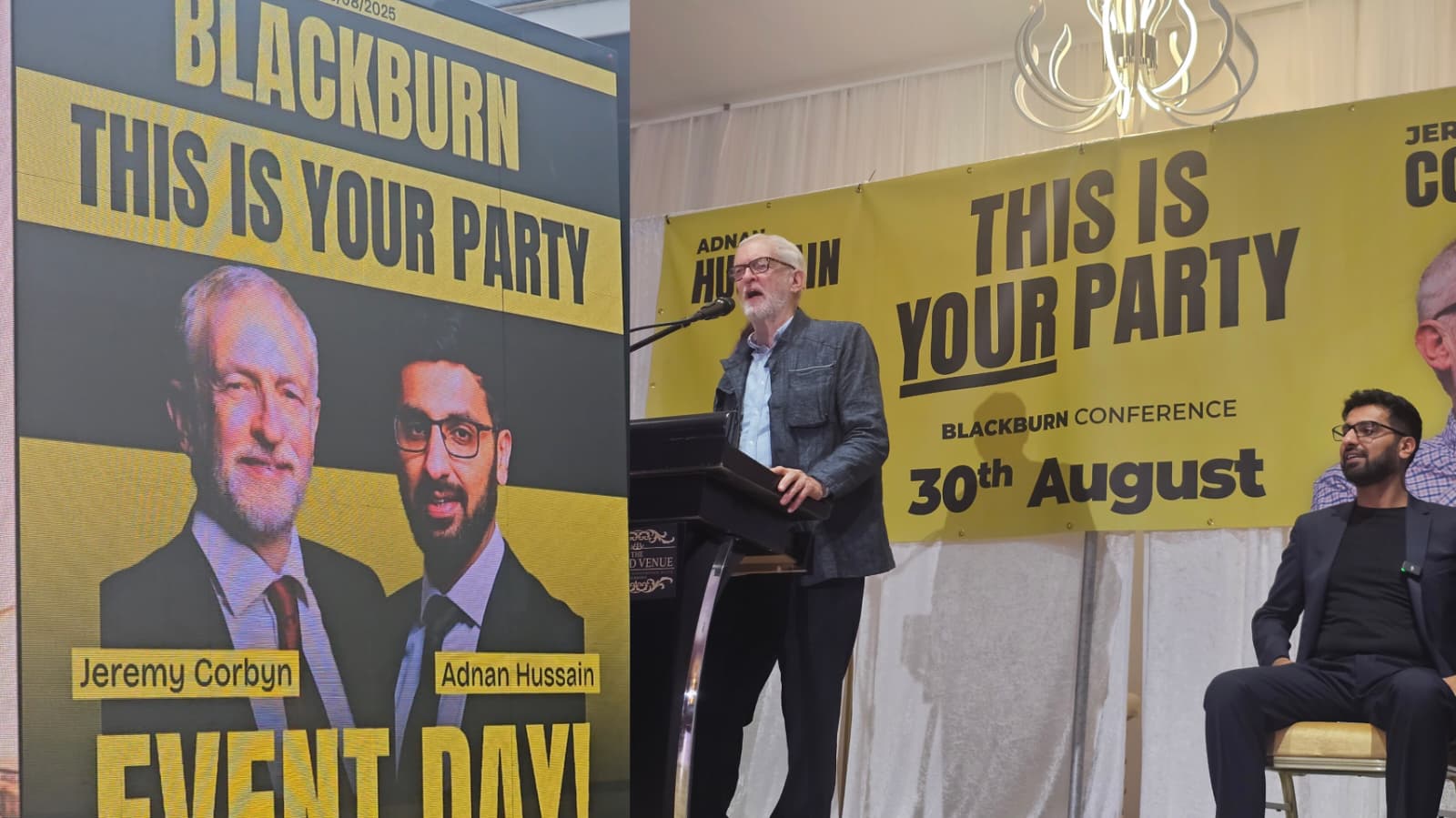
"Today, as I’ve said, I’m proud to join my colleagues in introducing Blackburn, Lancashire, the North West, to a new political movement," Hussain told the enthusiastic audience. He continued: "It stands, as I’ve already said, not for the elite, not for the wealthy, but for you, the working class."
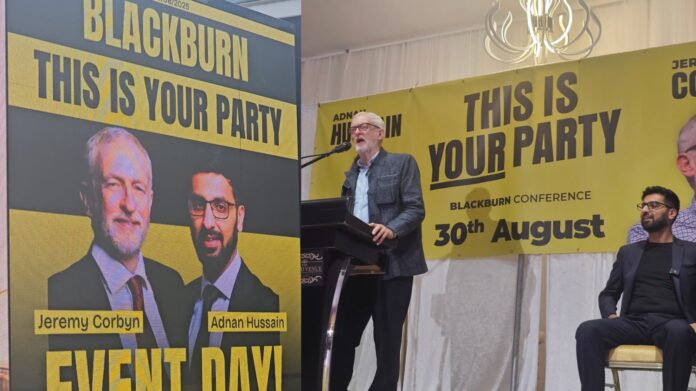
Hussain emphasized that the emerging political project is intended to be built upon collective principles rather than centered around individual personalities. However, his speech still drew a wave of loud applause and cheers when he encouraged the room to envision a future administration, declaring, "Imagine a United Kingdom with Jeremy Corbyn as the Prime Minister."
Quickly qualifying the remark to maintain focus on the movement’s broader philosophy, he added: "It’s not about the individual. It’s about his vision. It’s about what he stands for. It’s about what he is bringing to the table."
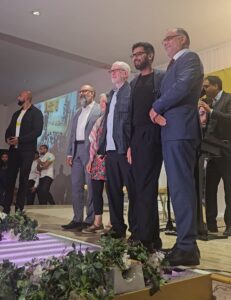
Birmingham MP Ayoub Khan, who has also aligned himself with the newly formed Your Party, took to the stage to praise the sheer scale and demographic breadth of the turnout. Addressing the crowd, Khan remarked on the intimidating effect large assemblies can have on career politicians. "Nothing frightens politicians more than seeing a movement that is as large and as diverse as this one, Your Party," he said. Attendees were frequently urged by speakers to look around the room and recognize the varied makeup of the gathering, with organizers emphasizing the phrase "Look around you, this is the UK" to underscore the party’s ambition to broadly represent modern British society.
Notably, the majority of the crowd comprised non-Muslim attendees spanning a wide spectrum of ages, genders, and faith backgrounds. Organisers repeatedly pointed to this multi-faith, cross-demographic coalition as a core strength and proof of the movement’s wide-ranging appeal across different communities.
Among the guest speakers was Professor Marion Roberts, representing Jewish Voice for Labour (JVL), who addressed complex issues surrounding antisemitism and Zionism. Her remarks were widely interpreted as a direct response to longstanding controversies and criticisms that dogged Jeremy Corbyn throughout his tenure as Leader of the Labour Party. Roberts told the audience that members of the broader political bloc maintain varied political and electoral allegiances, but outlined the specific mission of her organization.

"The group I belong to, JVL, was set up to support Jeremy once he became leader and to counter the false accusations of antisemitism which were intended to protect Israel from criticism," Roberts stated.
As Jeremy Corbyn finally stepped up to take the central stage, the atmosphere intensified, greeted immediately by chants of "Free Palestine" echoing through the hall. As the speeches progressed, these slogans escalated in certain sections of the crowd to chants of "Death, death to the IDF," illustrating how the conflict in the Middle East remained an emotional and central touchstone throughout the entire gathering.
In his address, Corbyn pivoted seamlessly between domestic grievances and international affairs, tackling pressing local issues such as chronic housing shortages, rising poverty, homelessness, and the burden of university tuition fees. He explicitly connected these domestic struggles to Britain’s historical and ongoing role in foreign military interventions and systemic global inequality.
Turning specifically to the situation in the Middle East, Corbyn declared: "We are always coming up against the Israeli expansionism led by the Zionist ideology, that they have a right to occupy Gaza and the West Bank."
Outlining the overarching ethos of the newly launched political project, Corbyn added: "We want this party to be open. We want it to be inclusive. We want it to be democratic and above all community and grassroots-based."
Your Party’s Stance on Anti-Zionism
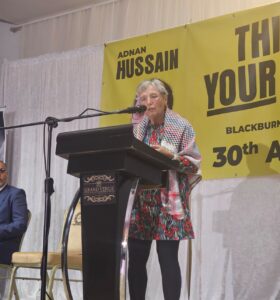
The Blackburn conference unfolded against a backdrop of intensified media and public scrutiny regarding Jeremy Corbyn’s personal definitions and political stance on Zionism. Earlier in the week, video footage circulated widely showing the former Labour leader repeatedly declining to answer direct media inquiries regarding whether he identifies as anti-Zionist. This public hesitation stands in stark contrast to fellow co-founder Zarah Sultana, who has previously and openly declared herself to be anti-Zionist.
Despite the heavy political subjects and controversies raised during the conference, organisers did not open the floor to public questions or a town-hall style debate. This decision drew quiet disappointment and criticism from some observers, who noted that avoiding a question-and-answer session bypassed opportunities for transparent engagement on complex and contentious topics.
At the conclusion of the event, reporters approached Adnan Hussain to ask whether prospective members of Your Party would face internal scrutiny or disciplinary vetting concerning their positions on Zionism and foreign conflicts.

Hussain responded robustly to the inquiry, stating: "Nobody should be penalised against a genocide, the killing of innocent children. They must be protected and anyone who is opposed to that must never be penalised."
While the Blackburn conference ultimately succeeded in showcasing substantial local enthusiasm, grassroots energy, and a large multi-demographic turnout, it also brought to the surface lingering questions over ideological alignments, leadership definitions, and whether Your Party can carve out a distinct and sustainable identity separate from the legacy of the Labour Party.