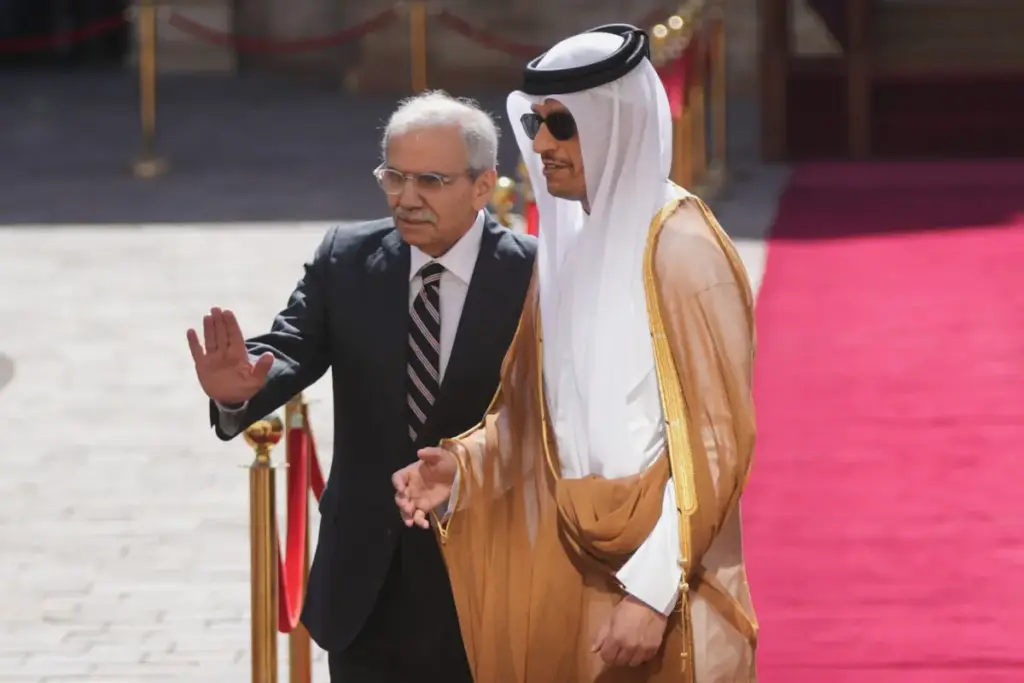
BEIRUT — Qatar’s Prime Minister Sheikh Mohammed bin Abdulrahman bin Jassim Al Thani has announced ambitious plans to construct a massive solar power facility in Lebanon, aiming to alleviate the crippling energy shortages that have plagued the country for years. The announcement was made during an official visit to Beirut on Friday, following high-level discussions with Lebanese Prime Minister Nawaf Salam.
The initiative, designed to provide a viable and sustainable solution to Lebanon’s chronic power deficits, represents a significant foreign investment in the country’s devastated infrastructure. According to the visiting Qatari premier, the project will be spearheaded through a collaborative framework involving state-owned QatarEnergy and French multinational energy giant TotalEnergies, which will jointly develop the initial solar installation.
"We have agreed to establish a comprehensive framework for cooperation in the energy sector and to present viable solutions," Sheikh Mohammed told reporters in Beirut, emphasizing that the overarching aim is to foster a major investment project that will yield tangible benefits for the Lebanese economy, as well as for the Qatari entities involved.
Lebanese Prime Minister Salam welcomed the announcement, stating that he intends to formally present the comprehensive electricity sector proposals to the Lebanese Cabinet in the near future. Highlighting the severity of Lebanon’s ongoing financial collapse, Salam noted that the financial burden of the project will not fall on the Lebanese state.
"The Qatari side will fund, implement, and activate the project without any cost on the Lebanese state," Salam said, underscoring the critical importance of such external assistance during a time of unprecedented economic hardship.
A Chronic Energy Crisis and Immense State Debt
The announcement comes as Lebanon continues to grapple with a multi-layered economic and energy crisis that has crippled public services and drained state resources. For decades, Lebanon’s state electricity company has served as one of the single largest sources of national debt. The utility has historically hemorrhaged an estimated $40 billion, weighed down by a bloated workforce and severely outdated infrastructure.
For years, the state-run power grid has provided only a fraction of daily electricity needs—often amounting to just a few hours of power a day. Until a year ago, the government was forced to rely on emergency cash advances from the Central Bank simply to purchase diesel fuel when state reserves ran dry, deepening the national fiscal deficit.
Sheikh Mohammed reiterated Doha’s unwavering support for the Lebanese people, noting that Qatar stands in solidarity with both Lebanon and the wider region during this exceptionally difficult hour. He observed that Lebanon’s longstanding energy struggles have been dramatically compounded by a severe financial collapse and the devastating impact of ongoing Israeli military operations.
Earlier on Friday, the Qatari Prime Minister engaged in a series of diplomatic meetings with other top Lebanese leaders, including the country’s president and parliament speaker, to discuss regional stability and bilateral cooperation.
Addressing Israeli Violations and Southern Reconstruction
Beyond the energy agreements, Sheikh Mohammed’s discussions in Beirut heavily focused on the volatile situation in southern Lebanon, where Israeli military forces continue their offensive, maintaining control over dozens of towns and villages near the border. The Qatari premier revealed that "Israeli violations within the Lebanese territories" formed a major component of his talks with Lebanese officials.
Sheikh Mohammed asserted that Israel must cease its attacks and withdraw its forces from Lebanese territory. He added that Qatar is actively coordinating its diplomatic efforts with the United States to lay the necessary groundwork for the future reconstruction of southern Lebanon, a crucial step toward allowing hundreds of thousands of displaced citizens to safely return to their homes.
The diplomatic push comes despite a fragile ceasefire agreement brokered by the United States and agreed upon in June. Under the terms of the US-brokered pact, the Lebanese government is tasked with disarming the Iran-backed group Hezbollah. In exchange, Israeli military forces are expected to execute a gradual withdrawal from the southern areas they currently occupy. However, Hezbollah is not a party to the agreement and has consistently refused to disarm until Israeli troops completely withdraw from Lebanese soil.
The human cost of the conflict has been staggering. According to Lebanese authorities, Israeli military attacks have claimed the lives of more than 4,300 people across the country since March. At the height of the hostilities, approximately 1.2 million people were internally displaced.
While the majority of displaced residents have managed to return to their hometowns following the June ceasefire, more than 300,000 individuals remain displaced, according to recent figures from the International Organization for Migration.
Concluding his remarks in Beirut, Prime Minister Salam expressed his deep gratitude to Qatar for its continuous and steadfast support, noting that Doha has consistently stood by Lebanon through some of its darkest and most challenging hours.