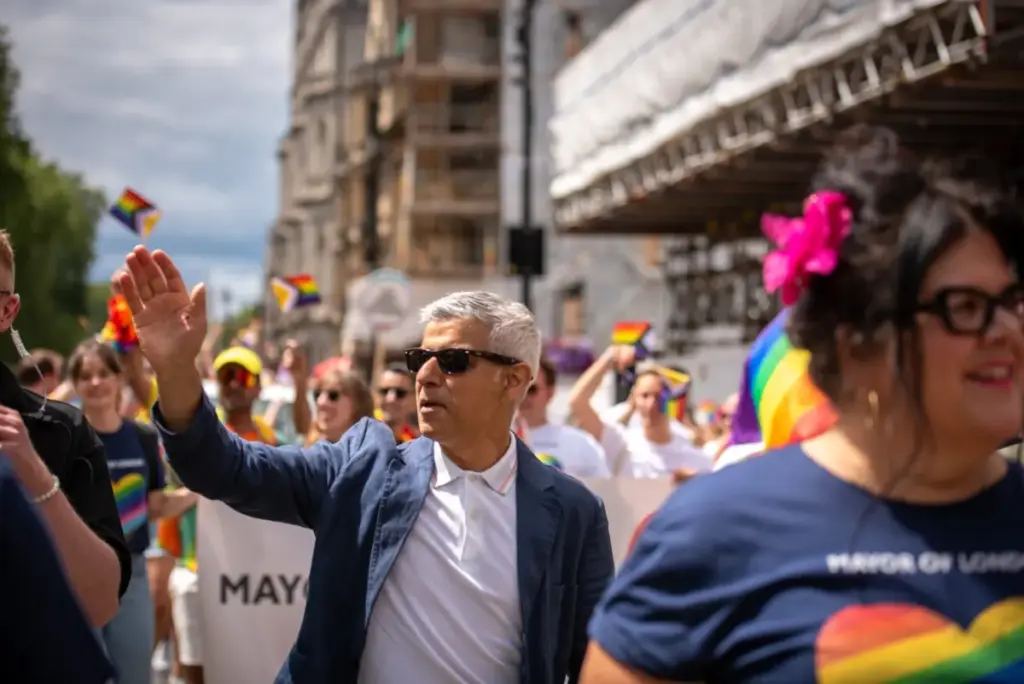
Labour’s Sadiq Khan has been elected mayor of London, securing a historic third consecutive term in a dramatic and closely watched electoral contest. Khan’s definitive victory on Saturday afternoon saw him successfully fend off Conservative candidate Susan Hall, who had been widely viewed as his primary adversary throughout the campaign. Despite a tense atmosphere leading up to the final declaration, Khan emerged with a comfortable majority, cementing his political footprint in the capital and reinforcing Labour’s presence in regional leadership across England.
Khan secured an impressive 1,088,000 votes, representing 43.7 percent of the total ballots cast. This gave him a commanding majority of approximately 275,000 votes over Ms. Hall, who finished second with just under 812,000 votes, or 32.6 percent. According to London Elects, the official body that manages the mayoral and London assembly elections, voter turnout remained relatively steady, dropping by only 1.5 percent compared to the previous mayoral contest in 2021, settling at a final turnout rate of 40.5 percent.
The path to Khan’s victory was marked by moments of intense political suspense, particularly during a complicated Friday night count. Labour campaign teams grew increasingly confident of securing the race after the party successfully captured the North East and West Central constituencies from the Conservatives more than two hours before the final result was officially declared. This shift provided a clear indicator of the direction in which the capital’s electorate was moving, reassuring campaign organizers who had weathered hours of uncertainty.

That uncertainty stemmed from what Labour sources described as a "24-hour vacuum" caused by a scheduled pause on London mayoral counts. During this operational hiatus, excited Conservative activists managed to dominate the social media landscape with rumors suggesting that Susan Hall was mounting a much greater challenge than anticipated, and claiming that broader polling predictions were "completely wrong." This social media blitz led some jittery Labour insiders to entertain the possibility that the two leading candidates might finish within a few percentage points of one another, heightening the drama before the final tallies were revealed.
Beyond the specific dynamics of the London contest, the wider electoral landscape presented a complex picture for the Labour Party. While national figures celebrated successes elsewhere, outside of the "London bubble," party leaders were forced to confront mounting evidence that Labour’s official stance on the conflict in Gaza had significantly eroded support in local elections, particularly within Muslim-heavy communities across the United Kingdom.
While Labour leader Sir Keir Starmer celebrated historic local election wins in areas such as Blackpool, Hartlepool, and Thurrock on Friday, he also had to address the palpable political fallout in northern towns and cities. Sir Keir publicly promised to "win back" Muslim support in vital electoral areas including Oldham, Newcastle, and Bolton, acknowledging the friction that had developed between the party leadership and traditional working-class and minority communities.
The friction surrounding the party’s foreign policy positions was underscored by internal criticism regarding campaign strategies. A London Conservative MP publicly criticized Susan Hall’s campaign for being overly reliant on channeling "anti-Khan" sentiment rather than presenting voters with a substantive, positive vision of what she would actually do if elected to lead the city. This lack of a clear alternative policy platform, critics argued, ultimately left conservative-leaning voters without a compelling reason to shift away from the incumbent administration.

The London mayoral result arrived on the heels of a series of other significant Labour victories in mayoral elections across the north of England. On Saturday, Steve Rotheram secured another term in the Liverpool mayoral election, Andy Burnham was comfortably re-elected in Greater Manchester, and Tracy Brabin secured a second term as the mayor of West Yorkshire. These regional wins reinforced Labour’s dominance in major urban centers, even as localized cracks appeared elsewhere on the electoral map.
The underlying tension regarding foreign policy and minority representation was brought into sharp focus by civil society and political figures within the party. The chair of the Labour Muslim Network issued a stark warning that the party still has "so much work to do with regaining the trust of Muslim voters." This caution followed clear indications that Labour’s stance on Gaza had dented local election support in several key districts, coinciding with heated internal party rows concerning allegations of Islamophobia.
Ali Milani, a prominent community figure who previously stood against former Prime Minister Boris Johnson at the 2019 general election, told the BBC that there was a deep sense of "hurt and betrayal" among many Muslim voters. This sentiment was driven by the perception that the Labour leadership had been slow to back an immediate ceasefire in the Israel-Gaza conflict and had failed to support calls for an arms embargo, decisions that alienated a significant block of politically engaged voters.
The electoral impact of these grievances was visibly demonstrated in several northern councils. In Oldham, Labour lost crucial seats to independent candidates across five different wards, resulting in the party losing overall control of the council. Retiring councillor Paul Fryer offered a candid assessment of the outcome to The Oldham Times, noting that while some voters may simply have grown fatigued after 13 years of uninterrupted Labour leadership in the borough, in other parts of the municipality, the Gaza issue was the decisive factor that cost the party its seats.

Similar challenges played out in other northern strongholds. In Rochdale, Labour lost a seat while George Galloway’s Workers Party captured two, although Labour managed to retain overall control of the local authority. Meanwhile, in Kirklees, Labour lost control of the council after surrendering five seats—a setback that followed the pre-emptive resignation of two councillors earlier in the year who had stepped down in direct protest over the party’s national leadership stance on Gaza.