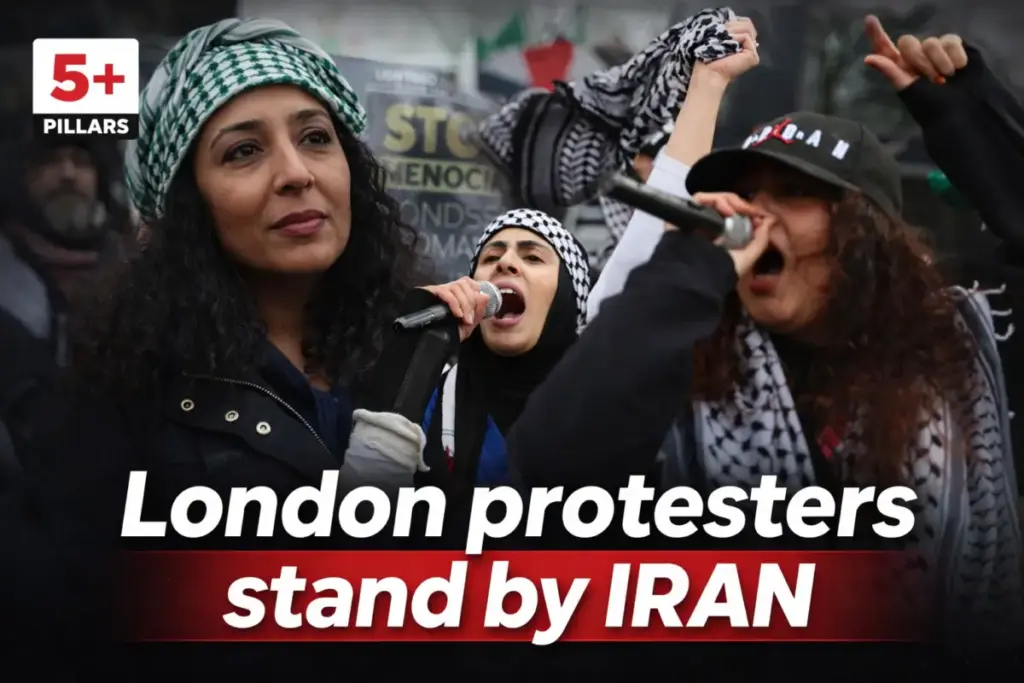
Thousands of demonstrators took to the streets of London in a powerful display of solidarity with Iran, marching through the heart of the British capital to protest escalating military aggression by the United States and Israel. The large-scale mobilization brought together a diverse coalition of peace activists, community organizers, and concerned citizens who voiced profound alarm over the trajectory of Middle Eastern foreign policy. Carrying banners, placards, and national flags, the crowd demanded that the British government distance itself entirely from what speakers and participants repeatedly condemned as a reckless and dangerous military escalation.
The protest unfolded against a backdrop of mounting international anxiety regarding potential wider military conflicts in the region. Chanting slogans and carrying a sea of Palestinian and Iranian flags, the demonstrators moved through central London routes, pausing at key focal points to hear speeches from various activist leaders. The atmosphere was charged with urgency as participants expressed their opposition to foreign interventions that they argue destabilize the entire Middle East and risk plunging the global community into a wider, catastrophic conflict.

Placards held high by the crowd captured the core demands of the mobilization, reflecting a broad spectrum of anti-war sentiments. Protesters brandished signs reading “Stop Trump’s wars,” “Tell Starmer: stop arming Israel,” “End nuclear hypocrisy,” and “Stop bombing Iran.” These messages highlighted the multifaceted nature of the demonstration, linking ongoing tensions involving Iran directly to broader regional conflicts, including the humanitarian crisis in Gaza and the contested nature of international nuclear policies. The inclusion of these interconnected grievances underscored the protesters’ view that Western foreign policy in the Middle East is fundamentally flawed and driven by double standards.
A central theme of the march was a direct critique of the United Kingdom’s official diplomatic and military stance. Activists directed sharp criticism at Prime Minister Keir Starmer’s administration, urging immediate policy reversals regarding arms exports and military intelligence sharing. Speakers at the rally argued that the British government risks becoming complicit in illegal acts of aggression by failing to condemn joint US-Israeli military actions unequivocally. The crowd repeatedly cheered calls for a completely independent British foreign policy that prioritizes diplomacy, international law, and regional de-escalation over uncritical alignment with Washington and Tel Aviv.
The demonstration also served as a platform to challenge what organizers described as persistent nuclear hypocrisy on the global stage. Protesters drew attention to the unequal application of international scrutiny regarding nuclear capabilities, pointing out that while nations like Iran face severe economic sanctions and military threats, other states in the region maintain undeclared nuclear arsenals largely shielded from international censure. Activists argued that genuine peace and security in the Middle East cannot be achieved through military threats, economic strangulation, or regime-change operations, but rather through multilateral dialogue, mutual disarmament, and adherence to international legal norms.

Throughout the afternoon, the march remained peaceful yet resolute, drawing onlookers from across the city who paused to observe the massive procession and listen to the speeches echoing through public squares. Stewards worked alongside local law enforcement to manage traffic flow and ensure the safety of participants as the river of people wound its way through central London. The strong turnout demonstrated that public opposition to foreign military entanglements remains robust within the United Kingdom, with many citizens eager to make their voices heard on the international stage.
As the rally drew toward its conclusion, organizers urged attendees to maintain pressure on their elected representatives through ongoing local activism, public meetings, and peaceful demonstrations. The message from the streets of London was unmistakable: a significant segment of the British public vehemently rejects participation in any military campaign against Iran and demands an immediate shift toward peace, diplomacy, and justice in the Middle East.