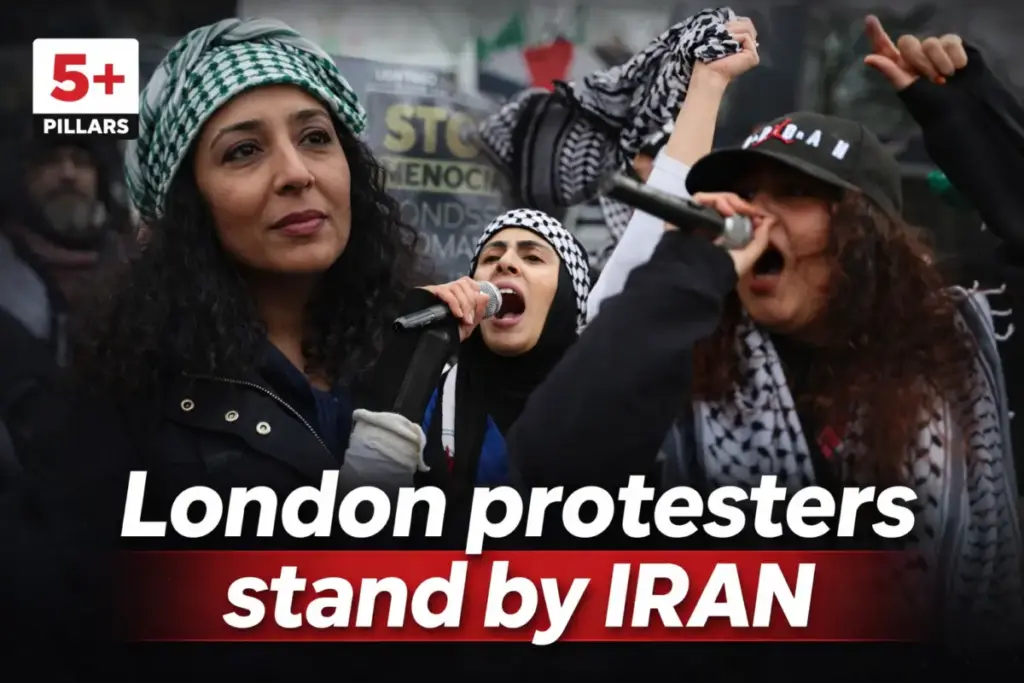
The demonstration, which drew a diverse crowd of peace campaigners, community activists, and concerned citizens, transformed major thoroughfares into a sea of banners, placards, and flags. Protesters chanted slogans demanding an immediate halt to the bombardment of Iran and expressing solidarity with populations caught in the crossfire of escalating Middle Eastern tensions. Waving a prominent array of Iranian and Palestinian flags, the demonstrators sought to draw a direct line between various theaters of conflict in the region, arguing that Western interventionism and unconditional military backing for aggressive state actions continue to fuel instability, suffering, and the constant threat of catastrophic escalation.
Placards carried by the marching thousands bore sharp messages directed at both international and domestic political figures. Among the most visible signs were those reading "Stop Trump’s wars," "Tell Starmer: stop arming Israel," "End nuclear hypocrisy," and "Stop bombing Iran." These slogans underscored a dual frustration among the protesters: deep-seated apprehension regarding the aggressive foreign policies emanating from Washington, and intense domestic pressure directed at Prime Minister Keir Starmer’s administration to fundamentally alter British foreign and military policy regarding the Middle East.

The atmosphere throughout the march was resolute and vocal, punctuated by speeches from various civil society leaders, peace activists, and community representatives who addressed the gathered crowds. Speakers focused heavily on the perilous nature of the current geopolitical climate, warning that the ongoing military actions against Iran risk igniting a devastating regional conflagration that could easily spiral beyond control. They emphasized that ordinary citizens across the globe have nothing to gain from foreign military campaigns that destabilize sovereign nations and devastate civilian infrastructure, urging a return to diplomacy, international law, and peaceful conflict resolution.
A central theme uniting the various groups present at the demonstration was the demand for political accountability within the United Kingdom. Activists directed severe criticism toward the current British government, arguing that Downing Street has failed to take a principled stand against escalating aggression. By continuing to supply arms and diplomatic cover for military campaigns in the region, critics argued, the UK government is complicit in violations of international humanitarian law and is actively dragging the British public into foreign conflicts without democratic consent or parliamentary justification.
The protest also highlighted growing anxieties over the double standards surrounding nuclear capabilities and international diplomacy in the Middle East. Demonstrators pointed to the hypocrisy of Western powers that aggressively target Iran’s nuclear program while ignoring or actively supporting the undeclared nuclear arsenal of Israel. Activists argued that genuine regional security can only be achieved through comprehensive disarmament and equal application of international treaties, rather than through selective enforcement, economic strangulation, and military bombardment.

As the march wound its way past iconic London landmarks toward its final rally point, police and security personnel managed traffic disruptions and maintained a visible presence, though the demonstration remained overwhelmingly peaceful throughout the day. Participants expressed determination to keep up the pressure on British political leaders through continued grassroots mobilization, public education campaigns, and street protests. For the thousands who marched through London, the message to Westminster and Washington was unambiguous: the relentless push toward war with Iran must be stopped immediately, and British foreign policy must pivot decisively away from militarism and toward peace.