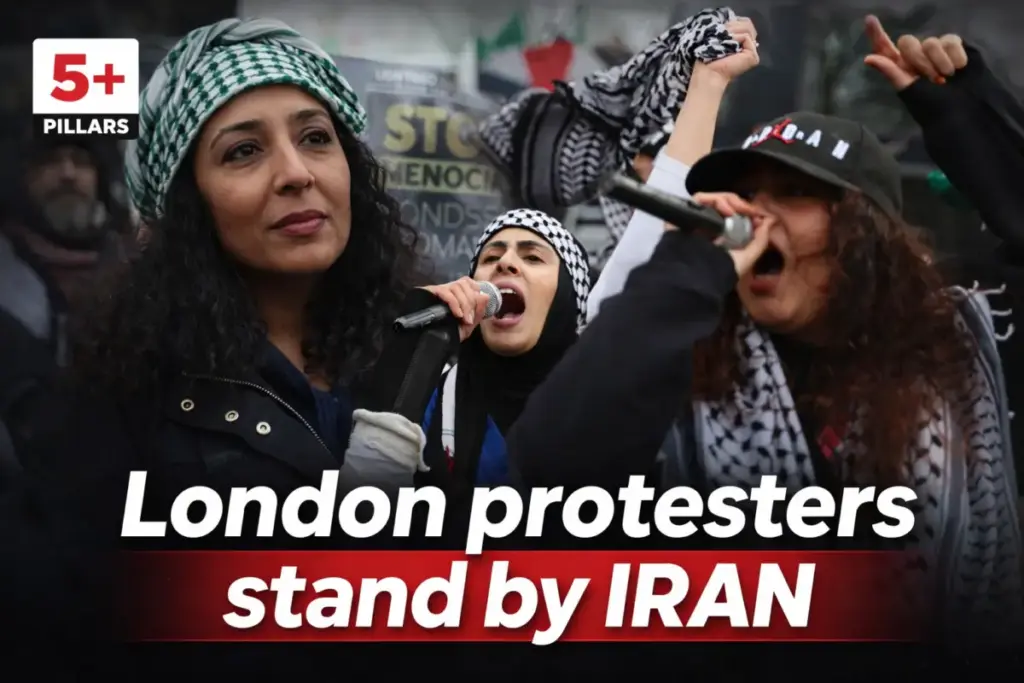
Thousands of demonstrators took to the streets of central London on Saturday to voice their fierce opposition to ongoing military escalation and what they characterized as a reckless US-Israeli war on Iran. The large-scale mobilization brought together a diverse coalition of peace activists, community organizers, and concerned citizens who marched through the British capital to demand an immediate end to foreign military interventions in the Middle East and to pressure the UK government into distancing itself from the unfolding conflict.
The demonstration, which filled major thoroughfares with a sea of banners, flags, and chants, served as a resounding platform for public dissent against the strategic trajectory of Western foreign policy in the region. Protesters converged to express solidarity with the Iranian people, underscoring deep-seated public anxiety regarding the humanitarian and geopolitical fallout of escalating hostilities. The atmosphere was charged with urgency as speakers and participants alike condemned the combination of American and Israeli military actions, warning that continued aggression threatens to ignite a catastrophic wider war with global repercussions.

A central theme of the London march was a direct appeal to British political leadership, with specific demands aimed at Prime Minister Keir Starmer and his administration. Activists raised pressing questions regarding the United Kingdom’s diplomatic and military alignment with Washington and Tel Aviv, urging Westminster to adopt an independent foreign policy rooted in peace and international law rather than following what organizers described as destabilizing military adventures. Demonstrators made it clear that the British public expects its government to act as a force for de-escalation rather than complicity in foreign conflicts.
The streets of the capital reflected a vibrant tapestry of international solidarity, with participants waving a wide array of banners and symbols. Prominent among them were placards carrying direct messages such as "stop Trump’s wars," "tell Starmer: stop arming Israel," "end nuclear hypocrisy," and "stop bombing Iran." In addition to these targeted slogans, the crowd carried numerous Iranian and Palestinian flags, visually linking the struggle against the bombardment of Iran with ongoing opposition to the war in Gaza and broader patterns of Western interventionism across the Middle East.
The inclusion of multiple causes highlighted a growing consensus among anti-war movements in the United Kingdom that various regional conflicts are deeply interconnected, stemming from shared geopolitical strategies and military support networks. Speakers addressing the crowds emphasized that the security and stability of the Middle East cannot be achieved through military dominance, economic blockades, or targeted strikes, but rather through diplomacy, respect for national sovereignty, and an immediate halt to arms transfers that fuel violence.

Security personnel and local authorities managed the massive turnout, which proceeded along a designated route through central London without major disruption, although traffic was temporarily diverted to accommodate the sheer volume of people. The demonstration drew participants from various walks of life, including students, trade unionists, human rights advocates, and members of Britain’s diverse diaspora communities, all united by a common desire to see an end to hostilities before the situation spirals further out of control.
As the rally concluded with speeches calling for continued grassroots mobilization and political pressure, organizers urged attendees to maintain public vigilance. They emphasized that building a sustainable anti-war movement requires ongoing education, community organizing, and persistent advocacy to ensure that the voices of ordinary citizens calling for peace are heard loudly within the halls of parliament.