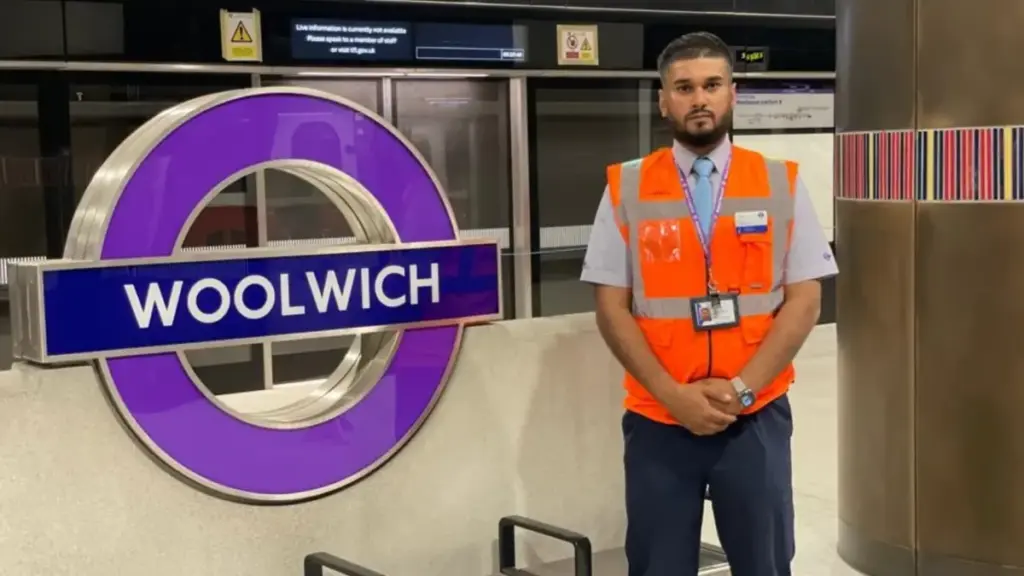
In the bustling and often anonymous environment of London’s vast rail network, where thousands of commuters rush past one another every single day without making eye contact, one employee has quietly become a beacon of hope for individuals experiencing the darkest moments of their lives. Rizwan Javed, a dedicated worker for Transport for London (TfL), has successfully helped prevent at least 34 people from taking their own lives by offering something that individuals in deep crisis desperately need: someone who is truly willing to stop, listen, and care.
Rather than walking past or ignoring the subtle signs of profound distress, Rizwan has repeatedly stepped out of his routine duties to speak directly with people standing at the edge of danger. Through calm conversations, a gentle demeanor, and genuine human compassion, he has guided numerous distressed individuals away from peril and toward safety, professional support, and a renewed chance at life. His extraordinary contributions to public safety highlight the profound impact that empathy and attentiveness can have in an urban transit environment.

The remarkable journey of life-saving interventions began after Rizwan completed specialized suicide prevention training provided by the renowned charity organization, the Samaritans. Working in partnership with major transport providers, the Samaritans train frontline rail staff to recognize the critical behavioral indicators that suggest a person may be struggling with overwhelming mental health challenges or contemplating ending their life. Armed with this vital knowledge, Rizwan learned how to approach vulnerable individuals safely, initiate meaningful dialogue, and provide immediate reassurance during high-stress situations.
According to Rizwan, many of the successful interventions that have ultimately saved lives did not begin with grand gestures or complicated rescue procedures. Instead, they frequently started with one simple, powerful, and deeply human question: “Are you okay?” In a world where people in crisis often feel entirely isolated, invisible, and convinced that nobody cares about their pain, asking that single question can profoundly disrupt their train of thought. It opens the door to a conversation that reminds them they are seen, valued, and not alone in their suffering.
Beyond his direct, frontline work across London’s transport infrastructure, Rizwan has organically evolved into a passionate advocate for broader mental health awareness. Recognizing the heavy burden of psychological distress and the isolation it causes, he has consistently encouraged people to speak more openly about their emotional struggles. By sharing his experiences and insights, he actively contributes to breaking down the persistent social stigma that continues to surround mental illness, making it easier for individuals to seek help before they reach a point of crisis.

Rizwan’s inspiring story serves as a powerful reminder that ordinary acts of kindness can generate extraordinary, life-altering consequences. In environments as fast-paced as public transit networks, a few moments of genuine compassion, the offering of a listening ear, or even just pausing to ask someone if they are doing alright can make all the difference to an individual who feels they have nowhere else to turn in the world.
The core ethos reflected in Rizwan’s dedication deeply resonates with timeless principles of community care and benevolence. The Prophet Muhammad taught that the most beloved people to the Creator are those who provide the greatest benefit to humanity. Through his unwavering commitment to protecting vulnerable lives and offering comfort to strangers in deep distress, Rizwan exemplifies this spirit of active, compassionate service to society.
As communities continue to navigate the complex challenges of modern life and mental health awareness gains vital momentum, individuals like Rizwan Javed stand out as everyday heroes. His actions demonstrate that safeguarding human life often relies not on elaborate infrastructure, but on human presence, empathy, and the courage to check in on one another.