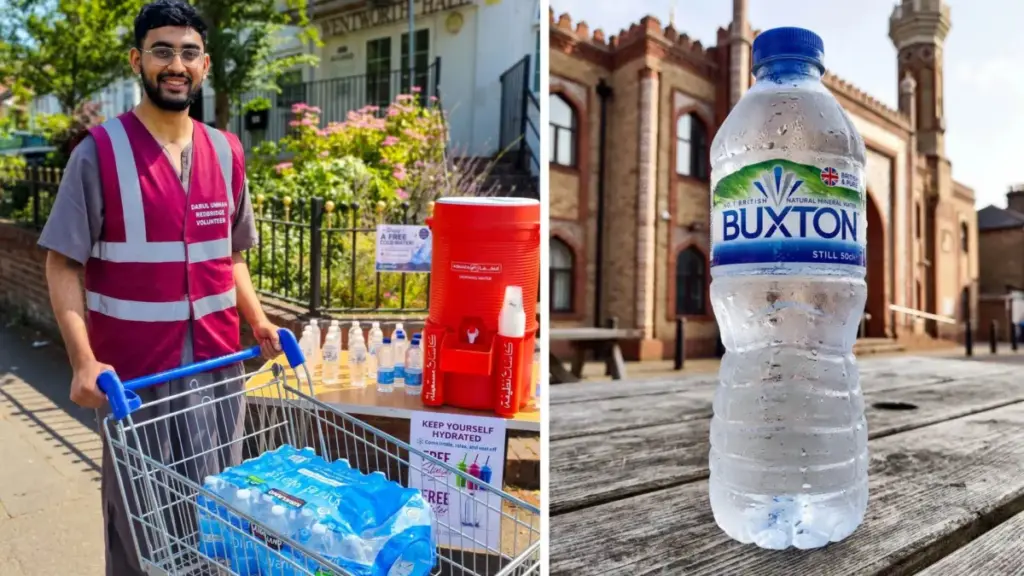
As temperatures climbed significantly across the United Kingdom this week, a familiar and heartwarming sight began appearing on pavements outside mosques nationwide. Tables neatly lined with ice-cold bottles of water were set up, inviting anyone passing by to take a refreshment completely free of charge, with no conditions attached and no questions asked. It was a simple, direct gesture of kindness tailored for anyone struggling against the relentless effects of an intense summer heatwave.

While many local mosques chose to set up dedicated water stations directly outside their buildings, others decided to take their community outreach a step further by meeting people right where they were. At the Darul Ummah Redbridge Mosque in Gants Hill, East London, dedicated volunteers braved the scorching sun to head straight out onto the streets. They walked among pedestrians, local workers, and weary commuters, personally handing out free bottles of water under the blazing afternoon sky to help people stay cool and hydrated during one of the hottest weeks of the year.

Across various regions of the country, similar scenes unfolded as religious institutions found practical, immediate ways to serve their local neighborhoods. Some mosques opened their air-conditioned prayer halls and community spaces to offer vulnerable members of the public a safe, cool environment to rest and escape the extreme temperatures. Others actively encouraged passers-by to step inside, sit down for a moment, and catch their breath while staying hydrated.

These initiatives, though seemingly simple on the surface, embody a timeless Islamic teaching centered on caring for fellow human beings without expecting any reward or recognition in return. Islamic tradition places a heavy emphasis on community service and public welfare. In a well-known tradition, the Prophet Muhammad taught that the best of people are those who are most beneficial to others. For the volunteers and organizers involved, responding to the heatwave was not viewed as an extraordinary or unusual undertaking; rather, it was simply seen as another natural opportunity to serve the public.

Throughout the year, mosques across Britain routinely organize and host a wide variety of charitable community initiatives. Many operate regular food banks to support struggling families, provide outreach programs for the homeless, host blood donation sessions, and coordinate localized welfare efforts. When the extreme weather alert was issued for this week, these established community networks simply pivoted to address an urgent, immediate seasonal need, demonstrating their ongoing commitment to local wellbeing.

At a time when daily news headlines frequently focus on global conflict, social division, and polarization, these quiet, localized acts of generosity tell a fundamentally different story. They highlight a narrative of everyday neighbors looking after neighbors, regardless of background or belief. They showcase how deeply held faith can directly inspire active, practical public service, and they illustrate how community institutions can open not only their physical doors, but also their hearts to the wider public in times of shared difficulty.

The efforts of the volunteers have drawn widespread appreciation within their local communities. Observers note that sometimes the most powerful form of community engagement and peaceful representation—often referred to in an Islamic context as da’wah—is not spoken from a podium or written in a pamphlet. Instead, it can simply take the form of a cold bottle of water offered with a genuine smile on a hot day, bridging gaps between diverse communities through shared human vulnerability and kindness.

As the hot weather persists across parts of the country, these impromptu hydration stations and mobile outreach efforts continue to serve as a reminder of the vital role that local faith groups play in public health, comfort, and community cohesion during extreme weather events.