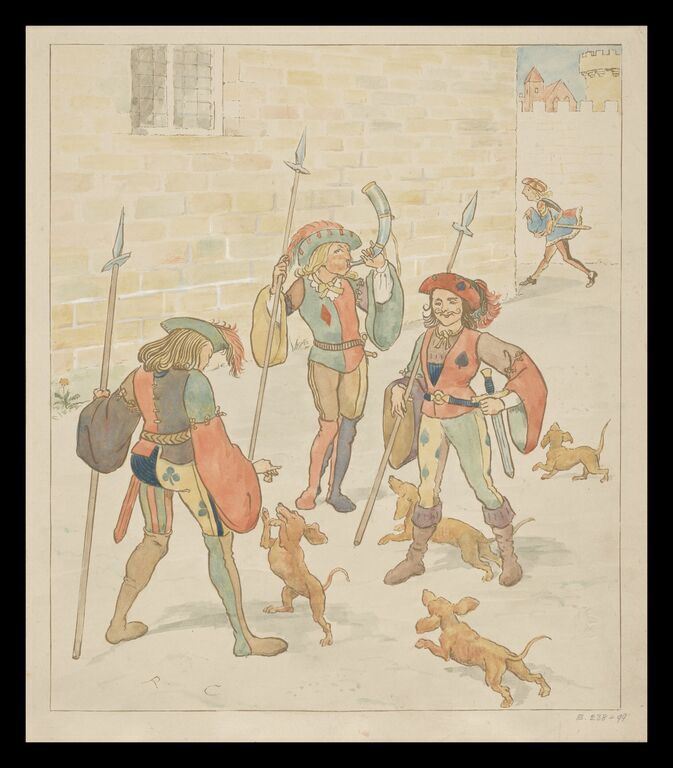
As an intern undertaking a dedicated five-month project at the Victoria and Albert Museum (V&A), my primary focus has been cataloguing and researching the rich collection of works on paper by the celebrated artist and illustrator Randolph Caldecott (1846–1886). Caldecott remains best known to art historians and literature enthusiasts alike for his charming and innovative annual "Picture Books," which include timeless Victorian-era classics such as The House that Jack Built and Babes in the Wood. Through these ongoing research initiatives and museum blog posts, my aim is to shed fresh light not only on his vibrant life and artistic career, but also on the fascinating, behind-the-scenes process of uncovering the depths of the V&A’s institutional holdings. This vital cataloguing project is generously supported by The Randolph Caldecott Collection Trust.
Randolph Caldecott’s enduring artistic legacy lives on far beyond his widely published books. It is physically preserved within the V&A collections through more than 700 individual drawings, rare proof prints, and other remarkable pieces of original art. These fascinating objects afford researchers, students, and visitors a unique, close-up look at the meticulous creative process behind the formation of his iconic picture books, featuring everything from delicate hand-coloured proof prints to unpublished illustrations that never made it into commercial print runs. Crucially, nearly half of this entire museum collection was acquired directly from Marian Caldecott, the artist’s devoted wife, following his untimely passing in the late nineteenth century.
Marian and Randolph’s Life in Kent
The story of Marian and Randolph’s domestic life begins in the county of Kent, where Marian Brind met the artist and where both were residing prior to their marriage in 1880. Marian hailed from the quiet village of Chelsfield as the daughter of a successful businessman. The Brind family trade was established in the wine merchant business, though her father actively engaged in several other commercial ventures concurrently. Intriguingly, the Brind family lived as close neighbours to Heinrich Sigismund Uhlrich (1846–1937), a talented German wood engraver who had immigrated to England from Norway in the early 1870s.
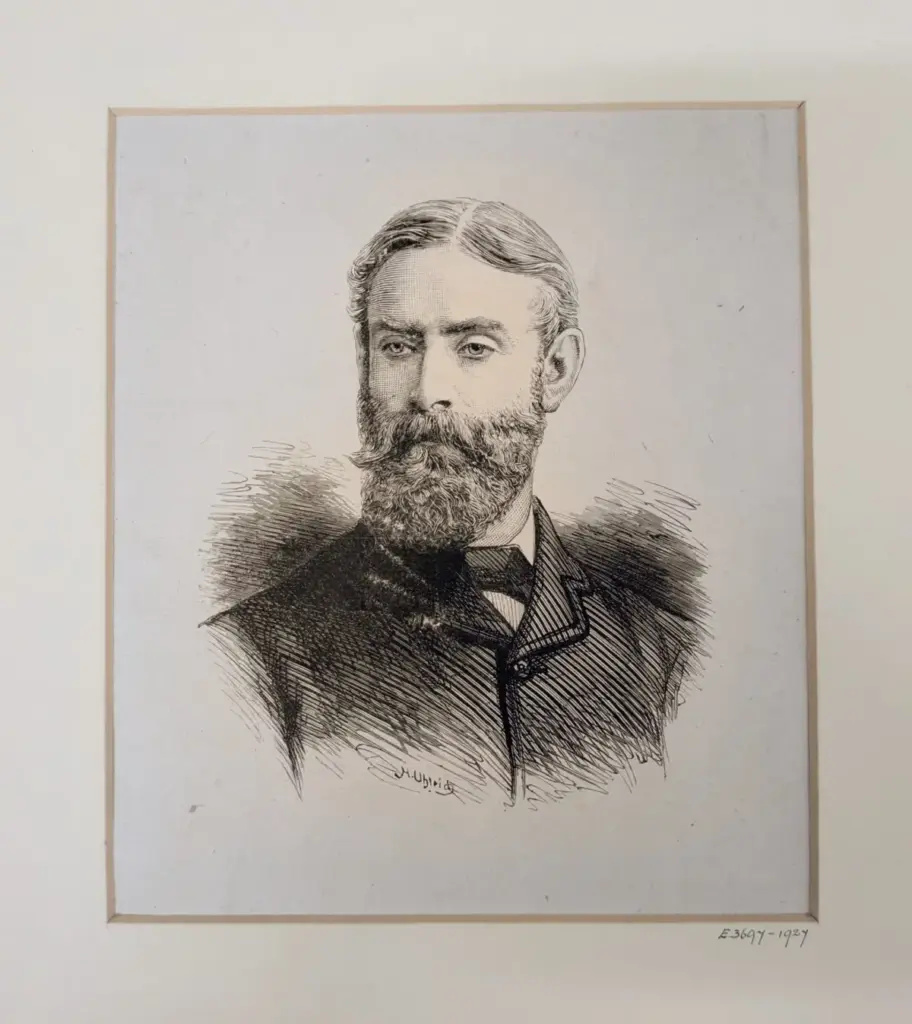
At the same time, Randolph Caldecott was living just seven miles away in the Kentish village of Kemsing, a home that Marian would officially join him in following their wedding. Heinrich Uhlrich maintained a professional connection to the prominent periodical the Graphic, a widely read newspaper to which Caldecott also regularly contributed his illustrations. The professional and personal ties run deep; Uhlrich was ultimately responsible for engraving the solemn portrait of Randolph Caldecott that accompanied the artist’s memorial in the pages of the Graphic following his death in February 1886.
The geographical and professional proximity of these two men—both working for the same major newspaper while maintaining close connections to the very same small rural village—presents a fascinating historical coincidence, much like the classic chicken-and-egg dilemma of which came first. However, historical records suggest it is unlikely that Caldecott personally introduced Uhlrich to Chelsfield. Caldecott was still living as a resident of London when Uhlrich first arrived in England to begin his career at the Graphic. Furthermore, Caldecott did not relocate to Kent until a full year after Uhlrich married Sarah Anne Morgan, the daughter of a local Chelsfield farming family.
In fact, historical context points to the strong possibility that it was this very marriage which first introduced Caldecott not only to the village of Chelsfield, but potentially to his future wife. Sarah Morgan and Marian Brind were remarkably close in age, and the sprawling garden of Marian’s family home shared a direct boundary wall with the parish church where Sarah and Heinrich were married in 1878. While Caldecott’s published letters offer surprisingly few details regarding how he first crossed paths with Marian, the circumstantial evidence strongly points toward this local wedding as the catalyst. Randolph and Marian were themselves married in that very same parish church just two years later.
Depictions of Marian Caldecott
Throughout their marriage, Marian and Randolph travelled extensively together, journeying abroad both for Randolph’s artistic commissions and to manage his notoriously fragile health, frequently spending harsh English winters in the warmer, more forgiving climates of the French Riviera. According to records maintained by the Randolph Caldecott Society, Marian is believed to be depicted in at least one of his illustrations for the publication Breton Folk, though art historians have not yet definitively identified which specific plate features her likeness. Speculation also surrounds the exquisite watercolour painting titled The Gavotte, where the female figure positioned on the right-hand side has been suggested as a possible portrait of Marian.
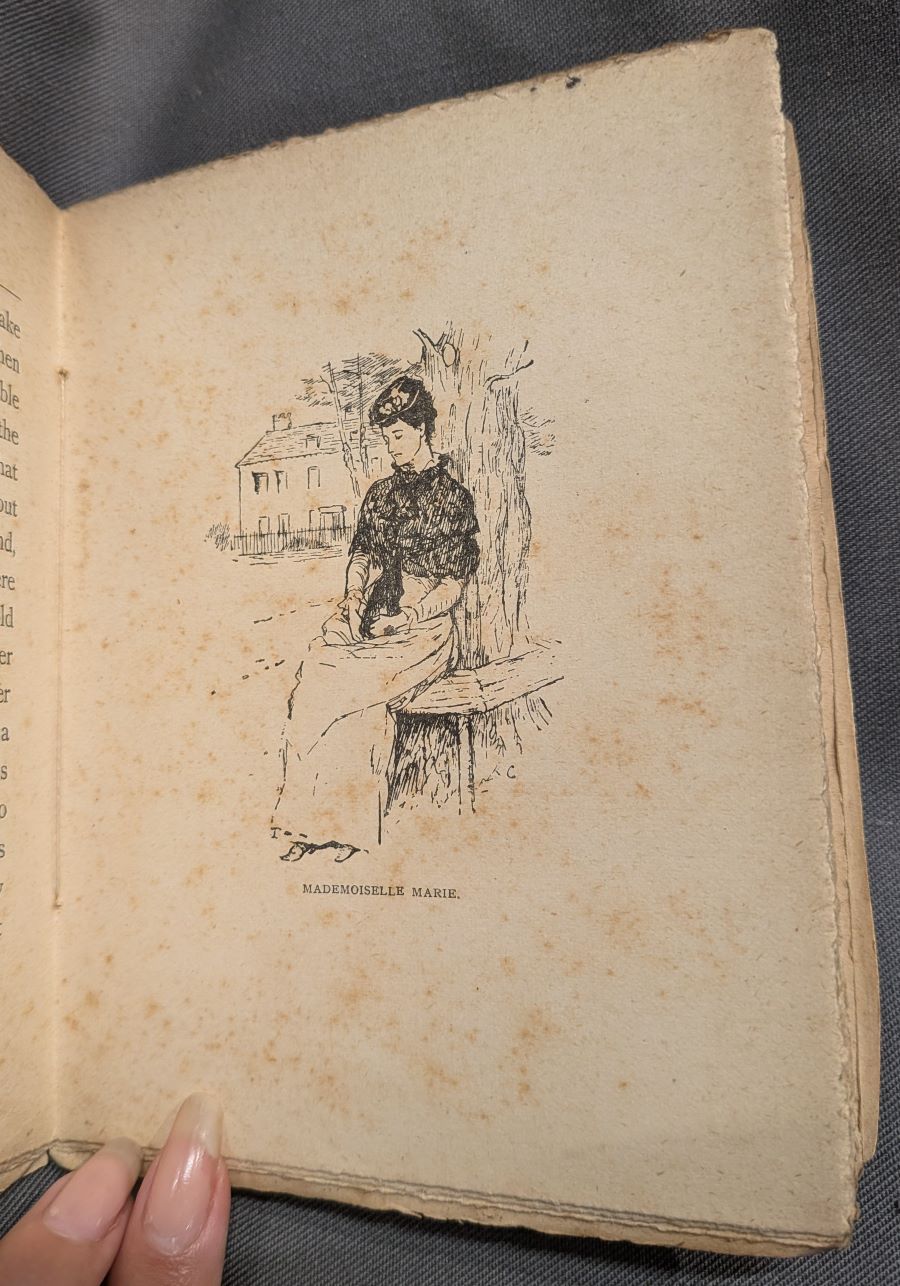
Finding definitive visual comparisons is challenging because direct depictions of Marian Caldecott are exceedingly rare in his surviving oeuvre. However, a significant discovery was made within an annotated copy of the book The Owls of Olynn Belfry, which was unearthed only after Randolph’s death. This copy revealed the fascinating detail that the published drawing of a character named "Mademoiselle Marie" was directly based upon Marian’s features.

Although her face does not frequently appear explicitly across his visual art, Marian features prominently throughout Randolph’s personal correspondence, where he affectionately and routinely referred to as "Mrs. C." During his lifetime, Caldecott socialized within an elite circle of high-profile Victorian artists and cultural figures, including the esteemed painter Sir Frederic Leighton, Pre-Raphaelite master John Everett Millais, and influential illustrator George du Maurier. Marian was warmly introduced into this distinguished social and professional sphere, regularly rubbing shoulders with her husband’s influential contacts and even maintaining a personal correspondence with the prominent children’s author Juliana Horatia Ewing. At one point, Marian even offered to act as Randolph’s personal secretary to ease his workload, though the artist politely declined, noting that he was simply too particular to allow anyone else to manage his correspondence.
Marian Caldecott and the V&A
The deep personal and professional partnership faced severe trials toward the end of Randolph’s life. In a personal letter written in November 1885, Randolph expressed considerable worry, lamenting that "Mrs. C. was not very well," having suffered from severe seasickness during an arduous ocean voyage across the Atlantic to the United States. Tragically, just a few months later, the tables turned as Randolph himself succumbed to illness; an unseasonably severe and cold spell during a stay in Florida drastically worsened his already precarious health, leading to his death in February 1886 at the age of just 39.
Following her husband’s passing, Marian demonstrated a fierce dedication to preserving his memory and artistic standing. She wrote to a close friend of the couple, Frederick Locker-Lampson, to coordinate the establishment of a dedicated committee tasked with creating a fitting public monument to Randolph. Her explicit wish for the memorial committee was that it include "no one who is not known to have some interest in and admiration for Randolph’s work, or himself, no dragging in of names of people who don’t care, just to make a ‘boom’."

Fortunately, finding passionate admirers of Randolph’s illustrations proved remarkably straightforward. Among his prominent circle of friends was the accomplished painter Thomas Armstrong, who conveniently served as the director of art at the V&A—then operating under its historical name, the South Kensington Museum. Leveraging these connections, Marian successfully arranged several major acquisitions of Randolph’s original artwork by the V&A in the years immediately following his death. These pieces were acquired by the museum not merely as fine historical examples of Victorian book illustration, but actively as foundational teaching tools and design references for the next generation of art students.
A deeper dive into Marian Caldecott’s nominal file within the official V&A archive reveals extensive correspondence between the grieving widow and the museum administration. Yet, remarkably, it was not merely her offerings of Randolph’s artwork that caught my attention during the current cataloguing project. Archival records uncovered the astonishing revelation that Marian’s relationship with the V&A extended far beyond her husband’s professional legacy. In 1896, Marian loaned an authentic eighteenth-century sack dress directly to the museum. The historic garment, which dates originally from the 1770s, clearly exhibits physical signs of later alteration for fancy dress costume use during the late nineteenth century.
This discovery immediately prompted an intriguing historical question: was this garment altered by Marian herself? Historical records establish that Caldecott frequently created preliminary drawings utilizing costumed models, and many of his published illustrations prominently feature non-specific, historical-style dress bearing striking aesthetic similarities to the fashions of the late eighteenth century. This surprising archive-based discovery has provided my current cataloguing fellowship with an exciting new objective—maintaining a constant, sharp lookout across Caldecott’s extensive graphic output for a familiar, historical dress that might match the museum’s loaned artifact.

Historical records further track the physical presence of the garment within the museum. As late as 1918, the dress remained actively on loan and on public display within the institution’s historic "Loan Court," a space alternatively known at the time as the "Octagon Court" and recognized today as Gallery 40. In August of that eventful year, amid mounting domestic anxieties regarding the "possible increase of attack from enemy aircraft" during the final months of the First World War, the V&A administration dispatched an official inquiry letter to Marian’s last known London address. The museum formally requested that she review the ongoing conditions of her loan and confirm whether she wished for the historical dress to remain safely secured within the institution during wartime.
Unfortunately, the official letter was swiftly returned to the museum marked as "not known" and "gone away." For a moment, this archival dead-end threatened to mark the final chapter of Marian’s post-London paper trail. However, deeper investigation into public and museum records confirmed that Marian had actually departed London and returned permanently to her native Kent at least two decades prior. She spent her later years living comfortably alongside her sister, Amy, in Tunbridge Wells until Amy’s passing in 1931, with Marian herself passing away the following year in 1932. Decades later, in 2005, the historic sack dress that she had initially entrusted to the museum a century prior was officially accessioned into the permanent collections of the V&A, where it remains accessible for public study and can be viewed online through the institution’s digital Explore the Collections portal.
Reflecting upon this extensive archival research, studying the life of Marian Caldecott provides a vivid, highly engaging window into a varied and independent Victorian life that might otherwise have been unfairly sidelined as merely an appendix to her more famous husband’s biography. Marian transitioned smoothly from a comfortable rural upbringing in Kent to navigating elite artistic circles in London, rubbing shoulders with the preeminent cultural figures of the Victorian era while taking international travel and high society entirely in stride.

Though she endured the heartbreak of crossing the Atlantic and back—ultimately making the exhausting return journey to Britain alone following Randolph’s tragic death—she ultimately returned to her roots in Kent, cementing a quiet legacy of her own. The hundreds of original prints and drawings she successfully negotiated and sold to the museum continue to form the foundational core of the V&A’s comprehensive Randolph Caldecott collection. Through her tireless post-mortem advocacy and careful preservation efforts, Marian Caldecott ensured not only the survival of the physical artwork behind her husband’s legendary picture books, but ultimately secured his permanent, celebrated legacy within the history of British art.