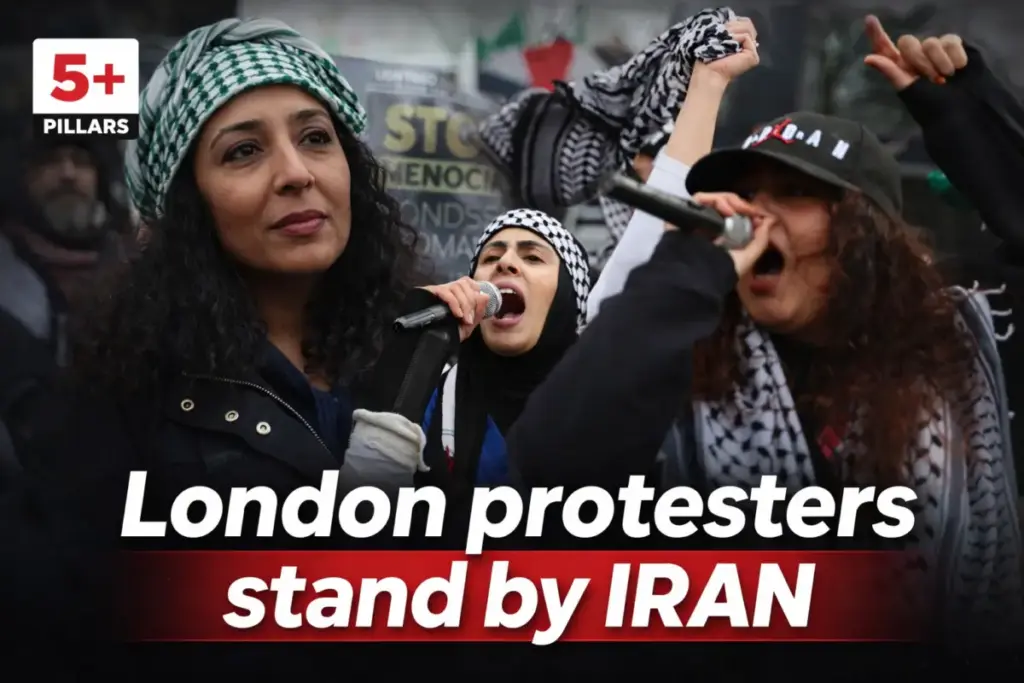
The demonstration brought together a diverse coalition of peace activists, community members, and political campaigners who converged to express solidarity with the people of Iran and to protest the broader pattern of Western military involvement in the Middle East. As the procession moved through designated routes in London, participants chanted slogans and displayed sharp criticisms aimed at both international leaders and domestic authorities. The atmosphere was charged with urgency as speakers and marchers alike highlighted the catastrophic human and geopolitical consequences of an expanded war.
Placards carried by the demonstrators bore direct messages addressing current political figures and policies. Slogans such as "Stop Trump’s wars," "Tell Starmer: Stop arming Israel," "End nuclear hypocrisy," and "Stop bombing Iran" featured prominently throughout the crowd. In addition to these explicit political demands, a sea of Iranian and Palestinian flags fluttered alongside peace banners, illustrating a broad intersectional solidarity among demonstrators who connected the plight of various populations affected by regional hostilities and Western foreign policy decisions.

The timing of the march coincides with mounting international alarm over heightened hostilities in the Middle East. Activists speaking at the event focused heavily on the role of major global powers, particularly the United States and its allies, in stoking tensions through continuous military actions, economic sanctions, and diplomatic backing of aggressive campaigns. Particular scrutiny was directed toward the British government and Prime Minister Keir Starmer, with protesters demanding a fundamental shift in UK foreign policy. Rather than offering tacit or material support to military campaigns led by foreign allies, demonstrators insisted that London must champion de-escalation, diplomacy, and international law.
Protest organizers emphasized that the British public has repeatedly shown an aversion to foreign entanglements in the Middle East, recalling the devastating consequences of past interventions in Iraq, Libya, and Afghanistan. Speakers warned that a conflict with Iran would not be contained within local borders but would instead trigger a catastrophic global fallout, threatening international security, triggering massive displacement, and exacerbating economic hardships for ordinary citizens worldwide. They argued that continuing to supply arms or intelligence to belligerent states makes the UK complicit in violations of international norms and human rights.
Throughout the afternoon, the demonstration remained peaceful yet resolute, with marshals and security personnel working alongside local authorities to manage the large crowd. The visual impact of thousands of people marching past iconic London landmarks served as a stark reminder of the domestic political pressure facing Western leaders over their handling of Middle Eastern affairs. Activists vowed to continue their mobilization efforts, organizing future rallies, educational forums, and lobbying campaigns to ensure that public opposition to the war remains visible and vocal at the highest levels of government.

As the march concluded with speeches and final calls to action, participants dispersed with a renewed commitment to building an anti-war movement capable of holding political leaders accountable. The event underscored a profound disconnect between official government policies and the desires of a significant segment of the British population, who continue to demand peace, non-intervention, and an end to military aggression across the Middle East.