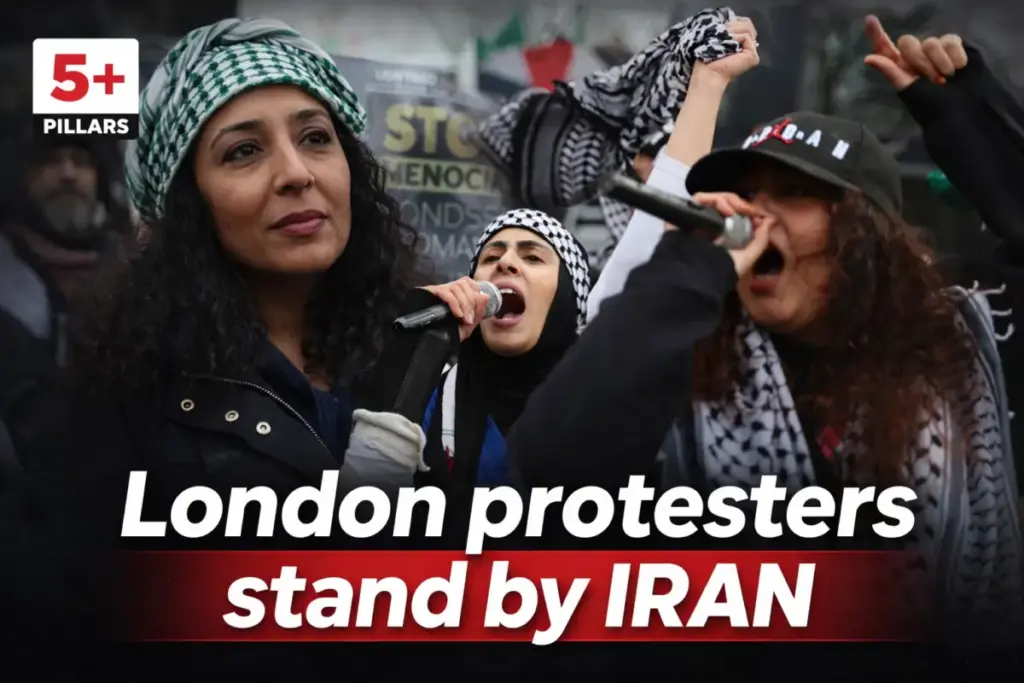
The high-profile demonstration brought together a broad coalition of peace activists, community organizations, and political campaigners who marched through the heart of the British capital. The atmosphere was charged with defiance and deep apprehension over the trajectory of Middle Eastern geopolitics, as participants voiced fears that ongoing escalations could rapidly spiral into a catastrophic regional war with global implications.
Throughout the march, protesters carried vivid signs that laid bare their core demands and grievances. Placards bore slogans such as "Stop Trump’s wars," "Tell Starmer: stop arming Israel," "End nuclear hypocrisy," and "Stop bombing Iran." Alongside these pointed political messages, demonstrators prominently displayed Palestinian and Iranian flags, drawing visual connections between the ongoing conflicts, regional suffering, and what activists described as a pattern of aggressive Western foreign policy interventions in the Middle East.

The central rallying cry of the afternoon was directed squarely at Prime Minister Keir Starmer and his administration. Speakers and participants alike demanded that the United Kingdom refuse any military, logistical, or diplomatic complicity in the US-Israeli campaign against Iran. Protesters argued that British involvement would not only violate international law and exacerbate human suffering but would also deeply entangle the UK in a conflict devoid of strategic justification or public mandate.
The demonstration in London mirrors growing international anxiety over the sharp deterioration of security in the Middle East. Tensions have reached historic highs following a series of direct confrontations, airstrikes, and retaliatory measures involving Iran, Israel, and the United States. For months, peace groups and civil society organizations across Europe have warned that the persistent refusal of Western powers to pursue genuine diplomatic resolutions—coupled with the continued supply of military hardware to regional actors—is pushing the entire region closer to the brink of disaster.
Activists on the ground in London emphasized that the war on Iran, much like previous military campaigns in the region, threatens to devastate civilian populations while destabilizing global security and economy markets. Many speakers drew attention to the double standards surrounding nuclear capabilities in the region, criticizing Western governments for ignoring the unchecked arsenals of their regional allies while imposing crippling economic sanctions and military threats against Tehran.

The march culminated in a series of speeches from prominent peace campaigners, trade unionists, and human rights advocates who urged the British public to remain vigilant and active against the march to war. They called for continuous grassroots mobilization, urging citizens to pressure their Members of Parliament to demand an immediate de-escalation of hostilities, an arms embargo on Israel, and a strict policy of British neutrality regarding any military actions targeting Iran.
As the demonstration concluded, organizers vowed that Saturday’s mobilization would be just one of many actions taken to oppose foreign military intervention. They stressed that building a broad, vocal anti-war movement within the UK is more critical than ever to counter what they termed the reckless warmongering of Western leaders and to advocate for a foreign policy rooted in diplomacy, international law, and human rights.