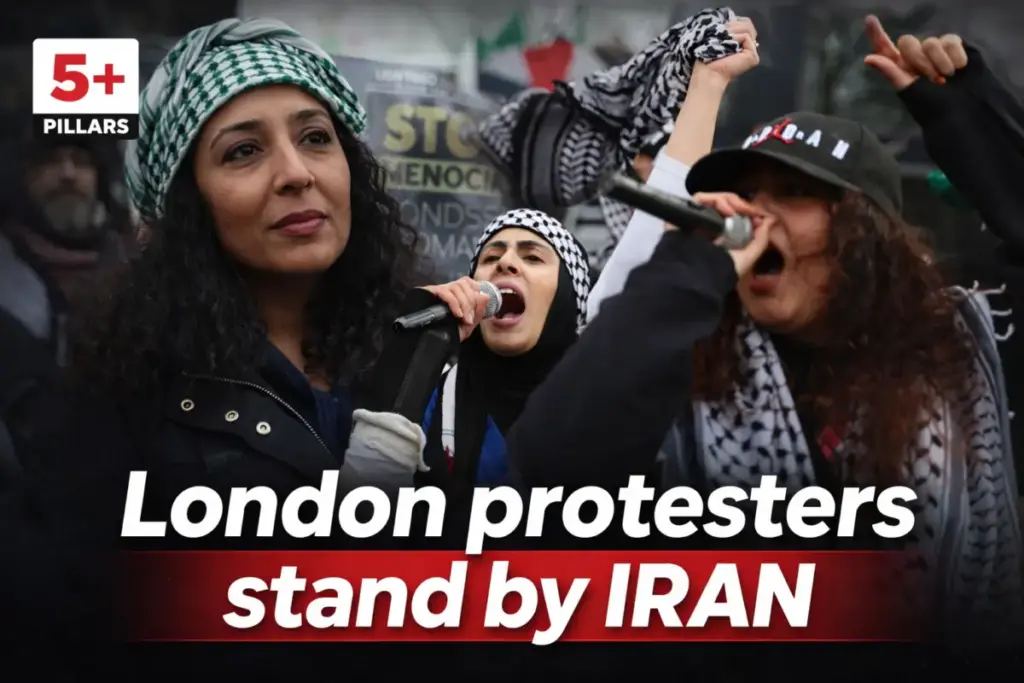
The demonstration brought together a broad coalition of peace activists, community organizers, anti-war campaigners, and concerned citizens who marched through major thoroughfares before gathering for speeches and rallies. The atmosphere was charged with urgency as speakers took the microphone to denounce the latest cycle of hostilities, calling for an immediate halt to foreign interventions in the Middle East and demanding a fundamental shift in British foreign policy.

Prominent among the visual messaging carried by the protesters were slogans directed squarely at international and domestic leaders. Activists hoisted placards bearing messages such as "Stop Trump’s wars," "Tell Starmer: stop arming Israel," "End nuclear hypocrisy," and "Stop bombing Iran." Alongside these pointed political demands, demonstrators displayed large Iranian and Palestinian flags, drawing visible connections between the ongoing military campaigns in multiple regional flashpoints and expressing solidarity with populations enduring the brunt of aerial bombardments and economic blockades.
The march highlights growing domestic opposition within the United Kingdom to the government’s foreign policy stances and its diplomatic alignment with Washington and Tel Aviv. Speakers at the rally emphasized that British citizens do not support participation in, or material support for, military escalations that threaten to engulf the entire Middle East in flames. Activists argued that instead of facilitating campaigns of aggression, the UK government should be utilizing its diplomatic channels to de-escalate tensions, advocate for ceasefires, and push for international law to be upheld universally.

The demonstration in London is part of a broader wave of international concern over the deteriorating security situation involving Iran, the United States, and Israel. Observers note that public anxiety has intensified as diplomatic efforts appear to stall and military postures harden on all sides. For the thousands who marched through the British capital, the message was clear and immediate: diplomatic solutions must replace military escalation, and the United Kingdom must refuse to play any role in a war that risks devastating consequences for global peace and regional stability.