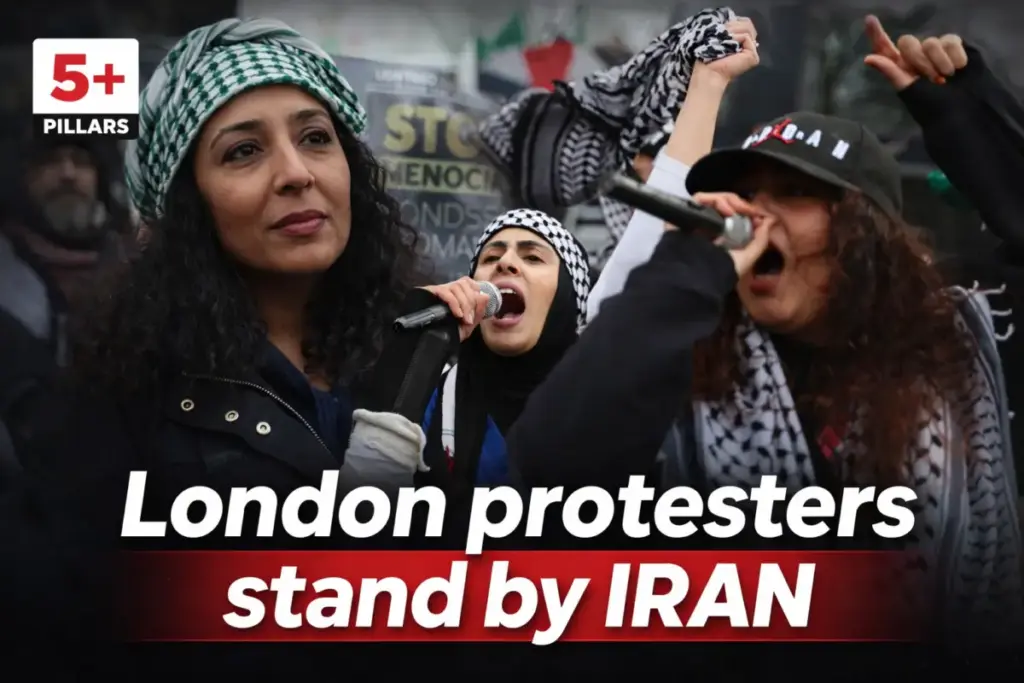
The atmosphere in central London was charged with urgency as protesters navigated major thoroughfares, carrying a sea of banners, placards, and national symbols. Prominent among the visual displays were Iranian and Palestinian flags, reflecting a broader intersectional solidarity among anti-war movements in the UK. The placards carried by demonstrators bore stark and direct messages aimed squarely at Western foreign policy leaders. Slogans such as "Stop Trump’s wars," "Tell Starmer: stop arming Israel," "End nuclear hypocrisy," and "Stop bombing Iran" dominated the landscape, capturing the multifaceted grievances of the assembled crowds.

The demonstration served as a focal point for public anxiety regarding the trajectory of international relations and the risk of a wider regional conflagration. Speakers addressing the crowds emphasized the catastrophic humanitarian and geopolitical consequences of military escalation involving Iran, warning that any further expansion of hostilities would destabilize an already volatile region and inflict unimaginable suffering on civilian populations. Activists directed significant criticism toward the domestic political establishment, calling on Prime Minister Keir Starmer’s government to fundamentally reassess its diplomatic and military alignment with foreign allies engaged in offensive operations.
Central to the demands voiced during the march was the immediate cessation of British military support or logistical complicity in actions targeting Iran and its regional allies. Protesters argued that successive British administrations have routinely compromised international law and ethical standards by maintaining military exports and intelligence-sharing arrangements that facilitate foreign conflicts. The call to stop arming Israel was intertwined with broader demands to halt what activists described as a reckless march toward a wider war, one that they fear could easily draw in global powers and trigger a global crisis.

The demonstration also highlighted deep-seated frustrations regarding what organizers termed "nuclear hypocrisy" among Western nations. Demonstrators pointed to the double standards applied by major global powers regarding nuclear capabilities and regional security frameworks in the Middle East, arguing that decades of selective enforcement and aggressive posturing have only served to deepen mistrust and accelerate instability. By bringing these issues to the streets of London, the participants sought to rupture the political consensus surrounding foreign intervention and force a public reckoning on the UK’s role in global conflicts.
As the march proceeded along its designated route under the watchful eye of local law enforcement, the demonstration remained largely peaceful, defined by the rhythmic chanting of anti-war slogans and the collective resolve of the participants. Organizers emphasized that today’s mobilization in London is part of a growing international movement against foreign intervention and militarism. They vowed to continue organizing public demonstrations, educational forums, and community outreach efforts until political leaders heed the public demand for peace, diplomacy, and an immediate end to the military escalation threatening the Middle East.