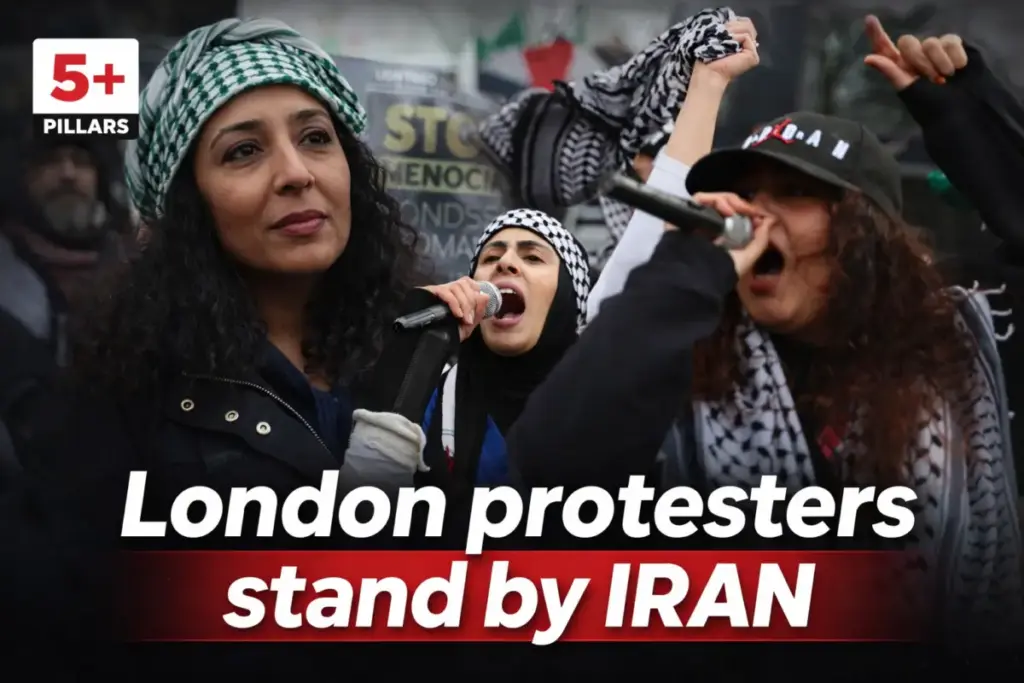
The march, which wound its way through prominent thoroughfares of the British capital, served as a powerful platform for public dissent against mounting geopolitical tensions. Demonstrators carried an array of banners, placards, and flags that underscored their primary political demands. Among the prominent messages visible in the crowd were signs reading “Stop Trump’s wars,” “Tell Starmer: stop arming Israel,” “End nuclear hypocrisy,” and “Stop bombing Iran.” Alongside these pointed political statements, marchers waved a sea of Iranian and Palestinian flags, drawing a direct line between the current military escalations and the broader, long-standing crises affecting the region.
The atmosphere at the demonstration was charged with urgency as speakers and participants alike expressed profound alarm over the trajectory of international relations. Activists focused much of their criticism on the role of Western powers, particularly the United States and the United Kingdom, in fueling instability through military intervention, diplomatic alignment, and the continued supply of weaponry. The inclusion of direct appeals directed at British Prime Minister Keir Starmer highlighted domestic political pressures facing the UK government as it navigates the complex web of international alliances and foreign policy commitments.

Protesters argued that any participation in, or diplomatic endorsement of, military actions against Iran by Western allies would not only violate international law but also trigger catastrophic consequences across an already volatile region. The slogan “Stop Starmer: stop arming Israel” reflected growing domestic discontent over the UK’s military export policies and diplomatic posture amid persistent warfare in Gaza and its spillover into broader regional confrontations. Speakers at the rally emphasized that British citizens do not support a new foreign entanglement and urged policymakers to prioritize diplomatic engagement, de-escalation, and international law over military adventurism.
The demonstration also highlighted public skepticism regarding the stated justifications for foreign policy decisions made in Washington and London. Placards addressing nuclear hypocrisy pointed to what activists characterized as a double standard in international diplomacy, where Western nations maintain massive nuclear arsenals while seeking to police the technological capabilities of sovereign states in the Middle East. The demand to halt the bombardment of Iran resonated strongly with the crowd, who chanted slogans calling for an immediate cessation of hostilities and a return to diplomatic dialogue.
Throughout the march, organizers utilized the high-visibility public gathering to urge broader public mobilization and political accountability. The event drew participants from various backgrounds, reflecting a broad-based anti-war movement within the United Kingdom that has consistently organized against Western military interventions abroad. By bringing together campaigns focused on Iran, Palestine, and broader anti-imperialist demands, the protesters sought to demonstrate solidarity with populations affected by foreign military actions and economic sanctions.

As the demonstration concluded, organizers and participants vowed to continue their grassroots campaign, emphasizing that public pressure on the UK government must be sustained to prevent any drift toward wider war. The large turnout in London underscored a deep-seated public anxiety over the direction of international security policy, serving as a stark reminder of the domestic political friction generated by military escalations in the Middle East.