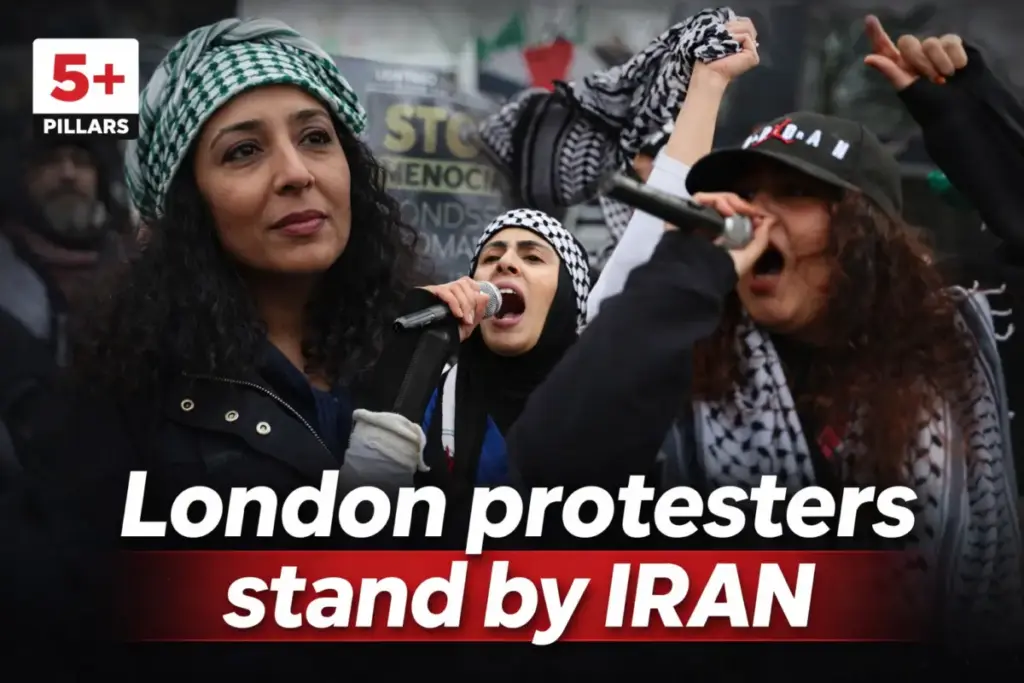
The atmosphere in the British capital was charged with urgency as participants streamed through prominent thoroughfares, bearing a diverse array of banners, placards, and national symbols. Prominent among the visual displays were Iranian and Palestinian flags, reflecting a broader consciousness among the protesters regarding interconnected struggles against foreign military intervention and regional destabilization. The demonstration served as a focal point for public anxiety surrounding the potential for an all-out regional war, with speakers and attendees alike emphasizing the catastrophic humanitarian and economic fallout that such a conflict would inevitably unleash across the globe.
Placards carried by the demonstrators featured explicit messages directed at both domestic and international political figures. Slogans such as "Stop Trump’s wars," "Tell Starmer: stop arming Israel," "End nuclear hypocrisy," and "Stop bombing Iran" dominated the visual landscape of the march. These rallying cries highlighted a dual critique: first, targeting the enduring legacy of aggressive American foreign policy under successive administrations, and second, holding the current UK government under Prime Minister Keir Starmer directly accountable for its diplomatic alignment and continued military exports to Israel amidst ongoing regional hostilities.

Organizers of the London rally stressed that the British public has no appetite for another entanglement in the Middle East, drawing stark parallels to past military interventions in Iraq and Afghanistan that resulted in prolonged instability and immense human suffering. Activists took to the microphone to articulate their profound opposition to any UK involvement—whether through logistical support, intelligence sharing, or direct military participation—in what they characterized as an unprovoked and legally dubious assault on Iranian sovereignty. The crowd responded with resounding chants, urging ordinary citizens to raise their voices and pressure policymakers to prioritize diplomacy and de-escalation over militarism.
The demonstration also brought to the forefront long-standing grievances regarding international double standards on nuclear capabilities and regional security architecture. Protesters asserted that Western powers engage in deep hypocrisy by condemning Iran’s nuclear program while simultaneously overlooking or actively facilitating the nuclear arsenal and military actions of Israel. This sentiment was encapsulated in the frequent demands for nuclear disarmament across the entire Middle East, with activists arguing that true security can only be achieved through mutual disarmament, international law, and respect for national sovereignty rather than through hegemony and coercive economic sanctions.
As the march proceeded past iconic London landmarks, heavy police presence monitored the route, though the demonstration remained largely peaceful and organized. Observers noted the broad coalition of groups represented within the crowd, including peace organizations, anti-war coalitions, civil rights advocates, and members of the British Iranian and wider Muslim communities. This diversity underscored the widespread cross-sectoral concern regarding the threat of a wider war and the conviction that British foreign policy must pivot away from unconditional support for aggressive foreign military adventures.

The rally in London forms part of a growing wave of international dissent, with similar demonstrations taking place in major cities around the world as citizens mobilize to push back against the drums of war. For the thousands who marched through the British capital, the message to Downing Street and international capitals was unequivocal: stop the aggression against Iran, halt the arms transfers fueling regional bloodshed, and commit urgently to a diplomatic path that respects international norms and human life.