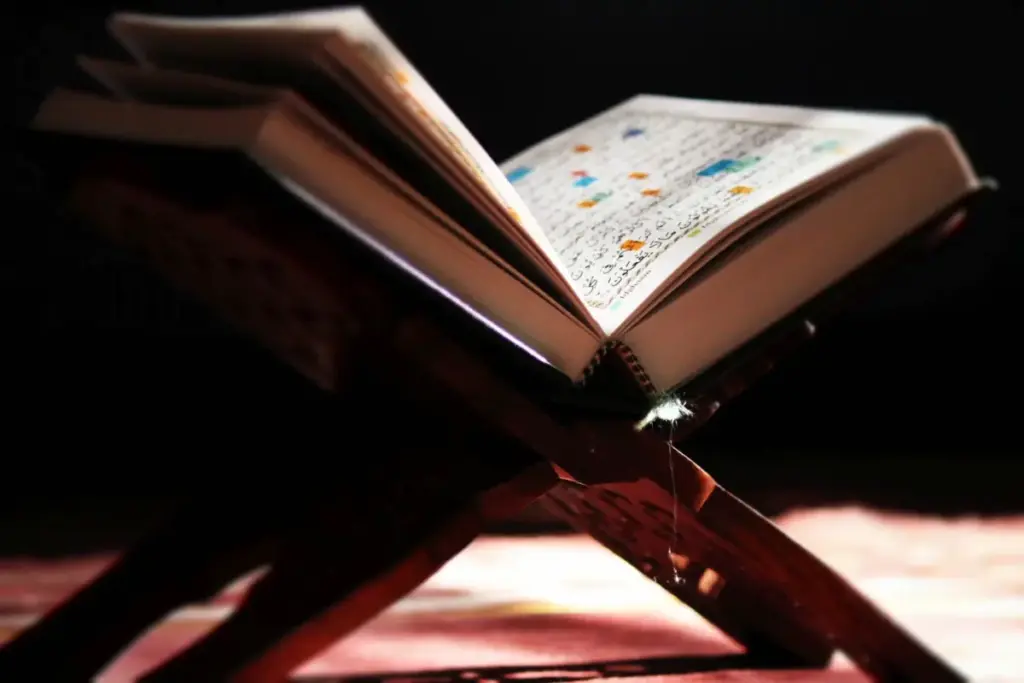
The question of the origins of the Quran and the source of Prophet Muhammad’s teachings has long been a subject of theological discussion, academic inquiry, and interfaith dialogue. In a recent installment of his widely followed educational media initiative, the "Eternal Challenge" series, prominent Islamic scholar Sheikh Sohaib Saeed addresses this very question, offering a detailed examination of historical allegations and the internal evidence found within the Islamic scripture itself.
Addressing viewers across digital platforms, Sheikh Sohaib tackles specific claims often raised by critics historically and in contemporary discourse—namely, the allegations that the Prophet Muhammad was instructed by various religious figures, human teachers, or scribes, or that he simply compiled and quoted narratives from previous Abrahamic scriptures. Through careful analysis of the historical context of seventh-century Arabia and the linguistic and thematic nature of the Quran, the episode serves as a deep dive into the foundational proofs of Islam.

The discussion forms part of a broader cinematic and educational exploration into the miraculous nature of the Quran, an Arabic term translating to "the recitation." For centuries, Muslim theologians and scholars have argued that the book’s literary excellence, profound theological consistency, and historical foresight defy human authorship, positioning it as an eternal miracle delivered to a man known historically for being unlettered.
Examining Historical Allegations and Human Authorship
Throughout the episode, Sheikh Sohaib directly addresses the persistent claim that external human influences shaped the content of the Quran. Critics of Islam, dating back to the era of the Prophet in Mecca, have frequently sought to attribute the divine revelations to human sources. In early Islamic history, pagan observers in Mecca occasionally claimed that a foreigner, a Christian monk, or local blacksmiths and scholars were secretly instructing the Prophet Muhammad.
Sheikh Sohaib systematically dismantles these assertions by pointing to both historical realities and logical inconsistencies within such claims. Seventh-century Arabia was predominantly a tribal, pagan society with scattered Jewish and Christian communities, yet the Prophet Muhammad was famously recognized by his contemporaries as Ummi—unlettered, meaning he could neither read nor write. Historical records indicate he had no formal training in theology, philosophy, or the complex legislative frameworks found within the Quranic text.

Furthermore, scholars of Islamic studies frequently highlight that if the Prophet had human mentors or tutors, accusations of plagiarism or fabrication would have been much easier to substantiate by his contemporary critics, who scrutinized his every word. Instead, the Quran itself challenges its skeptics to produce a single chapter like it, a literary and spiritual challenge that remains unmet to this day. Sheikh Sohaib emphasizes that attributing the scripture to human instruction fails to account for the monumental societal transformation, moral revival, and theological clarity the Quran introduced to a fractured Arabian peninsula in a remarkably short span of time.
The Significance of Quranic Prophecy
A major focal point of the video is the role of prophecy within the Quran, which Sheikh Sohaib identifies as a critical criterion for evaluating the truthfulness of prophets. Prophecy, in the theological sense, is defined as foretold news concerning future events that are entirely beyond the scope of human foresight, political calculations, or educated guesses.
Unlike general predictions based on strategic planning or sociological trends, true prophecy carries a distinct divine weight because it defies statistical probability and historical contingency. In the context of the Quran, several passages contain explicit predictions about future occurrences. One of the most famous historical examples cited by commentators is the Quranic passage regarding the conflict between the Byzantine and Persian Empires. At a time when the Byzantine Empire had suffered catastrophic defeats and appeared on the verge of total collapse, the Quran predicted that the Byzantines would achieve victory within a few years—a prophecy that was subsequently fulfilled, shifting the geopolitical landscape of the ancient Near East.

Sheikh Sohaib explains that these prophecies serve as vital empirical and spiritual proofs for believers and truth-seekers alike. By accurately foretelling events that no human being could have reliably anticipated, the text establishes a verifiable link to a transcendent source of knowledge. This predictive element reinforces the broader theme of the "Eternal Challenge" series, which invites audiences to examine the Quran not merely as a historical artifact, but as a living, dynamic communication from the Divine.
Continuing the ‘Eternal Challenge’ Series
The "Eternal Challenge" series, featuring Sheikh Sohaib Saeed, has built a substantial archive of video content designed to make classical Islamic scholarship accessible to modern audiences. The platform addresses fundamental questions regarding faith, revelation, and the nature of prophethood through structured visual media.
Earlier episodes in the series have explored foundational topics that complement the discussion on the origins of the Quran. For instance, the premiere episode, titled "The Eternal Challenge: What is the Quran?", introduces viewers to the definition, structure, and historical preservation of the text, emphasizing its unique place in world literature. Subsequent segments, such as "Eternal Challenge: Prophet and Book of Allah," explore the intimate relationship between the recipient of the message and the scripture itself, examining how the life of the Prophet Muhammad was guided, shaped, and validated by the continuous flow of revelation.
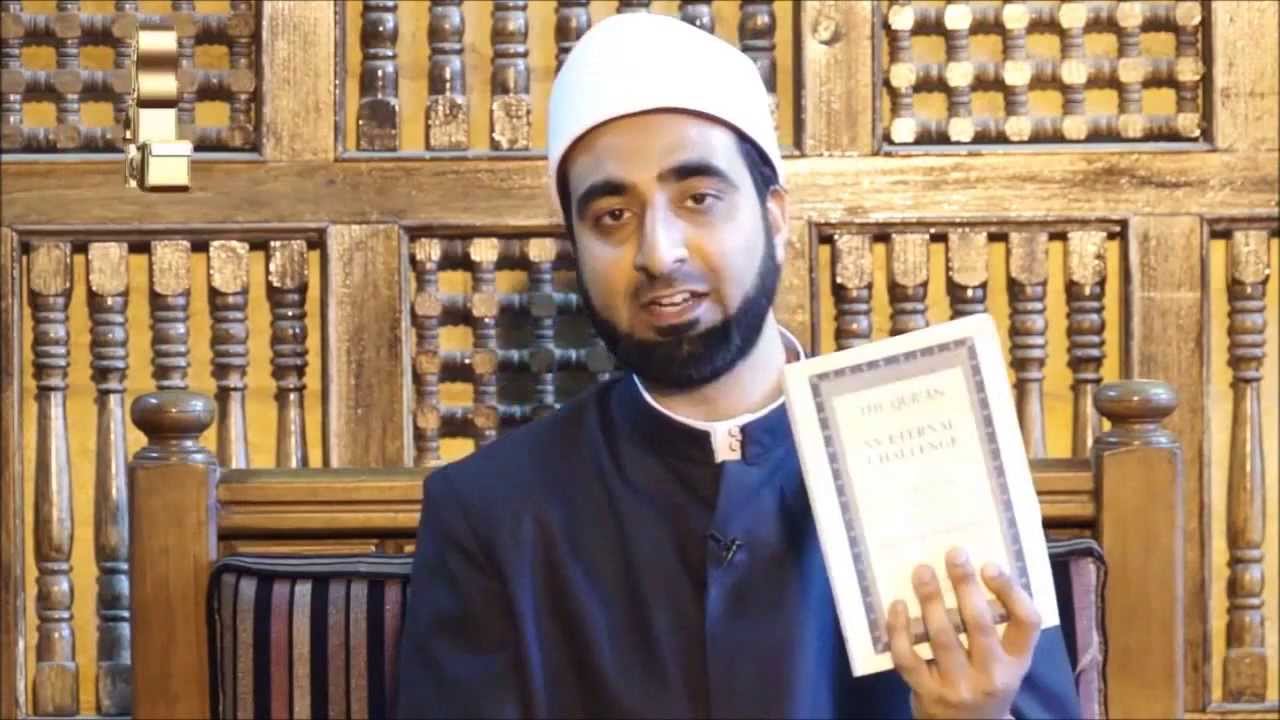
Another notable installment, "The Prophet Didn’t Make Quran… Rather, Quran Made Him," delves into the psychological and spiritual impact of the revelation on the Prophet Muhammad. Rather than viewing the scripture as a product of creative output or personal authorship, Islamic tradition presents the Prophet as a receptive vessel whose character, patience, and leadership were refined under the direct guidance of the divine text. This perspective counters modern materialistic interpretations of prophethood, reframing the prophetic mission as an organic response to divine initiative rather than sociopolitical ambition.
As digital media continues to play a central role in contemporary religious education, programs like Sheikh Sohaib’s series provide a space for academic rigor combined with spiritual reflection. By addressing complex theological inquiries—such as the source of revelation and the nature of prophecy—the series offers viewers tools to navigate historical controversies and deepen their understanding of Islamic theology in the modern age.