The political landscape of Israel found itself on a familiar yet intensely volatile footing on Wednesday as the Central Elections Committee released initial figures from the country’s pivotal general election. Early returns indicated that the camp led by Prime Minister Benjamin Netanyahu had pulled ahead of the opposition after approximately 50 percent of the nation’s votes had been officially counted.
The partial figures provided an early, albeit incomplete, glimpse into a deeply fractured electorate. After 50.1 percent of the ballots were tallied across the country, Netanyahu’s right-wing bloc was projected to capture 56 of the crucial 120 seats in the Israeli parliament, known as the Knesset. Meanwhile, the competing opposition bloc trailed with 49 projected seats, while various Arab parties accounted for the remaining 15 seats in this preliminary breakdown.
Election officials and political analysts were quick to emphasize that these partial results were highly volatile and bound to shift significantly as more remote districts, military ballots, and double-envelope votes were processed over the following hours and days. Indeed, these early numbers stood in stark contrast to the picture painted by exit polls released immediately after the closure of polling stations, which showed the major rival camps running neck-and-neck and struggling to cross the finish line with a clear majority.
The high-stakes electoral showdown pitted the veteran incumbent against a formidable and unified opposition movement, transforming the vote into a referendum on Netanyahu’s long-standing leadership, his domestic policies, and his polarizing political style. As the trickle of votes turned into a steady stream through the early hours of Wednesday, political leaders on both sides began positioning themselves for what threatened to be another grueling chapter of coalition-building or, conversely, the looming specter of yet another unprecedented round of national elections if a stable government could not be forged.
Neither leader rushed to claim outright victory on Wednesday morning, fully aware that the arithmetic of the Knesset remained profoundly hostile to easy coalition-making. Exit polls broadcast by Israel’s three major television networks underscored the profound stalemate, demonstrating that the competing political blocs were remarkably evenly matched. Crucially, none of the primary contenders or alliances managed to secure the magic number of 61 seats required to establish a functioning, stable majority in the 120-seat parliament, a chronic feature of recent Israeli political cycles that has repeatedly tested the resilience of the nation’s democratic institutions.
The granular details of the television exit polls highlighted the razor-thin margins defining the contest. Broadcasters Kan 11 and Channel 13 both projected an exact 51-51 tie between the opposing camps, effectively locking the political system into a paralysis that left both sides searching for kingmakers among the smaller factions. Meanwhile, Channel 12 offered a slightly more optimistic, though still precarious, projection for the incumbent, giving Netanyahu’s Likud-led bloc a narrow 52-49 advantage over its primary rivals.
Amid this tense atmosphere of uncertainty, the leaders of the opposing factions wasted no time in framing the early results and outlining their visions for the nation’s immediate future. Gadi Eisenkot, a 66-year-old former military chief of staff who emerged as a prominent leader of the opposition bloc, stepped forward on Wednesday to vow that he would move swiftly and decisively to form a governing coalition. Speaking to supporters and the press, Eisenkot argued that the high voter turnout and the shifting numbers demonstrated that the Israeli electorate had fundamentally rejected Netanyahu’s divisive leadership style, signaling a profound desire for political healing, institutional stability, and a change in national direction after years of relentless partisan friction.
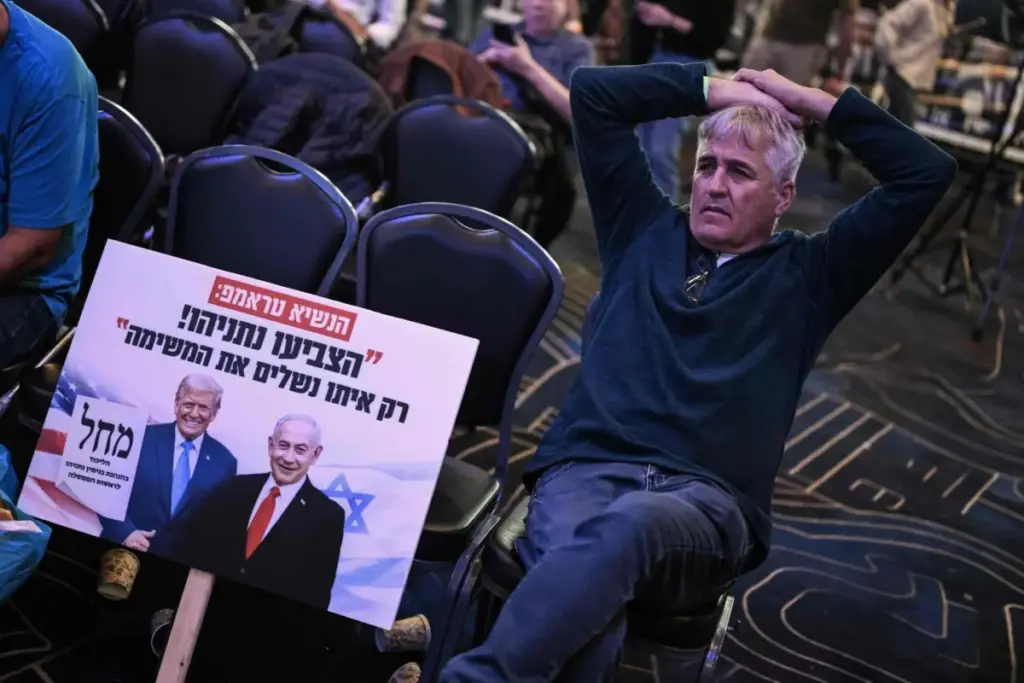
On the other side of the political divide, Prime Minister Netanyahu remained defiant and focused, doubling down on the core themes of his campaign. He issued passionate calls for the establishment of a strong, unified right-wing government capable of steering the country through profound regional and domestic challenges. In his public statements, Netanyahu drew sharp attention to what he portrayed as critical national security imperatives, specifically highlighting the ongoing and prospective threat posed by Iran. He underscored the prospect of renewed military action and strategic coordination against Tehran, explicitly tying such measures to his close relationship with U.S. President Donald Trump, a partnership he has long presented to the Israeli public as an indispensable asset for national defense.
The structural gridlock reflected in both the partial vote counts and the exit polls left the country bracing for a familiar cycle of prolonged, difficult coalition negotiations. With the final, certified results not expected until late Thursday or Friday, party leaders faced the daunting task of courting smaller fringe parties, religious factions, and ideological splinter groups to bridge the gap toward the coveted 61-seat majority. Should these backroom negotiations fail to produce a viable governing coalition, Israel risks plunging back into an electoral stalemate, raising the unsettling possibility of yet another general election in a nation already fatigued by repeated trips to the ballot box.