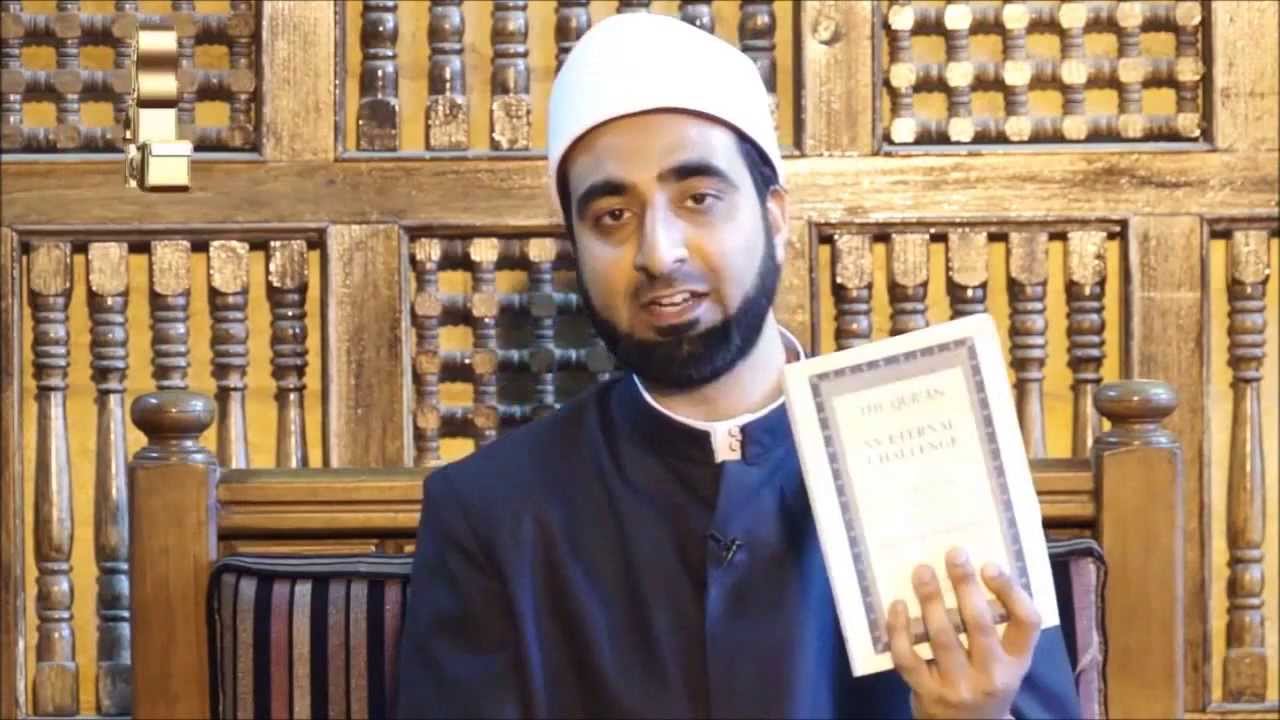
The question of the origins of the Quran and how its verses reached Prophet Muhammad has long been a subject of theological study, historical inquiry, and academic debate. In a recent episode of the widely followed educational and spiritual program The Eternal Challenge, prominent scholar Sheikh Sohaib Saeed addresses this central question, examining historical allegations and providing a comprehensive analysis of the text’s divine preservation and transmission.

Throughout the episode, Sheikh Sohaib tackles persistent claims, including historical assertions that various religious clerics, scholars, or contemporary figures instructed the Prophet, or that the content of the Quran was merely borrowed, adapted, or quoted from previous religious scriptures. By placing the text within its proper historical and theological context, the program offers viewers a detailed look at the internal and external evidence surrounding the revelation.
Addressing Historical Allegations of Human Authorship
The debate surrounding the source of the Quran is not new; skeptics and critics from the time of its initial revelation down to the modern era have sought to explain its profound theological, ethical, and legal frameworks through human agency. Common theories often suggest that Prophet Muhammad acquired scriptural knowledge through interactions with Christian monks, Jewish scholars, or other religious figures available in the Arabian Peninsula during the 7th century.

In this installment of The Eternal Challenge, Sheikh Sohaib methodically deconstructs these allegations. He points out the chronological, geographical, and linguistic discrepancies inherent in the theory of human instruction. The Sheikh explains that the unique linguistic structure, literary style, and profound theological depth of the Quran far exceeded the prevailing literary environment of pre-Islamic Arabia, where poetry and oral tradition reigned supreme, yet lacked the specific legislative and theological framework found within the Islamic scripture.
Furthermore, the program highlights the biographical realities of the Prophet’s life as an unlettered individual—commonly referred to in Islamic tradition as Al-Nabi al-Ummi—who had no prior formal training in theology, philosophy, or foreign scriptural languages. According to the scholarly analysis presented in the series, attributing the composition or acquisition of the Quran to human mentorship overlooks both the historical records of the era and the internal testimony of the text itself.

The Significance of Prophecies in the Quran
Beyond addressing the origins of the text, the video delves into a crucial dimension of the Quranic narrative: its prophecies. Prophecy, defined as foretold news concerning future events that are entirely beyond the scope of human foresight, observation, or calculation, serves as a cornerstone for examining the authenticity of prophetic claims.
Unlike an educated, calculated, or wise guess based on prevailing geopolitical trends, true prophecy involves precise details about future developments that no contemporary observer could reasonably anticipate. Sheikh Sohaib discusses how the Quran contains several distinct prophecies regarding both immediate historical events and long-term developments. In theological discourse, the fulfillment of these future predictions is regarded as one of the vital, tangible proofs verifying the divine origin of the prophetic message.
By examining instances where the Quran explicitly predicted outcomes of major conflicts—such as the eventual victory of the Byzantines over the Persians after a severe defeat—the series demonstrates how these benchmark predictions reinforced the validity of the revelation among early believers and challenged skeptics of the time.
Continuing the Exploration of the Eternal Challenge
The discussion forms part of a broader, multi-part intellectual exploration led by Sheikh Sohaib Saeed in The Eternal Challenge series. The program is designed to provide contemporary audiences with rigorous, well-reasoned answers to fundamental questions regarding the nature, revelation, and preservation of Islam’s holy book.
Earlier and complementary episodes in the series have explored foundational topics, encouraging viewers to deeply analyze what the Quran is, the unique dynamic between the Prophet and the Book of Allah, and the intellectual impossibility of human authorship. Through these segments, the series argues that rather than being shaped or manufactured by the Prophet Muhammad, the comprehensive worldview and ethical paradigm of the Quran ultimately shaped him and the civilization that followed.
As debates regarding faith, history, and scripture continue to find a prominent place in modern digital discourse, programs like The Eternal Challenge provide structured, academic perspectives for audiences seeking a deeper understanding of Islamic theology and the historical context of the Quran.