The question of the true origins of the Quran and the source of Prophet Muhammad’s profound teachings has long been a subject of theological inquiry, historical debate, and academic study. In the latest installment of his widely followed educational media initiative, the Eternal Challenge series, prominent Islamic scholar Sheikh Sohaib Saeed takes a deep dive into this pivotal question, directly addressing and refuting longstanding allegations that the Prophet was tutored by human clergymen or that he merely compiled and quoted material from earlier religious scriptures.

The episode, which forms part of a broader exploration into the miraculous nature of Islam’s holy text, examines the historical context of seventh-century Arabia, the biographical reality of Prophet Muhammad as an unlettered individual, and the rigorous internal and external proofs that establish the divine origin of the Quran. Through careful argumentation, Sheikh Saeed unpacks the mechanics of revelation, the nature of prophetic knowledge, and the distinct theological markers that separate true divine prophecy from human composition, historical borrowing, or educated speculation.
Addressing Historical Allegations of Human Tutorship
Throughout history, critics and skeptics of Islam have attempted to attribute the sophisticated theology, legal frameworks, and historical narratives of the Quran to external human influences. Common claims suggest that Prophet Muhammad learned stories of past prophets and theological concepts from Christian monks, Jewish rabbis, or various religious scholars operating within the trade-heavy and culturally diverse environment of the Arabian Peninsula.

In this episode of the Eternal Challenge series, Sheikh Saeed tackles these allegations head-on. He analyzes the historical impossibility and logical inconsistencies of the tutoring theory, pointing out the vast discrepancies between the theological perspectives found in the Quran and the sectarian disputes prevalent among various Christian and Jewish factions of late antiquity.
Furthermore, the scholar emphasizes the well-documented historical reality of the Prophet’s background as an unlettered man—an ummi—who did not read or write prior to the descent of the revelation. The sudden emergence of a text boasting unmatched literary elegance, profound philosophical depth, and uncompromised monotheism from a milieu devoid of comparable Arabic literary or theological works stands, as the series argues, as a testament to a source far beyond human instruction. The presentation carefully dismantles the notion that the Quran is a derivative work, illustrating instead how its corrections of previous scriptural alterations and its unique voice point directly to an independent, divine authority.

Prophecy and the Proofs of Truthfulness
A central theme of the video discussion centers on the nature of prophecies contained within the Quran. In theological discourse, a true prophecy is defined strictly as foretold news regarding a future event that lies entirely beyond the realm of human calculation, probability, or strategic foresight. This distinguishes divine prophecy sharply from an educated guess, a political prediction, or a wise observation made by astute observers of human affairs.
Sheikh Saeed highlights prophecy as one of the most vital, verifiable proofs for the truthfulness of prophets throughout history. Within the Quran, several future events were explicitly foretold at times when the nascent Muslim community was weak, politically marginalized, and facing severe persecution in Mecca. Among the most notable historical examples frequently cited in Islamic scholarship is the Quranic prediction concerning the eventual victory of the Byzantine Empire over the Persians, revealed at a time when the Byzantines had suffered catastrophic defeats and appeared on the brink of total annihilation.
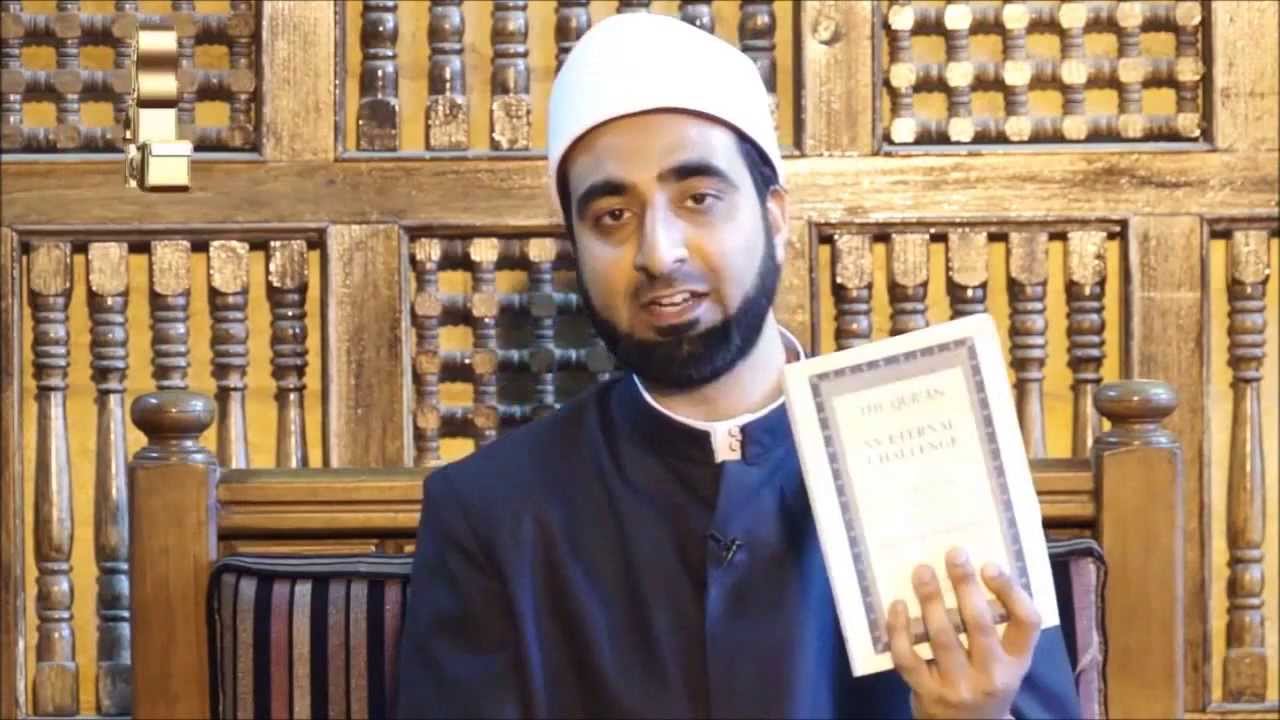
The fulfillment of such specific, high-stakes predictions serves, according to the series, as an empirical pillar supporting the claim that the author of the text possessed absolute knowledge of the unseen. By examining how these prophecies materialized precisely as foretold, the discussion urges viewers to reflect on the divine authorship of the verses, challenging the premise that a human author fabricating a text would risk staking their entire movement on falsifiable future predictions.
Continuing the Exploration of the Eternal Challenge
The release of this latest episode enriches the ongoing digital discourse provided by Sheikh Sohaib Saeed through platforms such as his official Tafsir Doctor channels and partnering Islamic educational networks. The Eternal Challenge series has consistently aimed to provide contemporary audiences with accessible, academically grounded, and spiritually resonant answers to fundamental questions surrounding the Quranic text.
Earlier installments in the comprehensive series have explored foundational topics designed to engage both inquiring minds and committed believers. These include introductory sessions defining the exact nature of the Quran, deep dives into the dynamic relationship between the Prophet and the Book of Allah, and analytical examinations addressing whether the Prophet authored the text himself. Through these preceding modules, the overarching narrative developed by the series posits that rather than the Prophet shaping or authoring the Quran, the profound spiritual and moral weight of the Quran ultimately shaped him and transformed the trajectory of human history.
As media platforms continue to distribute these segments to global audiences, scholars and educators hope that structured intellectual engagements like the Eternal Challenge will foster deeper academic appreciation, interfaith understanding, and a rigorous intellectual grounding for those studying Islamic scripture in the modern era.