
LONDON — The question of the precise origins of the Quran has remained a subject of intense academic inquiry, theological debate, and historical analysis for centuries. Among the most persistent queries surrounding the foundational text of Islam is a fundamental one: Who actually taught the Prophet Muhammad the Quran?
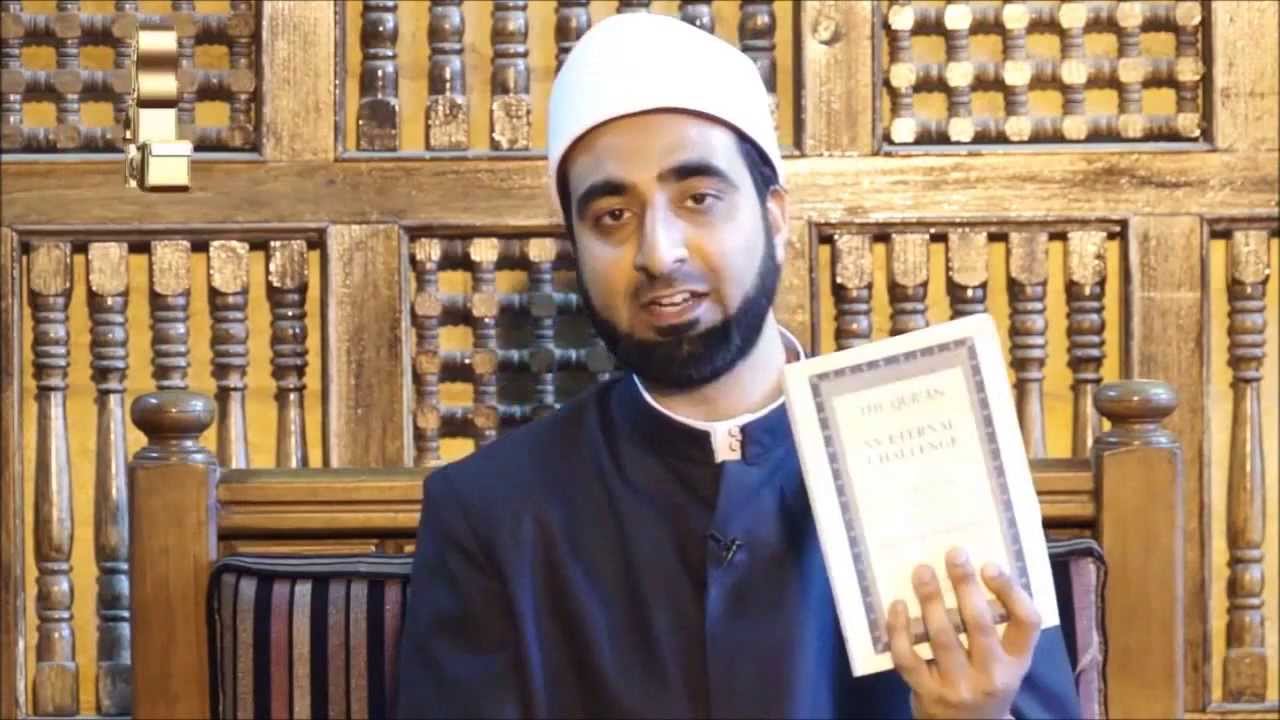
This central inquiry is the focus of a compelling new episode of the Eternal Challenge video series, hosted by prominent Islamic scholar Sheikh Sohaib Saeed. In this installment, the scholar tackles prevailing historical and theological allegations, dismantling long-standing claims that the Prophet of Islam was tutored by external human authorities, such as regional clergymen or contemporary scholars of previous religious traditions, or that he simply compiled and quoted passages from earlier Judeo-Christian scriptures.

Through a structured academic and theological examination, Sheikh Saeed addresses the mechanics of revelation, the historical context of seventh-century Arabia, and the distinct nature of the prophecies embedded within the Quran, offering viewers a comprehensive defense of the divine origin of the text.
Addressing Allegations of Human Tutorship and Borrowing
Throughout history, critics of Islam have attempted to attribute the authorship of the Quran to external human influences. Some orientalists and historical detractors have argued that the Prophet Muhammad—who was known in his community as an unlettered man—must have received instruction from Christian monks, Jewish rabbis, or literate scholars living in or passing through the Arabian Peninsula. Others have suggested that he synthesized stories and theological concepts from earlier scriptures, such as the Torah and the Gospel, adapting them to form the Quran.

In the latest episode of the Eternal Challenge, Sheikh Saeed confronts these allegations head-on. He evaluates the socioeconomic, cultural, and geographical realities of pre-Islamic Mecca, highlighting the implausibility of the theory that a man living in relative isolation in a tribal society could systematically access, master, and synthesize complex theological doctrines, legal frameworks, and historical accounts from foreign religious traditions without leaving a historical trace of such tutorship.
The scholar elaborates on the character and life of the Prophet Muhammad, emphasizing that his known background before the commencement of his prophethood at the age of forty was entirely devoid of any formal academic training, philosophical instruction, or literary composition. By analyzing the linguistic brilliance, legal depth, and theological consistency of the Quran, the program argues that the text transcends the intellectual and cultural boundaries of seventh-century Arabia, rendering human authorship or tutorship an untenable explanation for its existence.

The Nature of Prophecy and Verification in the Quran
Beyond refuting external influences, Sheikh Saeed turns his attention to a core evidentiary pillar of the Quran: its prophecies. In the context of religious scripture, prophecy is defined as foretold news concerning future events that are entirely beyond the scope of human prediction, sociological extrapolation, or educated guessing.
The discussion distinguishes true prophecy from wise forecasts or general estimations based on current trends. In theological and historical frameworks, fulfilled predictions serve as one of the most vital empirical proofs for the truthfulness of a prophet and the divine origin of his message.
The episode explores specific instances where the Quran made definitive assertions about future events—ranging from geopolitical outcomes involving the Byzantine and Persian empires to personal assurances given to the early Muslim community during times of severe persecution and hardship—all of which subsequently materialized precisely as foretold. By examining these predictive elements, the series presents prophecy not merely as a rhetorical device, but as a verifiable challenge to skeptics, reinforcing the overarching theme that the Quran’s source lies beyond human intellect.
Continuing the Eternal Challenge Series
This latest release builds upon a broader exploration of the Quran’s inimitable nature by Sheikh Sohaib Saeed. The Eternal Challenge series has systematically examined various facets of Islam’s sacred text, inviting both believers and academic researchers to engage with the philosophical and historical dimensions of the scripture.
Previous installments in the comprehensive series have addressed foundational questions regarding the very definition of the Quran, the relationship between the Prophet Muhammad and the Book of Allah, and the counter-arguments surrounding whether the Prophet authored the text himself. Earlier episodes have famously posited that rather than the Prophet shaping the Quran, the dynamic realities of the Quranic revelation fundamentally shaped the Prophet and the community around him, cementing a civilization that altered world history.
As public interest in comparative religion, Islamic history, and scriptural analysis continues to grow across digital platforms, scholars like Sheikh Saeed utilize modern media to bridge traditional Islamic scholarship with contemporary intellectual discourse, providing structured, evidence-based responses to complex theological questions.