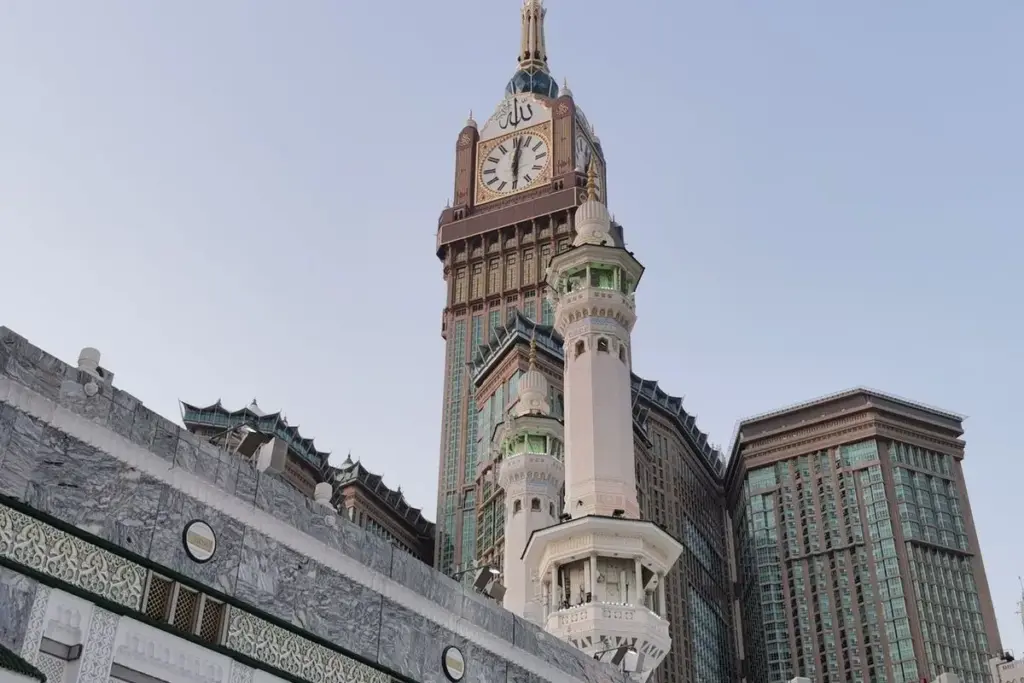
Guinness World Records has officially recognized two remarkable attractions within the iconic Makkah Clock Tower, cementing the skyscraper’s status as a global architectural marvel. The museum situated inside the tower at 426.875 meters above ground has been named the highest museum in a building, while its towering outdoor observation deck at 560.875 meters secured the title of the highest outdoor observation deck in the world.
The Royal Commission for Makkah City and Holy Sites announced these prestigious recognitions, aligning the new titles with ongoing efforts to upgrade and expand facilities for residents, pilgrims, and international visitors. Both record-breaking attractions are located within the seven-tower Abraj Al-Bait complex, which stands immediately adjacent to the historic Grand Mosque, Islam’s holiest site. According to Guinness measurements, the heights for both the museum and the observation deck are calculated precisely from ground level to the nearest millimeter, distinguishing the interior spaces from the overall structure of the tower itself, which reaches a staggering height of 601 meters.
These latest accolades lift the landmark’s total tally of Guinness World Records to at least five. Previous achievements centered primarily on the massive architectural clock itself, including titles for the tallest clock tower, the largest clock face, and the highest clock face in the world, a recognition initially established in late 2011. While those earlier records highlighted the monumental exterior engineering of the building, the newly certified titles focus on the cultural and experiential spaces open to the public inside the tower.
The Highest Museum in a Building Covers Astronomy and Timekeeping
Occupying the four uppermost floors of the tower, the Clock Tower Museum first opened its doors to visitors in May 2019. Its curated exhibits offer an in-depth exploration of astronomy, ancient and modern timekeeping, the rich history of Makkah, and the complex engineering feats required to build and maintain the massive clock overhead.
Within the museum, visitors can retrace the historical evolution of astronomical instruments and examine how scientific tools have been utilized for centuries to observe the crescent moon, a traditional method that marks the beginning of each Islamic month. The museum’s exhibits bridge ancient heritage with modern scientific understanding, offering educational and cultural enrichment to millions who pass through the city.
Just above the cultural exhibits, the outdoor observation deck provides sweeping panoramic views of the Grand Mosque and the sprawling urban landscape of Makkah.
Together, the museum and the observation deck serve as premier attractions that draw tourists and pilgrims seeking both spiritual reflection and a unique vantage point over the holy city.
Earlier Makkah Clock Tower Titles Centered on the Clock
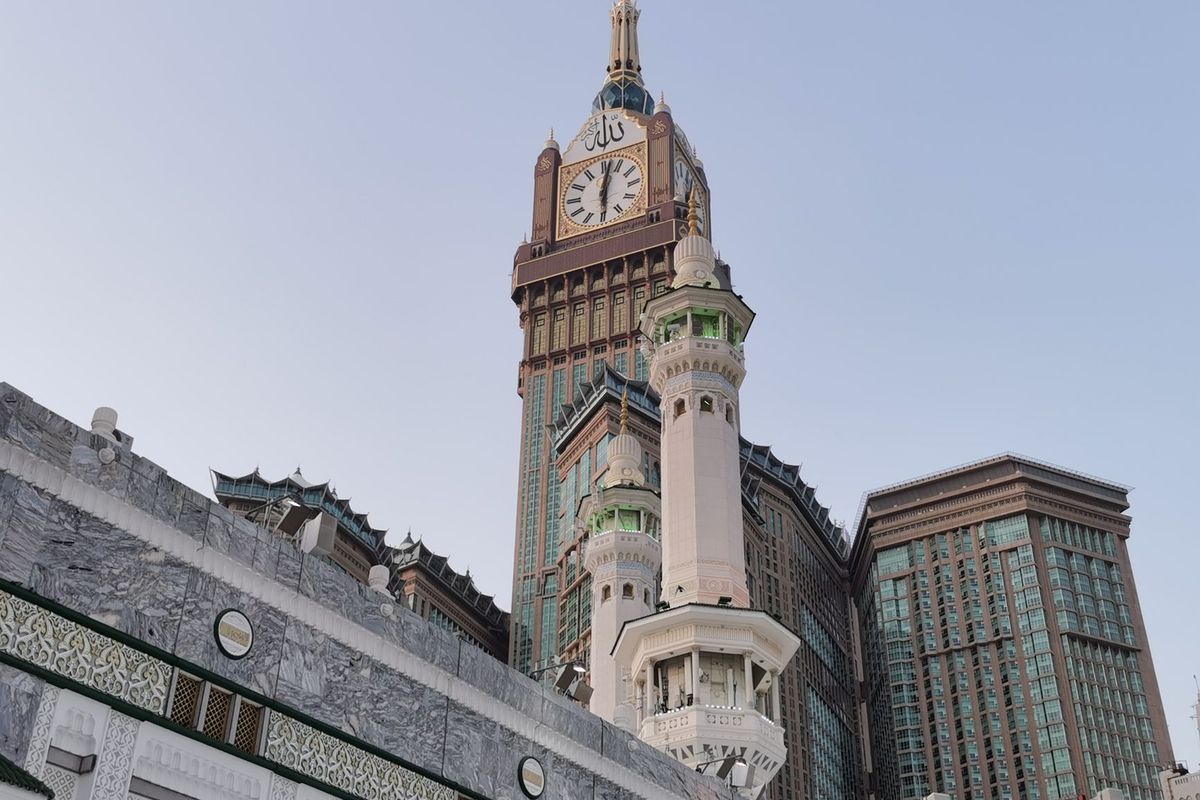
The Makkah Clock Tower has long dominated the city’s skyline. Each of the tower’s four identical clock faces measures an impressive 43 meters in diameter. Rising above the clock mechanism is a 71-meter spire that brings the total height of the building to 601 meters. Completed in 2012 as a centerpiece of the Abraj Al-Bait complex, the skyscraper was developed by the Saudi Binladin Group.
Representatives from the Royal Commission for Makkah City and Holy Sites noted that receiving the new Guinness certificates reflects a broader strategic mission to develop and enhance the city’s prominent landmarks. The initiative draws directly upon Makkah’s profound history, scientific contributions, and distinctive architecture as part of a wider campaign to elevate the international profile of its heritage. By highlighting these architectural and cultural achievements, the commission aims to present the city’s rich history to visitors from across the globe, reinforcing its standing as a premier religious and cultural destination.
Umrah Arrivals From Abroad More Than Doubled Between 2022 and 2025
The recognition of Makkah’s newest world records arrives amid a period of unprecedented growth in religious tourism across Saudi Arabia. Official figures presented by Saudi Arabia’s Minister of Hajj and Umrah, Tawfiq Al-Rabiah, indicate that Umrah pilgrims arriving from abroad surged dramatically from 8.4 million in 2022 to 18 million in 2025. Concurrently, visitors to al-Rawdah Sharifa expanded significantly, rising from 6 million to approximately 16 million over the same timeframe.
Survey data from the ministry indicates that overall pilgrim satisfaction climbed from 74 percent to 93 percent over a five-year period, comfortably surpassing the government’s initial target of 90 percent. To accommodate this massive influx of travelers, infrastructure development has accelerated across Makkah and Madinah. Accommodation capacity now exceeds 1.3 million beds distributed across roughly 400,000 rooms in approximately 4,000 distinct buildings.
Transportation hubs have similarly scaled up operations to meet surging demand. King Abdulaziz International Airport in Jeddah handled 52 million passengers in 2025, while expansion projects at Madinah’s airport are underway to increase annual passenger capacity from 8 million to 18 million, with full completion targeted for October 2027. These developments form a core component of the Pilgrim Experience Program, which was launched in 2019 as a key pillar of the broader Vision 2030 strategic framework.
Government officials have consistently emphasized the economic and spiritual dimensions of this expansion. In earlier remarks at the Saudi-European Investment Forum, Minister of Transport and Logistics Saleh Al Jasser discussed ambitious long-term projections pointing toward a combined total of more than 30 million Hajj and Umrah pilgrims annually, alongside a broader goal of welcoming over 100 million tourists a year. Al Jasser also highlighted trillions of riyals in planned investments directed toward the kingdom’s burgeoning tourism and pilgrimage sectors over the decade.
King Salman Gate Plans Cultural and Heritage Space Beside the Grand Mosque
Complementing the vertical expansion of the Makkah Clock Tower are massive ground-level urban renewal projects designed to reshape the immediate surroundings of the Grand Mosque. Among these is the King Salman Gate project, an expansive development spanning 12 million square meters adjacent to the holy site.
Launched by Crown Prince Mohammed bin Salman and developed by Rua AlHaram AlMakki, a subsidiary of the Public Investment Fund, the project is designed to integrate modern hospitality, residential properties, commercial spaces, and cultural venues. The master plan incorporates approximately 900,000 indoor and outdoor prayer spaces, advanced public transport links, and the careful restoration and development of roughly 19,000 square meters designated as historical heritage sites.
Industry projections anticipate that the multi-phase development will generate more than 300,000 jobs by 2036. Developers have stated their overarching ambition to establish Makkah as a global benchmark for sustainable and thoughtful real estate development, blending modern urban planning with the deep spiritual heritage of the region. As these infrastructure projects and record-breaking cultural sites continue to develop, Makkah remains firmly positioned at the center of international religious tourism and architectural innovation.