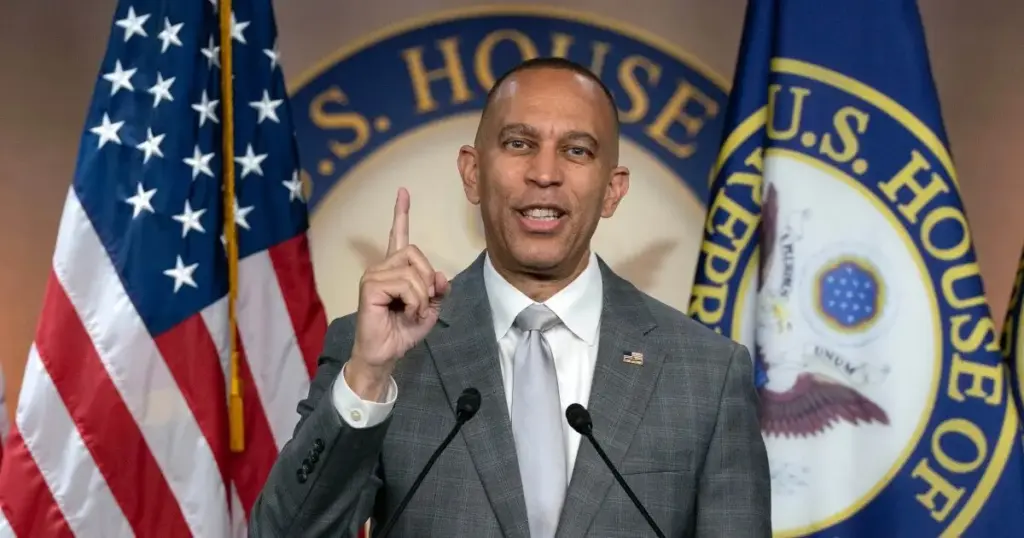
Washington, DC, USA – In a landmark moment for American political history, Representative Hakeem Jeffries has officially become the first Black lawmaker to be nominated for the powerful position of Speaker of the United States House of Representatives.
The significant political development unfolded in Washington, DC, on Wednesday during a closed-door vote among congressional Democrats. The 56-year-old New York congressman easily secured his party’s nomination for the speakership, capping off weeks of intense political realignment following the recent midterm elections.
The nomination comes just weeks after Democrats scored sweeping victories across the country in the midterm elections, successfully reclaiming control of both chambers of the US Congress. With the Democratic Party regaining its majority in the House, Jeffries is now firmly poised to replace current Republican Speaker Mike Johnson when the new Congress is officially sworn in on January 3.
The path to Wednesday’s closed-door vote was shaped by high-stakes strategic decisions within the Democratic caucus. Prior to the balloting, Jeffries confirmed plans to compel members of his party to take a recorded vote, a move designed to demonstrate unity and accountability amid growing dissent among progressive factions over his leadership style and legislative vision. While internal debates have occasionally highlighted ideological friction within the caucus, the unified party machinery ultimately rallied behind Jeffries to lock in the historic nomination.
Jeffries has served as the leader of US House Democrats since 2023, guiding the party through a challenging period in the minority following previous election cycles. His ascent through the ranks of congressional leadership has been closely watched by political analysts and party strategists alike. Known for his sharp rhetorical style, disciplined legislative strategy, and ability to navigate complex ideological divides, Jeffries has steadily consolidated his standing as the central figure of the modern Democratic Party in the House.
The designation of Jeffries as the Democratic nominee for speaker carries profound symbolic and practical weight. For decades, the speakership of the House—one of the most influential positions in the American political system, sitting second in the presidential line of succession—has been held exclusively by white lawmakers from both major political parties. By securing the nomination, Jeffries breaks a long-standing racial barrier in the legislative branch, reflecting the shifting demographics and evolving leadership landscape of the United States Congress.
As the calendar turns toward the swearing-in ceremony on January 3, the political spotlight will increasingly shift toward how Jeffries plans to wield the speaker’s gavel. Reclaiming control of both chambers of Congress gives the Democratic Party a powerful platform to advance its legislative agenda, conduct oversight of the executive branch, and negotiate major policy initiatives with the White House. However, holding a House majority requires managing a diverse and occasionally fractious caucus, particularly in an era of razor-thin legislative margins.
The upcoming transition of power marks a new chapter for Capitol Hill. With the closed-door nomination now secured and the historic nature of his candidacy firmly established on the national stage, Jeffries prepares to step into a role that will test his political acumen, bridge internal party divisions, and shape the direction of federal governance for the coming congressional term.