The landscape of global finance has long been dominated by conventional banking and investment models rooted in interest and risk speculation. However, a significant paradigm shift has been steadily gathering momentum over the past few decades, drawing the attention of economists, policymakers, and everyday investors alike. At the heart of this movement is Islamic finance—a system deeply anchored in ethical principles, asset-backing, and shared risk. Far from being a niche market restricted exclusively to followers of Islam, Islamic finance is increasingly recognized as a universally accessible financial framework capable of serving all of mankind, regardless of a customer’s religious background.
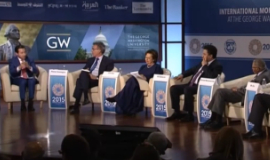
This universal applicability was notably highlighted by former Turkish Deputy Prime Minister Ali Babacan during a high-profile discussion hosted by the International Monetary Fund (IMF) in May 2015. Speaking to an international audience of financial experts, policymakers, and global economic leaders, Babacan emphasized that the foundational tenets of Islamic finance—transparency, social responsibility, the prohibition of excessive uncertainty, and the avoidance of usury—offer viable and stable economic solutions that transcend religious boundaries. His remarks underscored a growing global realization that ethical investing is not merely a matter of faith, but a prudent and sustainable approach to long-term wealth creation.
In an era where modern investors are increasingly seeking ways to "get rich slowly" through deliberate, sustainable wealth growth rather than high-stakes speculation, the philosophy behind halal ethical investments resonates deeply. The core principles of Islamic finance prohibit investing in sectors deemed harmful to society or the environment, such as conventional gambling, alcohol, tobacco, weapons manufacturing, and pornography. Furthermore, the prohibition of riba—the charging or paying of interest—encourages a model where financiers and entrepreneurs share in both profits and losses, aligning the financial interests of all parties involved and fostering a more equitable distribution of wealth.
This risk-sharing ethos creates a natural alignment with modern environmental, social, and governance (ESG) investing criteria, which have become a cornerstone of contemporary mainstream finance. Because Islamic finance requires investments to be tied to tangible, real-world economic activities and physical assets, it inherently shields investors from the hazards of over-leveraged, purely speculative financial instruments that have historically triggered global economic downturns. Consequently, individuals looking for stable, values-driven asset growth find that halal investment avenues provide a secure alternative that protects their capital while generating sustainable returns.

The integration of Islamic finance into the broader global economic architecture reflects a broader desire for financial systems that prioritize human well-being and economic justice. As international financial institutions like the IMF continue to examine inclusive economic models, the dialogue surrounding Islamic finance has evolved from a regional discussion into a global conversation about the future of ethical capitalism. Leaders such as Ali Babacan have played a crucial role in framing this discourse, pointing out that financial resilience and ethical integrity are mutually reinforcing goals.
Ultimately, the enduring appeal of Islamic finance lies in its timeless commitment to responsibility and community welfare. By promoting a system where wealth is generated through productive economic participation rather than monetary manipulation, halal ethical investments offer a blueprint for financial stability that speaks to universal human values. As more investors around the world look for ways to harmonize their financial portfolios with their ethical convictions, the principles articulated on international stages continue to guide the path toward a more inclusive and resilient global economy.