When a parent dies, the emotional shock and immediate grief are only the beginning of a long and difficult journey for the surviving family. For many widowed mothers and grandparents who step forward to care for orphaned children, the sudden loss of a primary breadwinner can push an already fragile household deeper into a cycle of poverty. The ripple effects touch every aspect of daily life, threatening food security, housing stability, and access to education.
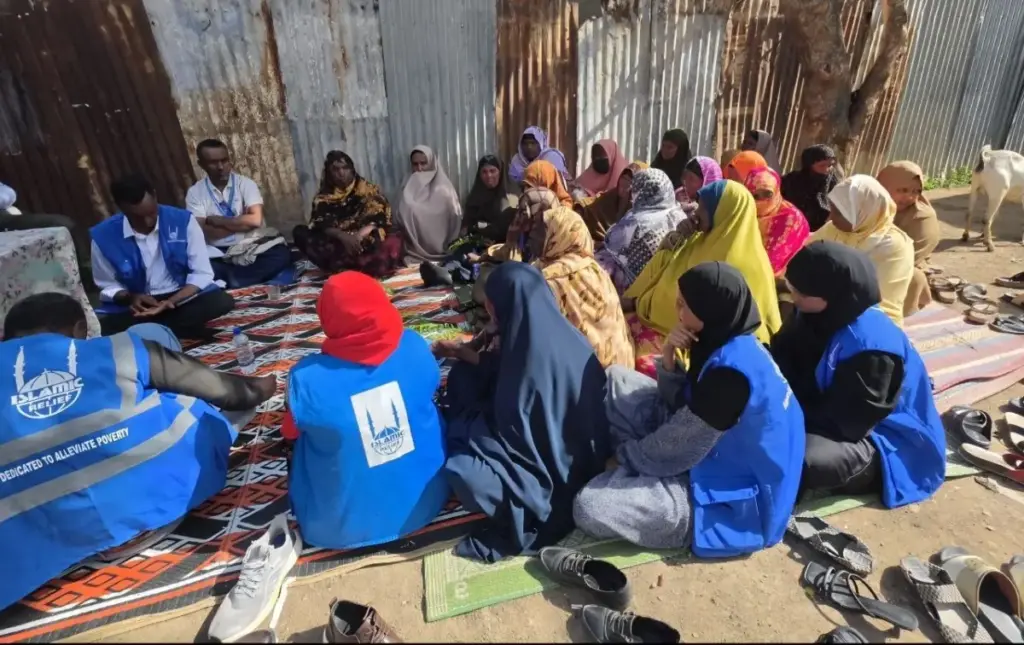
In May, Claire Bedwell-Thomas and Osob Osman, two members of Islamic Relief Worldwide’s Global Monitoring, Evaluation, Accountability, and Learning (MEAL) team, traveled to Ethiopia to witness firsthand how recent and ongoing community projects are addressing these profound challenges. Their mission was to evaluate initiatives designed to support widowed mothers as they work to boost their household incomes and secure a stable future for their children.
Operating in Ethiopia’s Somali Region, Islamic Relief’s Orphan Sponsorship Programme (OSP) provides a vital financial lifeline. The programme helps vulnerable families cover essential daily needs such as food, clothing, and education. However, during their recent visit to families in the city of Jigjiga, the MEAL team observed a transformative secondary approach at work: how pairing traditional sponsorship with Women’s Economic Empowerment initiatives allows caregivers to move beyond mere survival and toward long-term security and self-reliance.
A Foundation for Children’s Futures
Across all the households visited by the monitoring team, a single, clear message echoed from the caregivers: sponsorship is keeping children in school and offering families crucial breathing space during times of intense economic hardship. Many caregivers emphasized that education remains their highest priority for the next generation. Despite facing steep financial hurdles, these families are actively investing in their children’s learning, viewing education as the ultimate gateway out of poverty.
At the same time, caregivers spoke candidly about the harsh realities of rising living costs and inflation. While sponsorship support remains indispensable, many families acknowledged that they still require additional, robust opportunities to strengthen their household incomes and build resilience against external economic shocks. This is precisely where the Women’s Economic Empowerment project steps in, bridging the gap between daily survival and sustainable financial independence.
Turning Support into Long-Term Assets
One of the most striking and inspiring examples encountered during the field visit was the story of Nimco, a resilient widow raising seven children. Following the untimely death of her husband, Nimco and her family faced unimaginable hardship. There were times when they went entirely without food, and she struggled endlessly to find ways to provide the basic necessities for her children.
When the family was accepted into the sponsorship programme, the regular financial assistance provided an immediate lifeline. But Nimco possessed a clear vision for her family’s future that extended far beyond short-term relief. Recognizing that inflation would eventually erode the purchasing power of cash savings over time, she made the strategic decision to invest her resources into physical assets.
By carefully and resourcefully combining her sponsorship money, donor gifts, income generated from local livelihood activities, and targeted assistance from the women’s empowerment project, Nimco gradually accumulated building materials. Brick by brick, she managed to construct a brand-new house.
Nimco’s plans do not stop there. Once the necessary renovations to her original home are fully complete, she intends to rent out the newer property. This strategic move will establish a sustainable, recurring source of income that will continue to support her family and fund her children’s needs for many years to come.
Nimco’s personal journey stands as a powerful testament to what becomes possible when immediate financial assistance is thoughtfully paired with opportunities for economic empowerment. As she explained to the visiting team, sponsorship helps families survive the initial trauma of loss, while livelihood support creates the vital opportunities needed to fundamentally transform their life circumstances.
More Than Income
While increasing household revenue is a critical component of poverty alleviation, the women participating in the project spoke just as passionately about something far less tangible, yet equally transformative: confidence.
Many of the participants described how they had previously operated small, informal businesses in total isolation, possessing little to no access to formal guidance, professional training, or peer support. Through the self-help groups and formal cooperatives established by the project, these women have developed robust local networks. These platforms allow them to share daily experiences, discuss operational challenges, and learn valuable lessons from one another.
One participant summarized the profound impact of this collective approach with a striking observation: “Before I was just using one brain. Now there are 20 brains.”
These cooperative groups meet on a regular schedule to pool their savings, review financial progress, analyze business strategies, and hold one another accountable. Women frequently highlight the extensive knowledge they have gained in vital areas such as financial management, basic leadership, business planning, and household decision-making. Beyond the technical skills, they place immense value on the deep friendships and enduring solidarity that have naturally blossomed within the groups.
What initially began as structured project activities has organically evolved into a powerful network of mutual support. Here, women actively encourage one another, troubleshoot problems collaboratively, and celebrate each individual success as a shared victory.
Building a Pathway Out of Poverty
During a focus group discussion conducted with one of the local women’s cooperatives, participants repeatedly returned to a central theme: the project has fundamentally expanded their horizons. They described receiving extensive training and mentorship, speaking with immense pride about their ability to apply new business skills in their daily routines.
Many participants were able to confidently explain how they calculate operational profits, deduct business expenses, and manage household savings. This fluency demonstrates that the theoretical knowledge imparted by the project is already translating seamlessly into practical, revenue-generating actions in the marketplace.
Perhaps the most resonant reflection of the visit occurred when the team asked the women how vital the livelihood component was when implemented alongside traditional orphan sponsorship.
Significantly, the women did not limit their answers to discussions of money or capital. Instead, they spoke eloquently about knowledge, self-assurance, and expanded opportunity, summarizing their collective experience with the phrase: “Our brains are widened.”
Looking Ahead
The personal stories and community successes documented in Ethiopia serve as a powerful reminder that complex challenges like poverty cannot be effectively addressed through a single, isolated intervention.
Orphan sponsorship provides a crucial foundational layer, helping children remain enrolled in school and ensuring that vulnerable families can reliably meet their immediate physical needs. Women’s economic empowerment builds directly upon that secure foundation by equipping caregivers with the practical skills, psychological confidence, social networks, and economic opportunities required to drive lasting, generational change.
Together, these complementary approaches empower families to do far more than simply cope with hardship. They actively enable widows, grandparents, and other dedicated caregivers to launch viable businesses, accumulate tangible assets, increase their household resilience, and invest with confidence in brighter futures for their children.
As the team prepared to leave Jigjiga, one clear reality stood out: these women are not sitting back and waiting for change to happen to them. Given the right tools, guidance, and support, they are actively creating that change with their own hands.
Islamic Relief’s Orphan Sponsorship Programme continues to provide critical support to tens of thousands of children in need worldwide, creating pathways to stability and education across diverse communities.