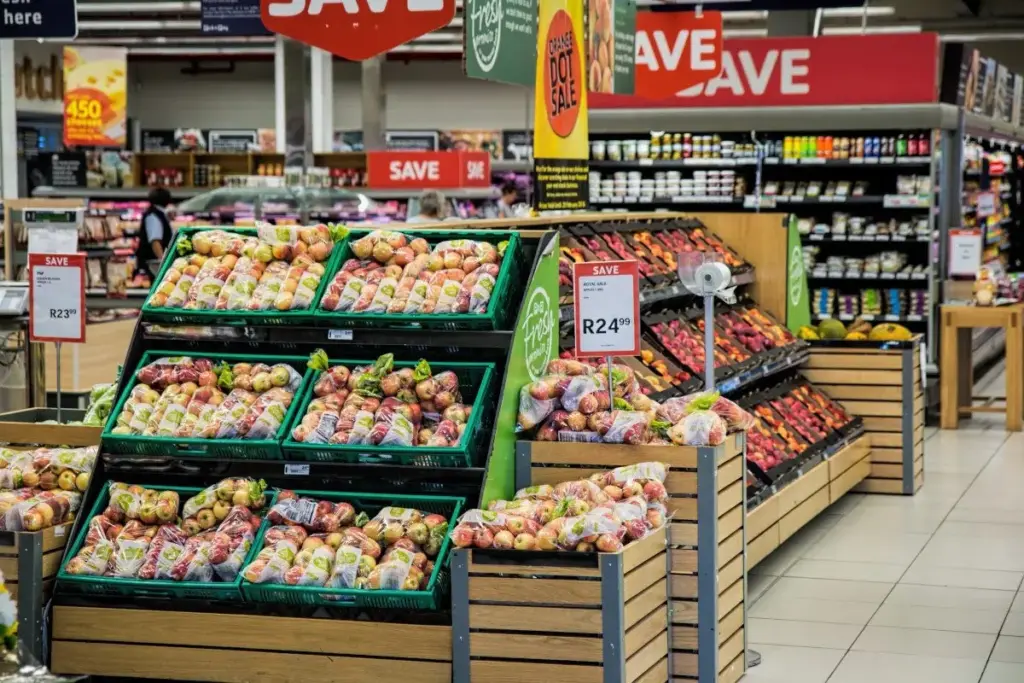
For millions of shoppers worldwide, buying halal food is not a conscious religious choice. More often than not, it is simply what happens to be sitting on the grocery shelf, stacked neatly at the meat counter, or prepped in a ready-to-eat meal package, frequently bearing no explicit religious label at all. Yet, when non-Muslim consumers intentionally seek out and select halal-certified products, peer-reviewed academic research indicates they are driven by a distinct mix of perceived food safety, cleanliness, familiarity with diverse cuisines, and an overlap with clean-label or ethical consumer trends. At the same time, animal welfare considerations cut both ways, serving as a primary motivator for some buyers while pushing others away.
This dynamic matters immensely because the commercial reality of the halal food market extends far beyond its traditional religious base. Muslim consumers around the globe spent an estimated $1.53 trillion on food and beverages in 2024, a formidable economic footprint projected to surge to $2.06 trillion by 2029, according to the State of the Global Islamic Economy Report published by DinarStandard. Backed by Pew Research Center data indicating that the global Muslim population reached roughly two billion people, or 26 percent of the world’s total population, the market’s core demographic is undeniable. However, neither of these figures accounts for the millions of non-Muslim shoppers who regularly purchase the exact same products.
This secondary consumer group holds the power to determine whether a brand seeking halal certification remains a niche option tailored to a specific demographic or successfully transitions into the mainstream market. For food manufacturers, major meat packers, and large-scale retailers operating across the United States, Europe, and Australia, this reality shapes three foundational business decisions: whether to pursue official certification, whether to prominently feature a halal logo on product packaging, and how to strategically respond if a customer campaign or public backlash turns against the designation.
Measuring the exact scope of non-Muslim halal consumption presents a significant challenge, as no official government statistics track non-Muslim spending in this category. Instead, analysts must rely on a patchwork of indirect evidence, including national slaughter data, corporate estimates, and academic surveys, each carrying its own inherent limitations.
The strongest indirect measure originates in the United Kingdom. According to the Food Standards Agency’s slaughter sector survey covering England and Wales, 72.3 percent of all sheep slaughtered during a survey week in March 2022 were killed using the halal method. By comparison, data from the Office for National Statistics from the 2021 census showed that Muslims accounted for 6.5 percent of the total population in England and Wales. While a portion of that lamb is inevitably exported, the massive statistical gap strongly suggests that countless non-Muslim households in Britain regularly consume halal-slaughtered lamb, frequently without realizing it.
Brand-level estimates point toward a similar conclusion in North America. Adnan Durrani, founder of the prominent U.S. frozen-food brand Saffron Road, estimated in a past interview with industry publication Food Dive that approximately 85 percent of his company’s consumer base consists of individuals who are neither halal consumers nor American Muslims. While corporate estimates of this nature represent internal projections rather than audited scientific data, they highlight a broader commercial trend playing out across thousands of major grocery stores and national retail chains.
Academic research into non-Muslim halal consumers consistently demonstrates that individuals who possess some familiarity with halal products are broadly receptive to them. Furthermore, consumer attitudes and social circles tend to predict purchase intentions far more accurately than religious knowledge itself. The vast majority of these peer-reviewed studies, however, originate in countries like Malaysia and Singapore, where non-Muslim populations live in close daily proximity to a Muslim majority or a large, integrated minority.
Studies conducted across Malaysia, Singapore, Canada, Spain, and the United Kingdom highlight several recurring patterns. Research focusing on urban shoppers in Malaysia, for instance, found that respondents frequently associated halal standards with enhanced food safety and environmental friendliness. Other studies emphasize that personal attitudes, cultural norms, and a sense of familiarity heavily shape a consumer’s willingness to purchase halal items. Cosmopolitan shoppers who enjoy international flavors and diverse cuisines are generally far more inclined to judge halal products favorably, whereas consumers with strong national identification or ethnocentric tendencies often exhibit more skeptical views.
Despite these insights, researchers acknowledge important caveats. Most academic samples are relatively small or rely on convenience groups such as university students, and the vast majority measure stated intentions rather than actual checkout purchases. Rigorous peer-reviewed research tracking non-Muslim halal buyers within the United States remains sparse, leaving a notable gap in contemporary market literature.
An analysis of available evidence reveals five primary drivers behind non-Muslim purchases of halal goods, with product availability and perceived quality ranking as the most influential, and price playing the least significant role.
Availability frequently acts as the default gateway. Many non-Muslims purchase halal products simply because a food supplier, restaurant operator, or retail chain chose that inventory for general distribution. In the United Kingdom, the aforementioned lamb statistics reflect this systemic availability. A similar phenomenon occurred in France when a major fast-food burger chain converted select branches to entirely halal menus. Corporate communications described the transition as a commercial success, meaning every customer walking through the door—Muslim or otherwise—was served halal meat. In the United States, major national retailers similarly stock halal chicken, lamb, and ready-to-eat meals alongside conventional grocery items, making them easily accessible to any shopper reaching for a familiar cut of meat.
Perceived quality, cleanliness, and regulatory oversight also sway many shoppers. Non-Muslim consumers often interpret a halal certification logo as an indicator of enhanced inspection and rigorous hygiene standards. While these perceptions are widespread, independent academic studies do not show that halal-certified food is inherently safer than comparable conventional food. Official government food safety oversight, such as the mandatory inspections enforced by federal agencies in the United States, applies equally to all commercially sold meat regardless of religious classification. What halal certification genuinely provides is a thoroughly documented chain of custody. Independent certifiers review ingredients, suppliers, and production lines, establishing a detailed paper trail that reassures cautious consumers. However, the rigor of these audits varies significantly, as halal certifiers do not all adhere to identical standards of depth or international recognition.
The overlap with ethical and clean-label claims represents another major factor. Halal products frequently intersect with consumer demands for antibiotic-free meat, organic farming practices, or non-GMO ingredients. When premium grocery chains initially stocked specialty frozen meals, they often lacked alternative entrees produced with antibiotic-free meat. In such cases, a shopper purchasing the product primarily for the antibiotic-free claim receives a halal-certified item as part of the package, making it difficult for researchers to isolate the exact motivation driving the sale.
Taste, cuisine, and cultural familiarity further expand the market. A substantial portion of non-Muslim spending on halal products is, in practice, spending on distinct ethnic cuisines, including Middle Eastern, South Asian, Turkish, Malaysian, and North African dishes. Street carts, kebab shops, and specialized food stalls cater to diverse urban populations, fostering a familiarity that reduces hesitation among non-Muslim diners.
Price, by contrast, is the weakest driver of halal adoption. Comprehensive government inquiries, such as an extensive review conducted by Australia’s Senate Economics References Committee, concluded that third-party halal certification does not measurably increase retail food prices. Because certification costs are distributed across large-scale manufacturing volumes, halal status remains largely price-neutral for most packaged goods, though specialized fresh meats may vary depending on local supply chains.
Animal welfare remains the most contentious issue surrounding halal food, acting simultaneously as a compelling reason to buy and a primary reason to avoid the category. Some non-Muslim consumers actively purchase halal products under the impression that traditional slaughter methods are uniquely humane, while others actively boycott them because certain halal meat processing methods do not incorporate pre-slaughter stunning.
Slaughter data reveals a complex reality regarding stunning practices. Figures from the U.K. Food Standards Agency indicate that the vast majority of halal-slaughtered cattle and a significant majority of meat chickens in England and Wales are stunned prior to slaughter, whereas a higher proportion of sheep are slaughtered without stunning. Certifiers and scholars continue to debate whether specific stunning methods are compatible with religious dietary laws, with some approving reversible stunning techniques and others rejecting any intervention before the cut. Regulatory bodies across Europe have responded to these welfare debates with varying legal frameworks, including judicial rulings that allow member states to mandate reversible stunning before religious slaughter.
This polarization has occasionally boiled over into organized public backlash and boycotts. Well-documented campaigns in Australia and France demonstrate that featuring a prominent halal logo can carry commercial risks. In Australia, several dairy and food companies faced intense social media pressure over their certification status, prompting temporary cancellations of export deals and corporate policy shifts before public support stabilized. In France, political figures publicly criticized fast-food chains for offering exclusively halal menu options, sparking intense national debates over secularism and corporate catering practices. Academic analyses confirm that consumer ethnocentrism correlates strongly with negative perceptions of halal products, suggesting that brands must carefully evaluate their target markets before adopting specific labeling strategies.
For food manufacturers and retailers, market evidence indicates that halal certification generally broadens a brand’s consumer base without incurring excessive operational costs. However, the decision to print a visible logo on product packaging remains a separate strategic choice that depends heavily on the product category, regional market dynamics, and the brand’s visibility among activist groups.
Companies navigating these choices typically weigh several practical considerations. Selecting a certifier whose seal enjoys recognized authority within target export markets is critical, as international recognition varies widely. Furthermore, transparently communicating the meaning behind a certification mark—including corporate stances on animal welfare and stunning practices—helps address the most common source of consumer pushback. Ultimately, brands cannot simply assume who is buying their products; measuring consumer demographics ensures that businesses understand the true commercial value driving their market reach.