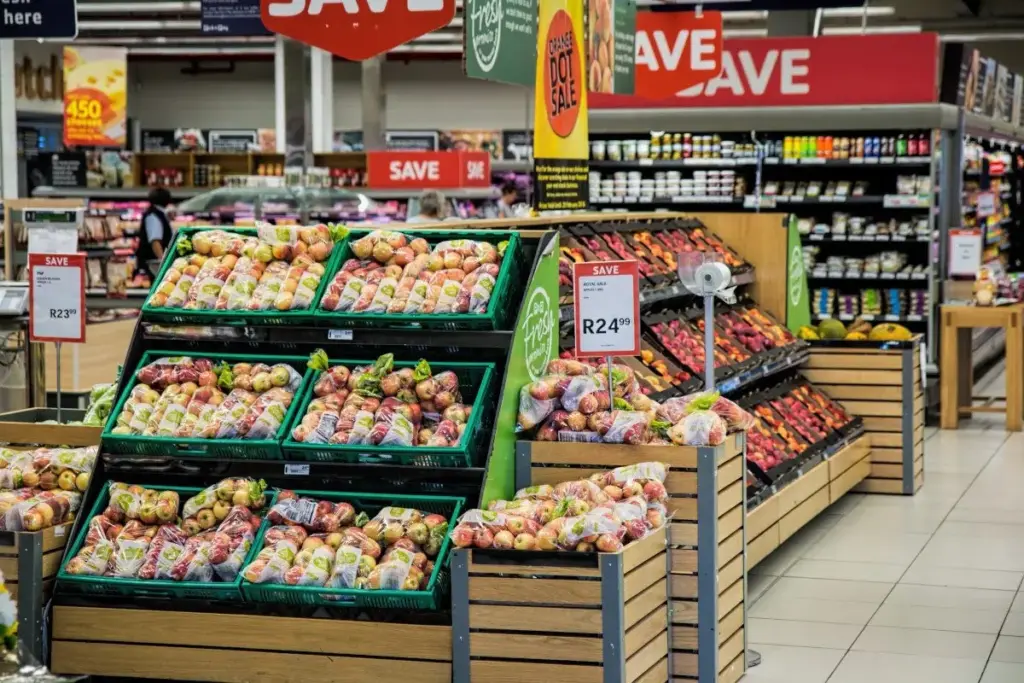
To millions of shoppers around the world, purchasing halal food is not a religious choice. It is simply a matter of what is available on the grocery shelf, at the local butcher counter, or in the refrigerated meat case, often sitting quietly without any distinct labeling at all. Yet when non-Muslim consumers intentionally seek out these products, academic research points to a complex mix of motivations, ranging from perceived food safety and cleanliness to familiarity with international cuisines and an overlap with clean-label and ethical shopping trends. At the same time, animal welfare concerns cut in both directions, serving as a primary driver for some buyers while prompting skepticism from others.
This dynamic matters immensely because the halal food market has expanded far beyond its traditional religious base. According to the State of the Global Islamic Economy Report 2025/26 by DinarStandard, Muslim consumers spent an estimated $1.53 trillion on food and beverages in 2024, a figure projected to surge to $2.06 trillion by 2029. Backed by Pew Research Center data showing a global Muslim population of roughly two billion people—accounting for 26 percent of the world’s population in 2020—these figures underscore a massive economic foundation. However, neither calculation accounts for the substantial cohort of non-Muslim consumers who purchase the exact same items every day.
This second group of buyers holds significant influence, ultimately determining whether a brand seeking halal certification remains a niche product or breaks into the mainstream. For food manufacturers, major meat packers, and large-scale retailers operating across the United States, Europe, and Australia, this reality shapes critical business strategies. Companies must continually evaluate whether to pursue formal certification, whether to prominently display certification logos on packaging, and how to navigate public relations challenges if customer campaigns unexpectedly turn against the designation.
How Many Non-Muslims Buy Halal?
Despite the clear commercial significance of non-Muslim purchasing power, no official government statistic measures non-Muslim halal spending directly in any country. Instead, analysts must rely on indirect evidence, including national slaughter data, company estimates, and academic surveys, each of which carries distinct limitations.
The strongest indirect measure comes from the United Kingdom. According to the Food Standards Agency’s 2022 slaughter sector survey, 72.3 percent of the sheep slaughtered in England and Wales during a survey week in March 2022 were killed using the halal method. By comparison, data from the Office for National Statistics 2021 census indicated that Muslims made up 6.5 percent of the population in England and Wales. While a portion of that lamb is exported, the vast statistical gap strongly suggests that many non-Muslim households in Britain routinely consume halal-slaughtered lamb, frequently without realizing it.
Brand-level estimates point toward a similar conclusion in North America. Adnan Durrani, founder of the United States-based frozen-food brand Saffron Road, estimated in a 2020 interview with Food Dive that roughly 85 percent of his consumers are neither halal consumers nor American Muslims. At the time, the brand was distributed across approximately 25,000 grocery stores, including major partnerships with thousands of Walmart locations. While such figures represent corporate estimates rather than independently audited data, they illustrate a widespread mainstream footprint.
What the Research Says About Non-Muslim Halal Buyers
Academic research consistently demonstrates that non-Muslims who possess a basic awareness of halal food are generally open to purchasing it. Studies indicate that personal attitudes and social circles serve as much stronger predictors of purchase intent than religious knowledge. Much of this academic literature originates from Malaysia and Singapore, where non-Muslim populations live alongside Muslim majorities or substantial minorities.
For instance, research published in the International Food Research Journal linked halal perceptions among non-Muslim shoppers in Malaysia to broader concepts of food safety and environmental friendliness. Subsequent studies in Singapore and Malaysia reinforced that positive attitudes and social norms—such as the purchasing habits of friends and family—drive the intention to consume halal products. Expanding this scope internationally, researchers examining consumer habits across Canada, Spain, and the United Kingdom found that cosmopolitan shoppers evaluated halal products more favorably, whereas ethnocentric consumers and those with strong national identities viewed them less favorably.
Nevertheless, these studies come with notable caveats. Most rely on relatively small sample sizes or convenience groups such as university students, and nearly all measure stated purchasing intentions rather than actual retail transactions. Furthermore, peer-reviewed research tracking non-Muslim halal consumers in the United States remains sparse, leaving a noticeable gap in domestic academic literature.
The Five Drivers Behind Non-Muslim Halal Purchases
Empirical evidence suggests that product availability and perceived quality serve as the strongest drivers for non-Muslim buyers, while price remains the weakest factor.
Availability often makes halal the default choice. Many non-Muslims purchase these products simply because a food supplier, restaurant chain, or retailer has selected them for their entire customer base. The U.K. lamb statistics illustrate this trend on a national scale. A similar phenomenon occurred in France when the fast-food chain Quick converted a portion of its restaurant network to halal-only menus, generating high commercial success where every customer, regardless of background, consumed halal meat. In the United States, major national retailers like Walmart and Costco routinely stock halal lamb, chicken, and ready-to-eat meals alongside conventional products, allowing everyday shoppers to pick them up seamlessly.
Perceived quality, cleanliness, and oversight also play a substantial role. Non-Muslim shoppers frequently interpret a halal certification logo as an indicator of enhanced inspection and rigorous standards. While peer-reviewed studies do not prove that halal-certified food is inherently safer than conventional food, certification does require strict compliance with dietary rules—such as the exclusion of pork and alcohol—and establishes a documented chain of custody. Certifiers audit ingredients, suppliers, and production lines, providing a paper trail that appeals to cautious consumers, even though audit depth and international recognition can vary significantly among certifying bodies.
Overlap with ethical and clean-label claims further drives mainstream adoption. Halal products frequently intersect with other highly sought-after attributes, such as antibiotic-free meat, organic certification, or non-GMO status. When brands enter high-end grocery chains offering antibiotic-free proteins under a halal umbrella, consumers may be primarily motivated by health or ethical claims while acquiring halal-certified food as a secondary attribute.
Taste, cuisine, and cultural familiarity represent another major catalyst. Much of the non-Muslim spending on halal food is, in practice, spending on distinct culinary traditions, including Middle Eastern, South Asian, Turkish, Malaysian, and North African cuisines. Halal street carts in major metropolitan areas, Turkish kebab shops across European capitals, and local Southeast Asian food stalls attract broad, diverse customer bases. Research indicates that consumers who enjoy international cuisines naturally hold more favorable views toward halal offerings.
Price appears to be the least influential factor in purchase decisions. An extensive inquiry by Australia’s Senate Economics References Committee concluded that third-party halal certification does not measurably increase retail food prices, as administrative costs for large manufacturers remain minimal. Consequently, halal status is largely price-neutral for packaged goods, allowing it to compete directly with conventional alternatives without imposing a financial penalty or premium.
Animal Welfare: A Divided Issue Among Consumers
Animal welfare remains the most contentious aspect of the halal market. While some non-Muslim consumers believe that religious slaughter methods prioritize humane treatment, others actively avoid halal products due to concerns over religious slaughter conducted without prior stunning.
Academic analysis of public submissions to the Australian Senate’s food certification inquiry revealed that over a third of respondents raised animal welfare concerns. However, the operational reality of stunning is complex. Official survey data from the U.K. Food Standards Agency demonstrated that the vast majority of halal-slaughtered cattle and a significant majority of meat chickens in England and Wales were stunned prior to slaughter, whereas a larger proportion of sheep were slaughtered without pre-cut stunning.
Scholars and certifiers continue to debate the compatibility of various stunning methods with religious guidelines. Many certifying organizations accept reversible stunning that leaves the animal alive prior to the cut, while others maintain strict prohibitions against any form of pre-slaughter stunning. These diverging standards have influenced regulatory developments, including a ruling by the Court of Justice of the European Union upholding member state authority to mandate reversible stunning before religious slaughter.
The Counter-Current: Backlash and Boycotts
While mainstream integration has largely succeeded, halal products have occasionally faced organized resistance and public backlash. The best-documented campaigns occurred in Australia and France, demonstrating that the presence of a halal logo can occasionally alienate certain consumer segments.
In Australia, several companies faced intense social media pressure regarding their certification status, leading some to temporarily drop and later reinstate their credentials, while others chose not to renew their certifications. Despite public campaigns alleging links between certification fees and external political or security concerns, official parliamentary inquiries found no direct connection between halal certification and illicit financing. In France, political figures publicly criticized fast-food conversions to halal menus, though legal challenges brought against the trials were swiftly withdrawn.
Academic research reinforces these findings, noting that consumer ethnocentrism and strong national identification correlate negatively with favorable evaluations of halal products. In markets characterized by high levels of consumer ethnocentrism, brands must carefully weigh the commercial risks and benefits of labeling.
Strategic Implications for Food Brands
For most food manufacturers, market evidence indicates that halal certification broadens consumer reach with minimal operational disruption, though utilizing an on-pack logo remains a distinct strategic decision. The appropriate labeling approach depends heavily on the product category, the target market, and the brand’s visibility to activist campaigns.
Brands operating in mainstream retail often benefit from selecting recognized certifiers and clearly communicating their standards—including their policies on stunning—through digital channels to address animal welfare inquiries proactively. Ultimately, understanding the composition of a brand’s customer base requires careful market analysis, ensuring that commercial strategies align with the true demographics driving sales in an increasingly globalized food economy.