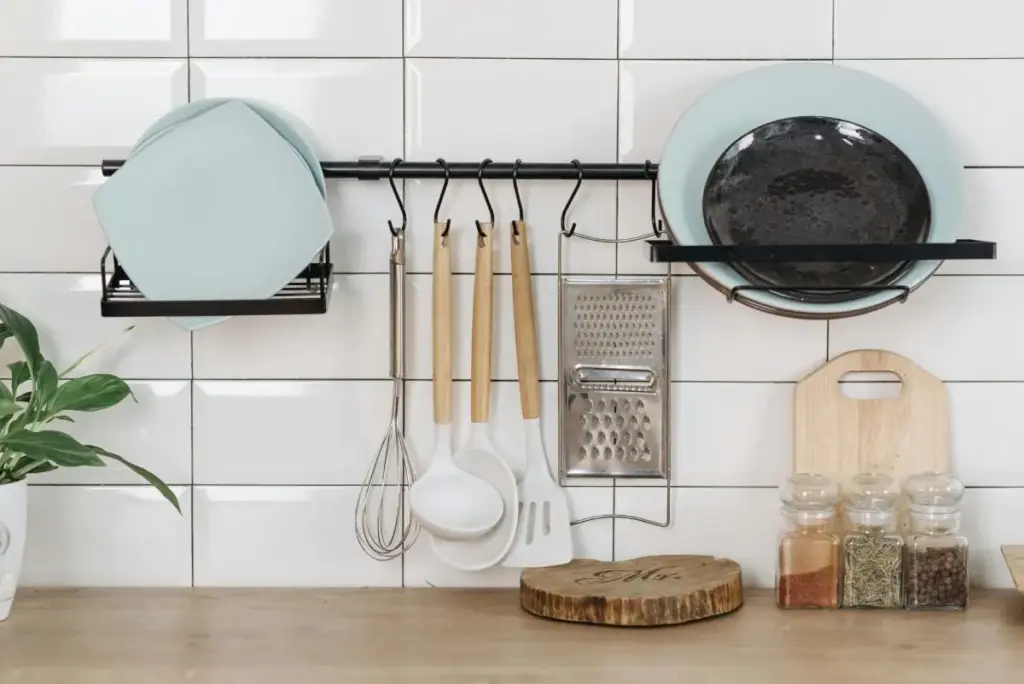
Setting up and maintaining a functional halal kitchen extends far beyond the mere acquisition of certified ingredients. According to culinary and religious guidelines, a practical halal cooking environment relies on suitable utensils, reliable sourcing, and a consistent routine designed to prevent unwanted food residues from reaching daily meals. Establishing an efficient culinary space does not require an extravagant collection of expensive appliances; rather, it centers on the deliberate organization of basic tools such as cutting boards, knives, pans, serving utensils, strainers, and secure, covered storage containers.
The foundational question for many home cooks and culinary professionals alike involves determining what makes a particular kitchen utensil suitable for a halal kitchen. To make this determination, cooks must consider the material composition of the utensil, its history of previous use, its capacity to be thoroughly cleaned, and how it will be kept separate from non-halal food sources. It is a fundamental principle that a pan or a knife cannot magically transform unsuitable ingredients into halal provisions. Consequently, the process must begin with reliable sourcing. Understanding why product origin and certification scope matter is essential for maintaining the integrity of any household or commercial food preparation area.
Historically, misconceptions have circulated regarding the absolute purity of kitchen equipment. A previous perspective suggested that utensils must never have touched non-halal meat or alcohol under any circumstances, implying that any prior contact rendered an item permanently unusable. However, religious scholars and historical precedents indicate that such an absolute stance is overly restrictive. Reference to traditional texts, specifically Sahih al-Bukhari 5478, illustrates that the companions of the Prophet Muhammad, such as Abu Tha’labah, sought guidance regarding the use of utensils belonging to the People of the Scripture. The recorded response directed him to use alternative utensils if available, and otherwise to wash those specific utensils before eating from them. This historical guidance demonstrates that a blanket claim requiring the immediate disposal of every previously used utensil is unfounded.
For specific complex scenarios involving pork or other severe impurities, individuals are encouraged to consult a qualified scholar regarding the precise cleaning requirements associated with their specific school of thought. Meanwhile, commercial kitchens are advised to strictly follow their designated certifier’s documented operational procedures. General household washing advice should never be presented as a universal religious purification ruling, as contexts and requirements can vary significantly between residential kitchens and industrial food production facilities.
To maintain organization and hygiene, kitchen equipment is generally categorized into six useful groups. The first group comprises cutting boards. Maintaining a clearly identified board exclusively for raw meat, alongside a separate board dedicated to bread, salad, and other foods consumed without further cooking, remains a vital practice. This distinction remains crucial even when all procured meat is certified halal, as the maintenance of halal status and the prevention of harmful cross-contamination from bacteria represent two distinct safety checks. Regulatory bodies, such as the United States Department of Agriculture, provide cutting-board guidance that permits the use of either wood or nonporous synthetic boards, while strongly recommending the separation of equipment used for raw animal foods versus ready-to-eat items. Regardless of the material, boards should be thoroughly washed with hot, soapy water after every use, rinsed, and dried. Items showing excessive wear, deep grooves, or cracks that are difficult to clean should be replaced promptly, as material alone does not guarantee long-term cleanliness.
Knives and preparation tools constitute the second group. Cooks are encouraged to select comfortable knives, along with any peelers or kitchen scissors that fit their practical cooking routines. Preference should always be given to designs featuring blades, handles, and joints that are straightforward to inspect and clean thoroughly. In shared living arrangements or multi-family kitchens, maintaining a labeled set of knives reserved exclusively for halal preparation can significantly reduce the risk of accidental mix-ups. Storing these tools in a designated drawer or container and clearly explaining the arrangement to everyone who utilizes the kitchen ensures ongoing compliance and harmony.
Pots, pans, and baking dishes form the third category of kitchen equipment. Cookware must be chosen based on compatibility with the specific hob or oven type, and users should always adhere strictly to the manufacturer’s instructions regarding heat exposure and cleaning methods. In mixed-use kitchens, acquiring dedicated cookware represents a practical and effective method to prevent accidental contact with non-halal ingredients. However, experts caution against describing the purchase of a completely separate set of cookware as the only viable solution for every household. Prior use, material porosity, and any required purification processes must always be carefully evaluated on a case-by-case basis.
Tongs, spoons, spatulas, and strainers represent the fourth group, requiring careful planning for both the cooking and serving phases of meal preparation. Cooks should set out a separate serving spoon for each individual dish, actively avoiding the transfer of a single utensil between halal and non-halal dishes. Furthermore, individuals must carefully inspect strainer holes, tong hinges, and any removable parts where food particles might become trapped. Cleaning procedures should follow the specific manufacturer guidelines for each product rather than assuming that stainless steel, silicone, or treated wood are universally immune to retaining microscopic residues.
Covered storage containers make up the fifth group of essential items. Effective food storage requires containers that close securely and can be thoroughly cleaned across all surfaces, including integrated seals and lid grooves. Labeling contents clearly helps ensure that halal food remains easily identifiable within shared refrigerators. Additionally, raw ingredients must be stored on lower shelves or in designated areas to prevent accidental leaks from reaching cooked or ready-to-eat foods. Labels and storage systems, however, are only effective when all members of the household adhere to the agreed-upon organizational arrangement.
Optional appliances round out the final group of kitchen tools. Modern conveniences such as slow cookers, pressure cookers, and air fryers can certainly complement a household’s cooking routine, but no appliance can ever replace rigorous ingredient checks and careful handling. Before investing in these devices, consumers should carefully evaluate whether internal components—such as the bowl, basket, rubber seals, and other food-contact surfaces—are easily accessible for deep cleaning. In many instances, a simpler pan that is easy to maintain may prove far more useful than a complex appliance that resists thorough sanitation.
Addressing common inquiries regarding kitchen setup often alleviates unnecessary stress for those transitioning to or organizing a halal-compliant home. A frequent question concerns whether homeowners are required to replace every single utensil currently in their kitchen. Experts advise against assuming that all existing utensils must be discarded. Instead, residents should carefully assess the condition, previous history of use, and overall cleanability of each item, seeking qualified religious guidance when uncertainty surrounds purification processes. Only damaged items that cannot be maintained properly need to be replaced.
Another common consideration involves the market presence of appliances bearing "halal-friendly" labels. Consumers are advised to treat such labeling as a commercial claim that requires independent verification. Buyers should inquire about the precise meaning intended by the seller, the specific scope covered by any accompanying certificate, and the credentials of the issuing organization. A marketing label alone does not establish that every meal subsequently cooked within the appliance will inherently fulfill halal requirements.
For individuals facing budget constraints when establishing a new kitchen, priority should be given to the foundational equipment necessary for preparing regular, daily meals. Starting with reliable cutting boards, a quality knife, a suitable cooking pan, basic preparation and serving tools, and dependable storage containers provides a solid operational base. Ultimately, establishing clear household routines and practicing meticulous cleanliness remain far more valuable than accumulating a vast array of expensive kitchen gadgets.