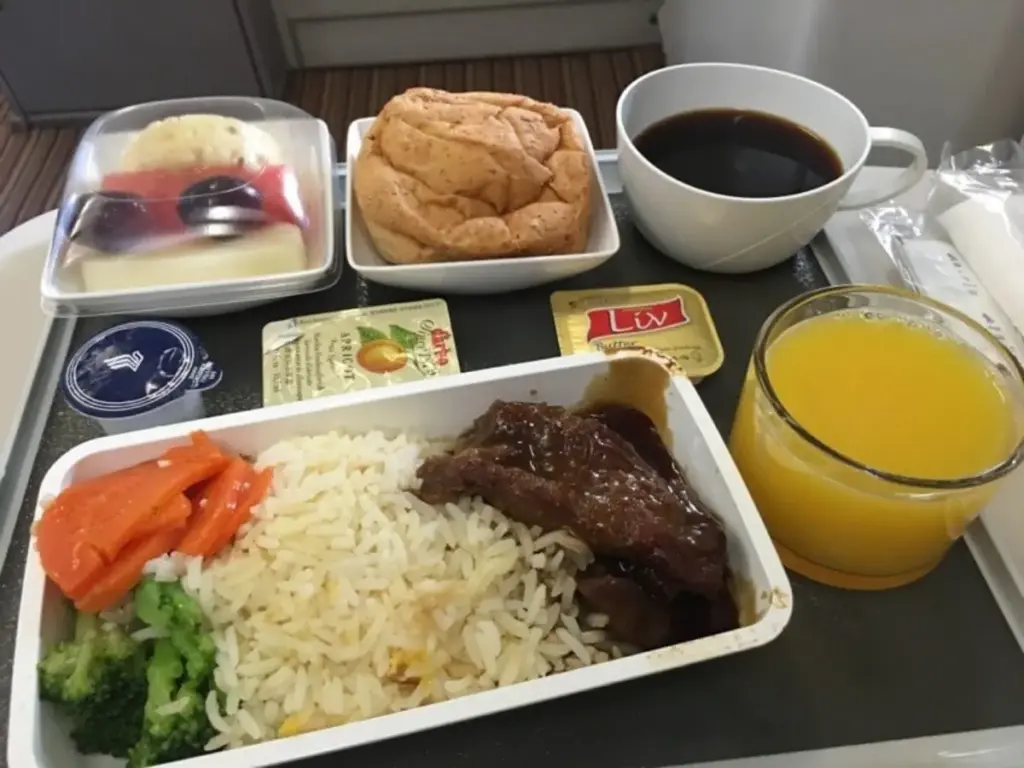
For millions of Muslim travelers navigating the global aviation network, ordering a special meal feels like a straightforward safeguard. You log into your airline booking, request a "Muslim meal" using the universal code, and trust that the tray handed to you at 30,000 feet respects your religious dietary laws.
However, a closer look at modern airline catering policies reveals a complex web of varying standards, airline-specific definitions, and subtle technicalities that often leave travelers confused. While a handful of major global carriers ensure that every single meal served on their aircraft is fully halal, many other international airlines offer a very different product: a specialized meal designed strictly to exclude pork and alcohol, but which falls short of official halal certification.
This distinction is the source of widespread misunderstanding among passengers. A meal prepared without pork or wine-based sauces can still feature poultry or beef sourced from standard commercial slaughterhouses that do not comply with Islamic dietary requirements. Because the booking code itself only directs the caterer on what to load, the actual contents of the meal depend entirely on individual airline policy, regional catering contracts, and the certification standards of local food suppliers.
Decoding the MOML "Muslim Meal" Booking Code
The letters MOML represent a standardized booking code rather than a quality assurance certificate. Across the global airline industry, reservation systems utilize a family of four-letter special-meal codes that travel agents and passengers type into reservation systems, sitting alongside codes like KSML for kosher meals and HNML for Hindu non-vegetarian options. In older legacy reservation platforms, the code was occasionally spelled out as a "Moslem meal."
While these letters remain identical across virtually every airline operating today, the underlying guarantees vary significantly from one carrier to another.
A comparison of major North American carriers highlights this disparity. American Airlines describes its Muslim meal as one that contains no pork, pork by-products, or alcohol-derived ingredients, explicitly noting that it makes no halal certification claims except on flights operating to and from Doha, where all onboard meals are fully certified. Meanwhile, Delta Air Lines utilizes a nearly identical exclusion list for its ingredients but adds a crucial guarantee, explicitly stating that all its Muslim meals are halal certified. Consequently, a passenger booking the MOML code on both airlines receives the exact same reservation entry but encounters two entirely different standards of compliance.
This gap exposes the primary misconception held by travelers. A meal devoid of pork and wine reduction can still incorporate meat from standard commercial processing plants, a practice that many practicing Muslims choose to avoid. The booking code alone provides no inherent visibility into the slaughter method or the supply chain history of the protein on the tray.
Global Carriers and Diverging Halal Policies
Major Gulf carriers—including Emirates, Qatar Airways, and Etihad—alongside Malaysia Airlines, maintain a policy where all standard meals served across their networks are fully halal. On these carriers, Muslim passengers generally do not need to request a special meal in advance. Similarly, Turkish Airlines prepares its standard catering in alignment with Islamic dietary laws under normal operating circumstances.
In contrast, North American, European, and many Asian carriers require halal options to be ordered in advance as special meals, with terminology ranging widely from fully certified to simply free of pork.
Emirates, Qatar Airways, Etihad, and Malaysia Airlines maintain that all meals on their operated flights are halal. Turkish Airlines indicates its meals follow Islamic dietary laws under normal circumstances, though this qualifier leaves operational room for substitute caterers at outstation airports or during unexpected operational disruptions, situations where the airline does not always specify alternative procedures.
Among other carriers, Delta Air Lines states that its Muslim meals are halal certified while excluding pork and alcohol. United Airlines expanded its special-meal categories to include enhanced protein options, though its special meal services generally apply primarily to longer-haul flights exceeding 2,000 miles that feature scheduled meal service. American Airlines maintains its pork- and alcohol-free policy for Muslim meals while restricting full halal certification claims to its Doha routes. British Airways prepares its halal options according to standard guidelines, though it does not offer special meals on short-haul Euro Traveller routes. Singapore Airlines provides Muslim meals prepared without pork, lard, or alcohol by halal-certified suppliers, but explicitly notes that the meals themselves do not carry a formal halal certificate.
India presents a distinct regulatory and operational landscape. Following its corporate merger with Vistara, Air India announced that halal-certified food would be allocated exclusively to passengers who pre-book the Muslim meal option. At the same time, flights operating to and from Jeddah, Dammam, Riyadh, and Medina, alongside dedicated Hajj flights, continue to serve exclusively halal meals.
The Nuance Between Halal and Halal-Certified in the Air
A formal halal certificate is issued to a ground-based kitchen facility and its specific supply chain partners, rather than to an aircraft galley. This operational reality explains why certain airlines that utilize fully halal kitchens still decline to label the final served meal as officially certified.
Singapore Airlines publicly clarified this distinction following a passenger inquiry. A company spokesperson explained that its Muslim meals are prepared without pork, lard, or alcohol by certified suppliers, but remain uncertified because aircraft serviceware is not physically segregated by meal type and meals are ultimately reheated inside the same commercial convection ovens alongside non-halal dishes.

The Islamic Religious Council of Singapore noted that a lack of formal certification for the final plated meal does not automatically render the food impermissible, emphasizing that meals departing Singapore are prepared in certified establishments, that onboard tasks involve reheating rather than primary cooking, and that sealed packaging maintains physical separation between different meal types.
While sealed packaging effectively segregates meals during reheating, the more complex variable remains the sourcing of the meat itself on carriers that promise only the absence of pork. Singapore Airlines explicitly details its operational boundaries, whereas many other international carriers provide minimal transparency regarding their supply chains.
The Role of Contract Caterers and Regional Variations
Airlines rarely prepare their own inflight meals. Instead, global operations rely heavily on specialized contract caterers, meaning the halal status of a specific tray is tied directly to the commercial kitchen located at the departure airport—a variable that can shift whenever airline catering contracts are renegotiated.
The scale of this industry is substantial. Global airline catering represents a multi-billion-euro market projected to expand steadily over the coming years, with major international caterers controlling significant shares of global volume. Within this market, the Middle East and Africa represent some of the fastest-growing regions for aviation catering services.
Halal certification typically occurs at this foundational kitchen level. Specialized facilities, such as dedicated halal kitchens operated by regional catering subsidiaries in major aviation hubs like Tokyo, supply carriers with meals prepared strictly to halal standards under formal oversight. However, commercial contracts are frequently subject to change. For example, when Malaysia Airlines concluded a long-standing catering partnership with a major local supplier, the airline implemented contingency plans that briefly permitted passengers to bring their own food, underscoring the underlying limitation of network-wide dietary claims: an airline’s promise is ultimately dependent on the specific caterer loading the aircraft on any given day. Because airlines do not routinely publish which individual caterer services every airport across their routes, regional variations remain a persistent challenge for travelers.
Scholarly Perspectives on Commercial Meat Sourcing
When an airline meal lacks formal certification, the primary theological discussion centers on the meat itself. Traditional schools of Islamic jurisprudence generally permit meat slaughtered by the People of the Book under specific conditions, though contemporary jurists hold divergent views on whether modern industrial processing methods satisfy these historical requirements.
Some contemporary scholars argue that high-speed Western commercial slaughter plants fail to meet traditional conditions and should be avoided by strict adherents, while other jurists maintain that meat produced by scriptuary traditions may be consumed if considered lawful by those communities.
For the average traveler, the practical implication is straightforward: on an airline that promises only the absence of pork, verifying the slaughter method or the specific handler of the chicken or beef is nearly impossible. Passengers adhering to stricter interpretations frequently choose to pre-order vegetarian or fish meals on such carriers, or submit written inquiries to the airline regarding meat sourcing.
The Complexities of Cabin Beverage Service
A halal-compliant meal does not necessarily translate to a completely dry aircraft cabin. Major international carriers that ensure all their meals are halal certified may simultaneously offer champagne and wine service to economy and premium passengers on various routes, while withholding alcohol on flights directed toward specific regional destinations in accordance with local preferences or cultural norms.
Because the MOML booking code pertains strictly to food ingredients and meal preparation, it has no bearing on the broader beverage cart operations within the cabin. Consequently, passengers wishing to avoid proximity to alcohol service during flight currently have no reservation mechanism to select seat zones free from beverage distribution.
Growing Demand and the Push for Transparency
Muslim travelers represent one of the fastest-growing demographics in international aviation, with annual international arrivals numbering in the hundreds of millions and contributing significantly to the global tourism economy.
Industry analysts note that modern travelers increasingly look for absolute certainty regarding their dietary requirements before stepping onto an aircraft. Yet, consumer-facing information provided by many major airlines continues to fall short of this demand. While several Muslim-friendly destinations are served predominantly by carriers whose home bases operate as halal by default, return journeys often rely on foreign caterers whose specific accreditations remain undisclosed on airline websites.
To navigate these discrepancies, travel experts recommend treating airline meal confirmation with the same rigor applied to dining establishments on the ground. Submitting written inquiries to customer service requesting the exact identity of the certified kitchen loading a specific flight remains one of the few ways to separate verified halal compliance from general marketing terminology. If an airline responds only with assurances regarding the absence of pork or alcohol rather than naming a recognized certifier, passengers can adjust their meal selections accordingly to ensure alignment with their personal dietary requirements.