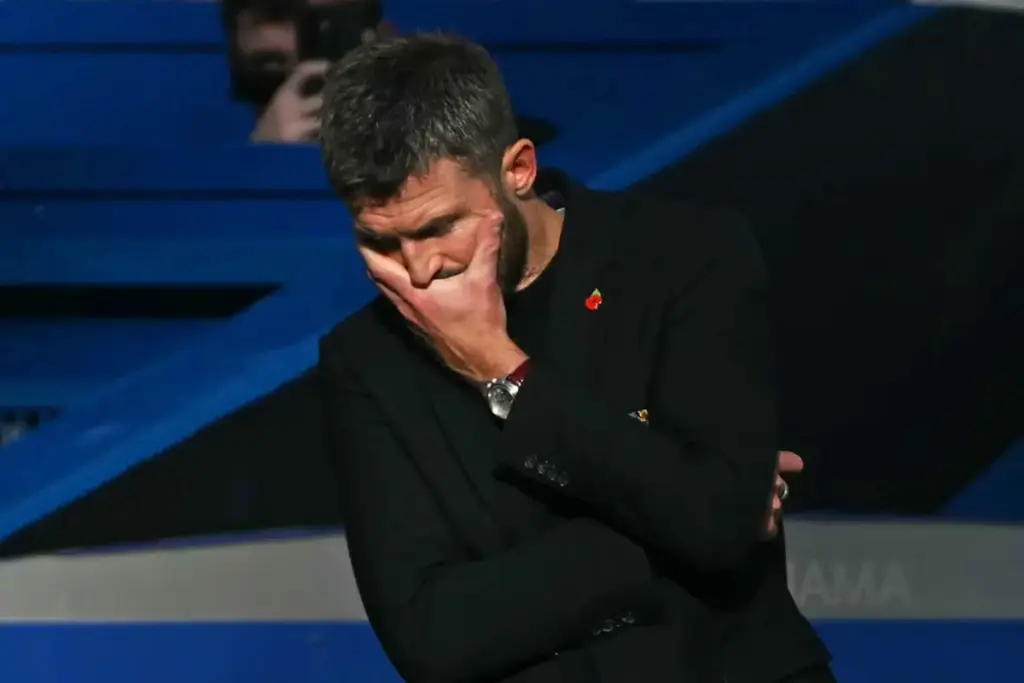
The latest setback in the capital leaves the 20-time English champions languishing in 16th place in the Premier League standings, having accumulated a meager seven points from their opening nine league matches of the campaign. They now sit precariously just one point above the bottom three, and depending on how the remaining fixtures of the weekend unfold, the club could easily slide into the relegation places. Such a scenario would represent an unimaginable nadir for a club of Manchester United’s stature, compounding the mounting pressure on Carrick and his coaching staff as the season threatens to spiral completely out of control.
This weekend’s defeat marks yet another bleak chapter in what is rapidly unfolding as one of the worst starts to a league campaign in four decades for Manchester United. Questions are now growing louder and more insistent regarding the manager’s long-term future and the overall strategic direction of the club under the current footballing structure. The optimism that once surrounded Carrick’s tenure has entirely dissipated, replaced by an atmosphere of anxiety, frustration, and fierce scrutiny from supporters and pundits alike.
The situation has escalated rapidly over the past week. Carrick had already been granted a temporary reprieve by the club hierarchy earlier in the week following United’s humiliating 3-0 home defeat to Bournemouth at Old Trafford. That particularly abject performance extended their winless streak to eight matches and left them hovering just one precarious position above the drop zone, sparking panic within the corridors of power at the club.
The fallout from the Bournemouth debacle prompted emergency discussions involving senior club officials, including chief executive Omar Berrada and director of football Jason Wilcox. During those high-level crisis talks, potential managerial replacements were openly discussed. Among the names reportedly considered by the hierarchy were Newcastle United manager Eddie Howe and Germany national team coach Julian Nagelsmann. Ultimately, however, the club’s decision-makers opted to exercise caution, deciding to retain Carrick for the daunting trip to Stamford Bridge and giving him and his underperforming squad one final opportunity to arrest their alarming slide and turn their season around.
That reprieve now looks increasingly tenuous. Carrick had initially taken charge of the first team on an interim basis following the departure of Ruben Amorim back in January. During that initial caretaker period, Carrick earned widespread plaudits by steadying the ship, implementing a clear tactical identity, and guiding Manchester United to a commendable third-place finish in the Premier League alongside securing qualification for the lucrative UEFA Champions League.
That impressive stabilization earned him a permanent two-year contract in May, rewarded by a club desperate for continuity and stability after years of managerial churn. Yet, the team’s dramatic and unexpected collapse in the early months of the new season has placed Carrick’s position under renewed and relentless scrutiny, turning the dream job into an intense crucible.
For a brief period during the first half at Stamford Bridge, there were fleeting signs of promise that suggested United might just weather the storm. The visitors competed fiercely in the opening forty-five minutes, disrupting Chelsea’s rhythm and even finding the back of the net when Matheus Cunha finished clinically past the goalkeeper. However, celebrations were cut short as the assistant referee’s flag went up, with Cunha’s effort correctly ruled out for offside. It proved to be the high-water mark of United’s afternoon, as their fragile defensive resistance and attacking cohesion completely faded once the second half got underway, allowing Chelsea to seize total control of the contest.
The deadlock was broken just five minutes after the restart. Morgan Rogers produced an impressive individual piece of brilliance to alter the course of the match in the 50th minute. Driving purposefully through a static and passive Manchester United midfield, Rogers continued his surge through the heart of the visitors’ defense before expertly lifting the ball over advancing goalkeeper Senne Lammens to give Chelsea a deserved lead.
Things went from bad to worse for the traveling side shortly after, as their afternoon completely unraveled. Defender Lisandro Martínez received a red card that left United with a numerical disadvantage of ten men for the remainder of the contest, effectively extinguishing any realistic hopes of mounting a second-half comeback.
The chaotic sequence began when the Argentina international was initially shown a yellow card for cynically pulling back goalscorer Morgan Rogers by his jersey during a transitional phase of play. Just moments later, tensions boiled over further during a Chelsea corner kick in the 63rd minute. In a flash of indiscipline, Martínez struck opposing midfielder Wesley Fofana directly in the face with a raised elbow while jostling for position inside the penalty area.
Referee Peter Bankes was instructed to review the violent conduct incident on the pitchside pitch monitor. After examining the replay, the match official quickly rescinded or built upon the initial caution, showing Martínez a second yellow card and subsequently a red, while simultaneously pointing to the penalty spot to award Chelsea a golden opportunity to double their advantage.
Up stepped Cole Palmer, who showed characteristic composure under pressure. The playmaker coolly converted from twelve yards out, sending Lammens the wrong way to double the hosts’ advantage to 2-0 and effectively ending any lingering hopes Manchester United had of engineering a recovery.
Martínez’s damaging sending-off also served to drag unwanted attention back onto the center-back, who had already found himself at the center of internal controversy just two weeks prior. The defender had attracted fierce criticism from analysts and supporters alike after taking part in an explosive post-match interview in which he publicly questioned the club’s hierarchy and voiced open concerns regarding Manchester United’s recruitment strategy during the summer transfer window.
The friction surrounding the player was further highlighted as he trudged slowly off the Stamford Bridge turf following his red card. Manager Michael Carrick appeared to pointedly ignore the defender as he made his way down the touchline toward the tunnel, creating another uncomfortable and telling visual moment in an increasingly disastrous afternoon for the beleaguered United boss.
The defeat leaves Manchester United facing a critical, season-defining juncture in their campaign. With confidence visibly drained and the pressure on the management team reaching a boiling point, the fixture list offers no respite. United must quickly regroup to prepare for a crucial Champions League home fixture against Italian side Roma early next week. Following that continental test, they face another daunting domestic assignment in the Premier League against a high-flying Aston Villa side, all before the domestic calendar pauses for the upcoming international break. For Carrick, every upcoming training session and match now feels like a referendum on his managerial future.