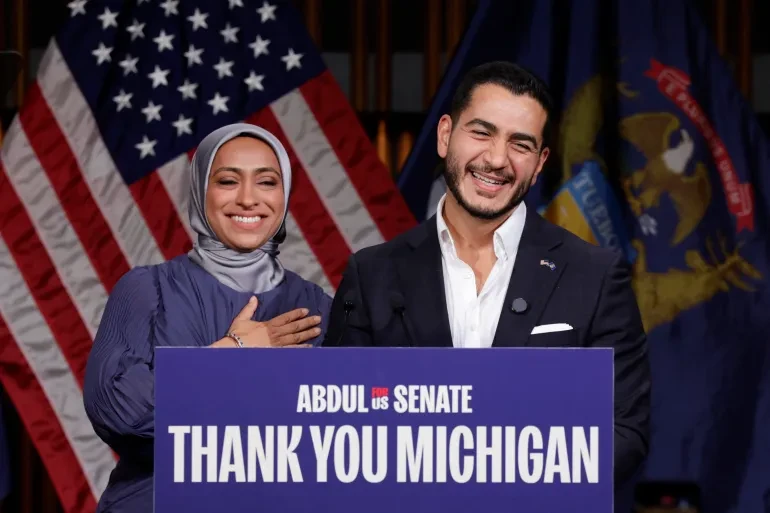
Anyone who sells halal food to the Gulf, ships pharmaceuticals through Asia, or structures Islamic financial instruments like sukuk for a living knows the persistent challenge of planning around a moving target. Throughout the past year, that target moved more erratically than most. International trade tariffs shifted underneath exporters’ feet as courts debated their legality, while an ongoing conflict in the Gulf made maritime shipping routes a daily question of risk and viability. Then, on November 3, American voters went to the polls and delivered a decisive shift in power, handing Democrats control of both chambers of Congress.
Most mainstream political coverage has focused heavily on the immediate implications for Washington, examining how divided government or a new legislative majority will alter domestic policy. However, for the people who actually ship, certify, and finance halal goods globally, the consequences reach much further than Capitol Hill, directly impacting bottom lines, supply chain logistics, and long-term investment strategies.
What Happened on Election Night and the Lame-Duck Reality
The electoral outcome materialized late into the evening as the Associated Press called the Senate for Democrats first, followed shortly after by the House. Live media coverage walked through the sequence as the returns unfolded, with analysts describing the outcome as a significant political shift that flipped multiple Republican-held Senate seats.
This dramatic realignment carries immediate administrative consequences because the newly elected Congress is not scheduled to be sworn in until January 3, 2027. That leaves a critical two-month window—a traditional lame-duck period—in which the outgoing Republican majority still controls the legislative agenda. For trade-dependent businesses, this gap matters profoundly. Anything the current administration wants to lock in before the incoming Congress arrives could be pushed through rapidly, altering regulatory frameworks overnight. Exporters must remain vigilant during this transition, as eleventh-hour executive actions or policy rollouts could disrupt existing supply contracts before the new congressional balance of power takes effect.
Tariffs and the Ongoing Regulatory Maze
The landscape of United States tariffs has long been characterized by a complicated series of legal challenges, setbacks, and executive replacements. The Supreme Court previously struck down the emergency tariffs that sat at the very center of the administration’s broader trade policy. Following that judicial defeat, the Court of International Trade ruled in May that subsequent replacement tariffs implemented under Section 122 were similarly invalid. A newer set of trade restrictions now covers more than 80 countries, yet legal challenges are actively moving through the court system, leaving international traders in a state of continuous uncertainty.
With Democrats securing control of both congressional chambers, the new legislative majority can aggressively push for votes aimed at ending emergency tariffs and utilize congressional hearings to press trade officials for definitive answers. Crucially, however, a newly empowered opposition in Congress cannot unilaterally override a presidential veto without securing a two-thirds supermajority in both chambers. Consequently, the rules governing international commerce will keep shifting for the foreseeable future, potentially remaining volatile for the remainder of the current presidential term.
For exporters navigating this environment, a practical lesson has emerged: pricing 2027 contracts as if today’s rates will hold is no longer a viable business strategy. Companies must build financial buffers into their projections to account for sudden rate changes, potential refund claims, and unexpected court rulings that can reverse established trade policies overnight.
The Gulf Problem and Shipping Route Vulnerabilities
For many businesses operating within the global halal sector, the ongoing conflict in the Gulf represents an even more pressing and volatile worry. The Gulf region remains a primary destination for high-volume food shipments, vital pharmaceuticals, and cosmetic goods. The ongoing war has cast a persistent shadow over the vital maritime and overland routes that carry these commodities to market.
The military conflict began on February 28, 2026, marked by initial United States and Israeli strikes across the region. Although a temporary ceasefire was brokered in April, it ultimately failed to hold, and active fighting resumed in May. In October, reports highlighted statements indicating that the administration would avoid attacking Iran prior to the midterm elections. That assurance functioned largely as an election-season pledge, and with the voting now concluded, businesses face a starkly different geopolitical reality.
Companies whose commercial operations depend heavily on Gulf shipping routes must immediately reassess their logistics. Industry experts advise building at least two distinct cost scenarios for 2027 operations and thoroughly reviewing existing contracts for force majeure and delivery clauses now—long before a critical shipment finds itself stranded due to sudden escalations.
Where Buyers Might Look Next for Trade and Certification
When traditional trade routes become prohibitively expensive, politically fraught, or physically risky, commercial buyers naturally begin seeking alternatives. This diversification process is already well underway across the sector, opening significant new avenues for emerging trade partners.
Countries such as Malaysia, Indonesia, the United Arab Emirates, Saudi Arabia, and Türkiye are increasingly positioned as primary candidates for new trade agreements and certification partnerships. Türkiye’s total exports reached a historic record of $409.1 billion in the 12-month period leading up to September. Furthermore, the D-8 Organization for Economic Cooperation has restated an ambitious $500 billion intra-bloc trade target for 2030, a goal that heavily depends on member states fully utilizing their existing preferential trade agreements. Exporters equipped with globally recognized halal certifications will find themselves in a much stronger position to pivot rapidly if primary orders need to be rerouted due to ongoing regional disruptions.
At the same time, international certification bodies are likely to experience heightened demand as exporters diversify their operational footprints. Recent developments underscore this trend, such as five South Korean agencies signing a unified halal export agreement in October. Meanwhile, regulatory bodies in Malaysia and Indonesia maintain distinct operational standards that are critical for mutual recognition agreements. Before dispatching any cargo, exporters must rigorously confirm whether a United States-issued halal certificate is formally accepted within their specific destination country and product category. Concurrently, Islamic financial institutions and sukuk issuers will need to monitor how shifting regional risk profiles affect deal timelines and capital deployment over the coming quarters.
What to Keep an Eye On
The recent midterm elections did not magically settle the complex and multifaceted picture of global halal trade. Instead, they fundamentally altered the political and regulatory setting in which exporters, certifiers, and financiers must make critical operational decisions for the next two years.
Businesses that proactively plan for multiple geopolitical and economic outcomes will be the ones best prepared when the next policy shift occurs. As supply chains adapt to changing tariffs, ongoing conflicts, and new legislative realities, the central question facing commercial leaders remains whether their operations are truly prepared for the next wave of changes.