
Throughout human history, celestial events such as solar and lunar eclipses have captivated observers, frequently inspiring awe, wonder, and deep-seated superstitions. In ancient times, when scientific explanations were unavailable, communities often attributed these sudden dimmings of the sun and
moon to supernatural occurrences, divine displeasure, or monumental earthly events, such as the birth or death of prominent leaders.
During the lifetime of Prophet Muhammad (peace and blessings be upon him), one such celestial phenomenon took place, providing a significant moment for the Prophet to address and correct prevailing societal myths. The event coincided with a deeply personal tragedy for the Prophet: the death of his young son, Ibrahim.
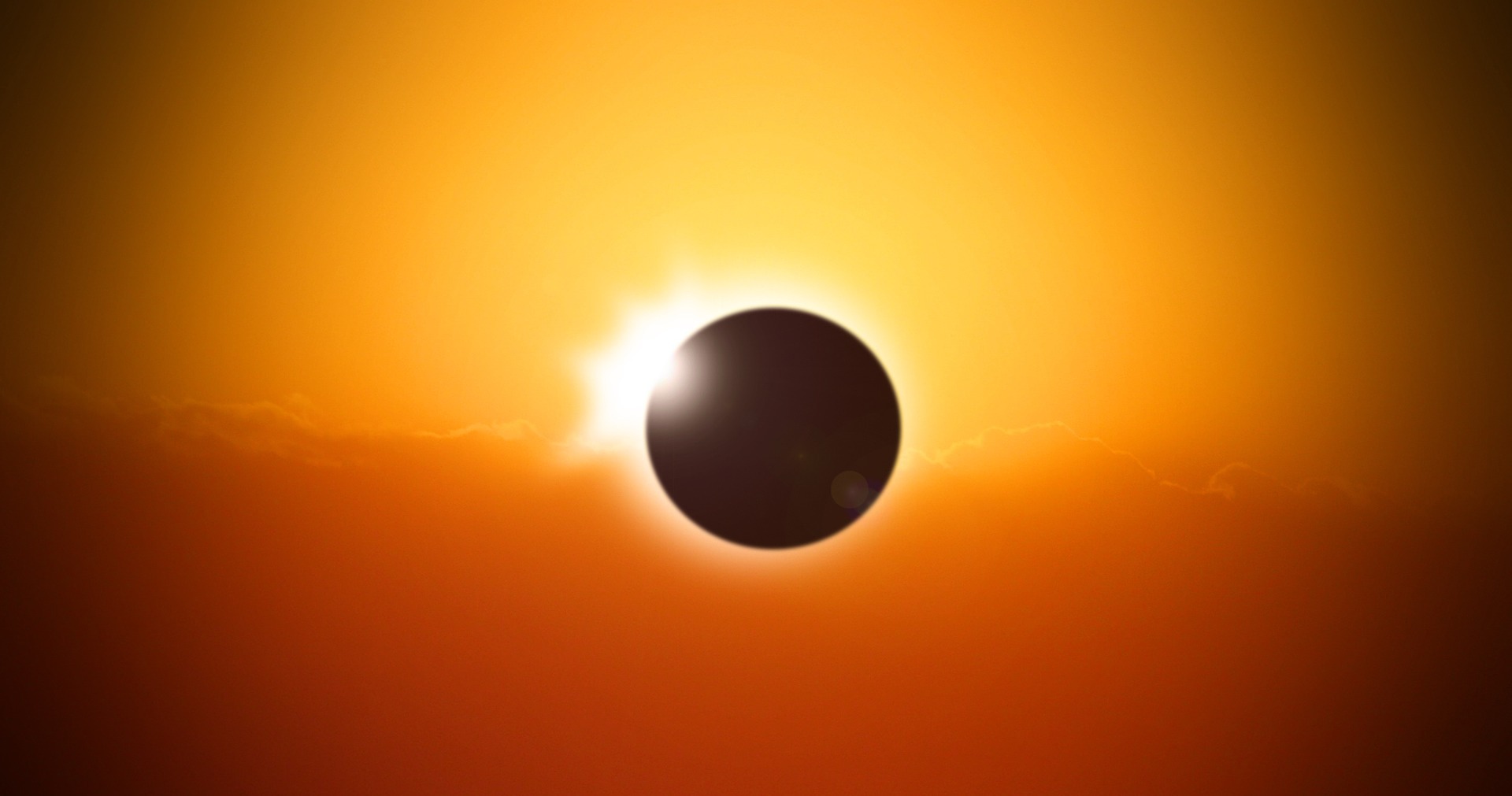
For the people of the time, the simultaneous occurrence of the solar eclipse and the death of Ibrahim appeared to be more than a mere coincidence. Many in the community quickly assumed a causal relationship, believing that the sun had hidden its light out of grief for the passing of the Prophet’s son. Rather than allowing this myth to take root, the Prophet Muhammad used the occasion to clearly distance cosmic phenomena from human affairs, redirecting the community’s attention toward theological principles and acts of worship.
To understand how this event unfolded and how it was recorded for posterity, one can look to the authoritative hadith collections, particularly Al-Jami` al-Saheeh by Imam Al-Bukhari. Within the Book on Eclipse, numerous companions of the Prophet narrated the details of that day, preserving both his actions and his explicit teachings for future generations.
According to accounts preserved in Al-Bukhari’s compilation, the reaction to the eclipse was immediate. Abu Bakra narrated that when the sun eclipsed while they were in the company of Allah’s Apostle, the Prophet stood up urgently, dragging his cloak behind him, until he entered the mosque. He led the community in a specialized two-rakat prayer that continued until the solar eclipse had cleared. Following the prayer, the Prophet delivered a clear and direct message to the congregation, stating that celestial movements are entirely independent of human mortality. "The sun and the moon do not eclipse because of someone’s death," he declared. "So whenever you see these eclipses, pray and invoke Allah till the eclipse is over."
This sentiment was reinforced by multiple narrations from other prominent companions. Abu Masud reported that the Prophet emphasized that the sun and the moon are simply signs among the signs of Allah, rather than indicators of human life or death, instructing the faithful to stand and pray upon witnessing them. A similar narration from Ibn ’Umar reiterated that neither the death nor the birth of any individual triggers a solar or lunar eclipse, framing the events strictly as divine signs that warrant prayer.

Al-Mughira bin Shu’ba specifically highlighted the context surrounding Ibrahim’s death. He noted that the solar eclipse occurred on the exact day his son Ibrahim died, leading people to voice the belief that the sun had darkened in mourning. The Prophet firmly corrected this assumption, reiterating that the sun and moon do not eclipse for the life or death of any person, and commanded that when an eclipse is observed, the faithful should pray and invoke Allah.
The detailed mechanical structure of the eclipse prayer was meticulously preserved by Aisha, the wife of the Prophet. She described how the Prophet led the people in the mosque, initiating the prayer with the Takbir and reciting from the Quran for an unusually prolonged period. He then bowed for a long duration, rose for a second recitation that was shorter than the first, bowed again for a prolonged period that was also shorter than the initial bow, and finally performed extended prostrations. He repeated this exact structure in the second rakat, completing a prayer that featured four bowings and four prostrations in total, by which time the solar eclipse had cleared.
Following the prayer, the Prophet delivered a comprehensive sermon (Khutba). After praising and glorifying Allah, he reiterated that the sun and moon are two signs of Allah that do not react to the life or death of anyone. He instructed the community that upon seeing an eclipse, they should remember Allah, make the Takbir, offer prayers, and give charity (Sadaqa).
In the same address, the Prophet underscored the gravity of moral accountability and divine displeasure regarding unlawful sexual conduct, urging his followers to remain mindful of their actions and the realities of the hereafter. Abdullah bin ’Amr also noted that during the lifetime of the Prophet, formal public announcements were made to gather the community for congregational prayer whenever a solar eclipse occurred.

The enduring nature of these prophetic traditions was emphasized in scholarly discussions recorded by later authorities. Az-Zuhri asked ’Urwa regarding an occasion when the sun eclipsed in Medina and his brother, ’Abdullah bin Az-Zubair, offered only a standard two-rakat prayer resembling the morning (Fajr) prayer. ’Urwa replied that his brother had done so because he had missed the established tradition and precedent set by the Prophet concerning the specific manner of observing eclipse prayers. Through these detailed narrations, early Islamic scholarship carefully preserved both the theological correction of ancient superstitions and the precise ritual practices established during the lifetime of Prophet Muhammad.