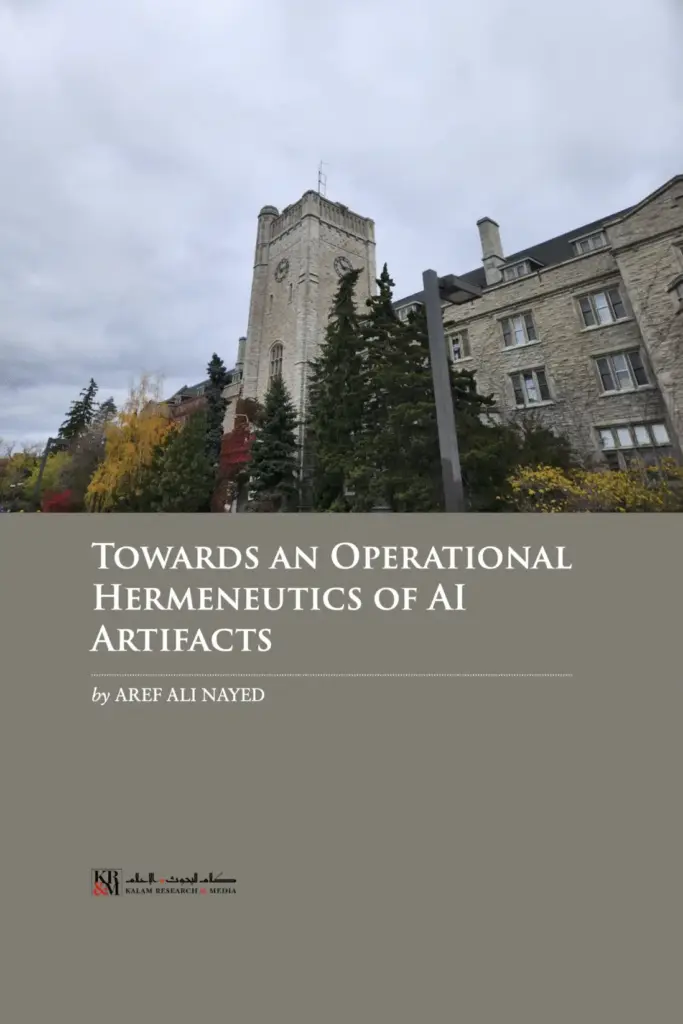
In a significant development bridging the worlds of classical philosophy and cutting-edge technology, Dr. Aref Ali Nayed has released a comprehensive new academic paper that applies foundational hermeneutic theory to contemporary artificial intelligence systems. Published in 2025 and spanning 26 pages, the monograph draws directly upon Dr. Nayed’s pioneering work in Operational Hermeneutics, a framework he originally developed at the University of Guelph during the 1990s. By extending these established interpretive principles into the realm of modern digital systems, the paper offers a timely and sophisticated new lens through which scholars, developers, and policymakers can understand, interpret, and govern AI-generated outputs.
The intersection of artificial intelligence and philosophy has become increasingly urgent as large language models, generative image creators, and automated coding platforms proliferate across global industries. While technical advancements continue to accelerate at a breathtaking pace, human frameworks for interpreting what these systems actually produce have often lagged behind. Dr. Nayed’s latest research directly addresses this gap, establishing a robust theoretical bridge that connects centuries of philosophical inquiry regarding human-made artifacts with the complex realities of machine learning and algorithmic generation.
At the core of the monograph is a systematic extension of Operational Hermeneutics to AI artifacts. Rather than treating texts, images, and computer code generated by algorithms as mere mechanical data points, the paper frames them as interpretive objects that require a sophisticated framework of understanding. To achieve this, the research traces the deep philosophical lineage of "artifacts" from classical antiquity through to modern systems theory. By connecting the teleological insights of Aristotle with the pragmatic design theories of Herbert Simon, Dr. Nayed establishes a continuous intellectual tradition that positions artificial intelligence not as a completely alien phenomenon, but as the latest evolution in human artifact-making.
Building upon this historical and theoretical foundation, the paper introduces four distinct modes of human engagement with AI artifacts: actuating, manipulating, utilizing, and actualizing. These categories provide a granular taxonomy for how users and creators interact with machine-generated content, moving beyond passive consumption to active, conscious interpretation. This granular approach allows researchers to dissect the exact nature of human-machine collaboration, clarifying the responsibilities inherent in deploying AI systems across sensitive domains such as education, governance, and the creative arts.
Crucially, the monograph tackles the pressing domain of AI ethics not through rigid procedural checklists, but through the lens of interpretive responsibility. As algorithms increasingly shape public discourse, legal frameworks, and personal decisions, the question of who bears responsibility for the meaning and impact of AI-generated content becomes paramount. Dr. Nayed introduces the compelling concept of "hermeneutic harm" within AI contexts, drawing attention to the subtle yet profound damages that can occur when machine outputs are misinterpreted, misapplied, or designed in ways that distort human understanding and cultural narratives. This concept enriches ongoing global conversations about algorithmic bias, misinformation, and the ethical deployment of advanced technologies.
Beyond its theoretical contributions, the paper marks the formal announcement of a major collaborative research initiative uniting leading academic institutions and specialized research organizations. This ambitious interdisciplinary program brings together the University of Guelph in Canada, the Sheikh Mohammed bin Zayed University for the Humanities in Abu Dhabi, the specialized artificial intelligence institution MBZUAI, Kalam Research and Media, and Agathon Systems Ltd. By pooling the expertise of these diverse entities, the collaborative initiative aims to translate abstract philosophical principles into practical, hermeneutically-informed AI design principles and robust governance frameworks that can guide the future development of safe and transparent technologies.
As global policymakers and technologists grapple with the societal implications of rapid digital transformation, this new monograph offers a vital resource for grounding technological innovation in deep humanistic inquiry. Scholars, researchers, and professionals interested in exploring the full monograph can access and download the 26-page publication directly through the Kalam Research website.