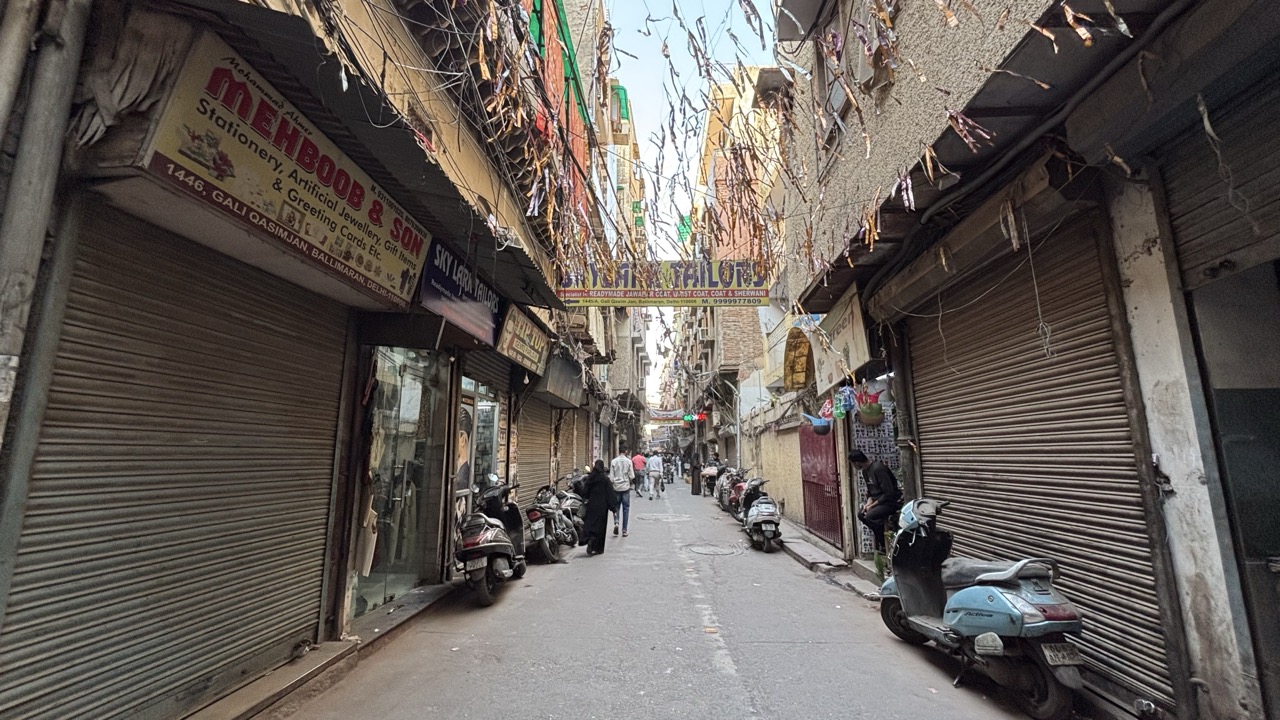
Old Delhi’s narrow lanes possess a life and rhythm entirely their own, existing in a space where centuries overlap with the everyday hum of contemporary urban existence. Every twist, turn, and alleyway carries a piece of history—some of it shining brightly in the collective memory, and some fading gracefully like old ink on parchment. In the heart of the Ballimaran area lies Gali Qasim Jan, a name that commands enduring historical resonance even as the specifics of its namesake risk fading from the immediate consciousness of the bustling neighborhood.
The lane does not announce its rich past with grand plaques, polished marble boards, or tourist-friendly markers. Instead, the sensory experience of the street defines it. The heavy, warm air is routinely filled with the sharp honk of bicycle rickshaws, the distant, resonant echo of an azaan calling the faithful to prayer, and human voices carrying over the cheerful clatter of glass chai cups. Sandwiched between a cracked stone archway and a sagging, intricately carved wooden jharokha, the tangible traces of bygone eras remain stubbornly visible, woven directly into the fabric of daily life.

The origins of the street trace back to the Mughal twilight, an era when Nawab Qasim Jan, a nobleman and courtier serving under Emperor Shah Alam II, who reigned from 1728 to 1806, chose this very location to construct his grand haveli. Over time, the noble’s personal identity became permanently fused with the geography of the street itself. Today, that legacy survives not through rigid textbooks or institutional history curricula, but rather through the oral traditions and lived experiences of the residents who continue to call the lane home, maintaining a quiet continuity with the past.
“People don’t really know who Qasim Jan was anymore. But his name… it stayed. We have all grown up hearing it,” says Syed Shaheed Hassan, a soft-spoken resident in his seventies who has spent his entire life rooted in this historic neighborhood.
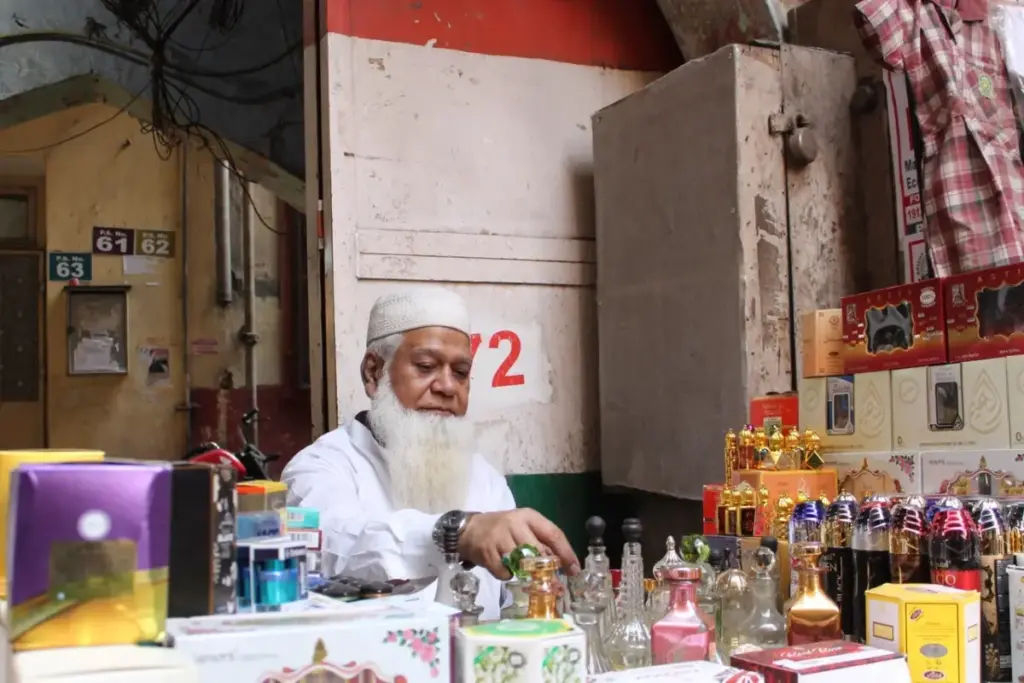
Hassan operates a modest, unassuming attar shop tucked neatly into a side nook of the gali. For over four decades, he has dedicated his daily routine to distilling and selling traditional perfume oils, offering artisanal scents like gulab (rose), jasmine, and amber. For Hassan, his trade is much more than a commercial enterprise; it is a sensory preservation of a heritage that modern consumerism has largely left behind. “This is not merely fragrance,” he explains, carefully uncorking a tiny, well-worn glass vial and allowing the rich aroma to escape into the dense alley air. “It is Mughal culture in a bottle.”
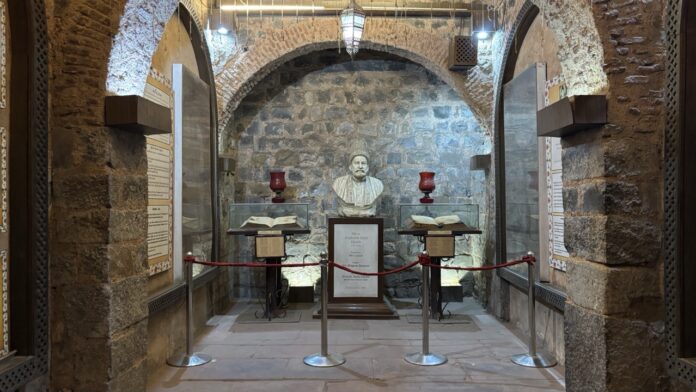
What elevates Gali Qasim Jan from a mere architectural relic of Delhi’s layered and complex past is the extraordinary convergence of stories it has hosted. Within the tight confines of this single lane, the grand narratives of royalty, anti-colonial resistance, classical Urdu poetry, and the golden age of Indian cinema interweave seamlessly.
“Legendary poet Mirza Ghalib lived just a few doors down. His nikah happened right here. People say this place gave him peace… maybe even some of those ghazals were born in this gali,” Hassan notes, reflecting on the towering literary giant whose final years are intimately connected with the neighborhood. Ghalib’s enduring presence permeates the atmosphere, serving as a reminder of an age when poetry was the lifeblood of Delhi’s intellectual aristocracy.
Yet, the noise, chaotic energy, and architectural congestion of the lane cannot conceal the broader historical currents that have swept through its walls. A closer examination reveals that monumental ideas and transformative movements originated from these very crevices. Gali Qasim Jan holds the distinction of being the birthplace of Maulana Qasim Nanautawi, a prominent Islamic scholar and theologian who later established Darul Uloom Deoband. Beyond his monumental educational contributions, Nanautawi actively participated in the anti-colonial resistance against British rule, notably involving himself in the historic Silk Letter Movement aimed at organizing an armed overthrow of the colonial administration.
“We did not have processions here or anything, but minds were shaped in these walls. Big ideas started in small rooms,” Shaheed explains, emphasizing the intellectual incubation that took place away from the public eye during periods of immense political turmoil.
As Hassan reflects on the decades he has witnessed from his streetside vantage point, his eyes brighten with memories that bridge the gap between historical gravity and cultural pop-culture milestones. Leaning in slightly, he shares a cinematic recollection that underscores the unique charm of the lane.
“You know, Meena Kumari once came here. They shot a scene for Pakeezah in this gali. I remember her sitting in a rickshaw and passing right by my shop, which was once just a decorated table on the street. It is the kind of memory you do not find in archives,” he recalls, evoking the haunting elegance of the classic 1972 cinematic masterpiece and its unexpected intersection with his own humble beginnings as a merchant.
Despite the glamorous brushes with cinema and the heavy footsteps of poets and revolutionaries, Shaheed maintains that his most cherished memory is of a subtler, yet profoundly more revolutionary nature—one that transformed the domestic and social landscape of the community from the ground up.
“There was a time when girls rarely went to school. It was not the norm. But then Rabea Girls’ Public School opened here. It changed things. Suddenly, every morning, we would see girls in white uniforms rushing in with their bags… it gave us hope,” he says, his voice carrying the weight of a profound social shift. Pausing for a moment, his voice trails off slightly as he contemplates the magnitude of that change. “In those days, a girl going to school was a big deal.”
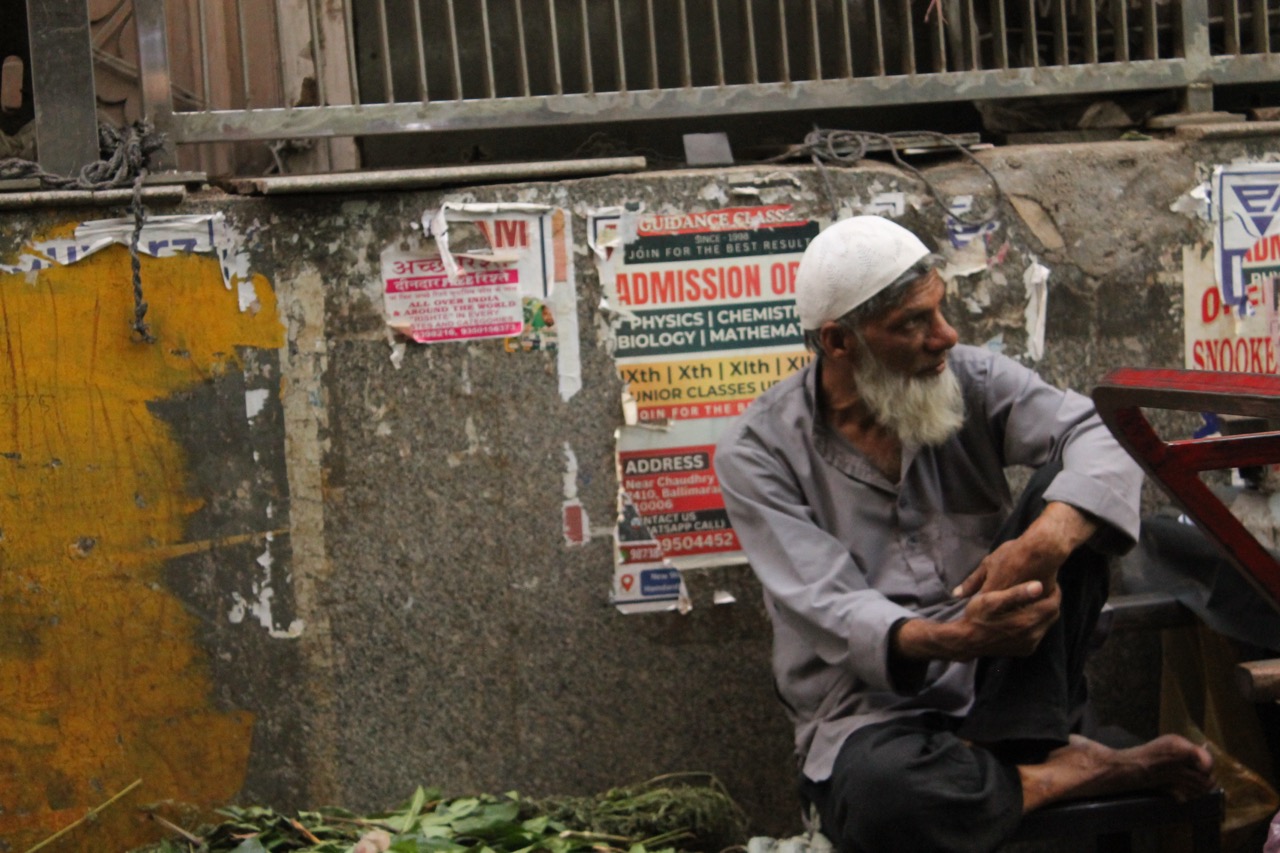
As the modern world outside gallops forward with rapid urbanization, digital transformation, and infrastructural upheaval, Gali Qasim Jan stubbornly moves at its own unhurried pace. Children kick plastic footballs across the uneven pavement beneath crumbling, ornate balconies where generations have stood and watched the world go by. Elderly women exchange neighborhood gossip across facing windows, maintaining a communal bond that transcends modern isolation. Through it all, the sweet, earthy scent of jasmine and attar from Shaheed’s shop drifts softly through the air, anchoring the street in its fragrant history.
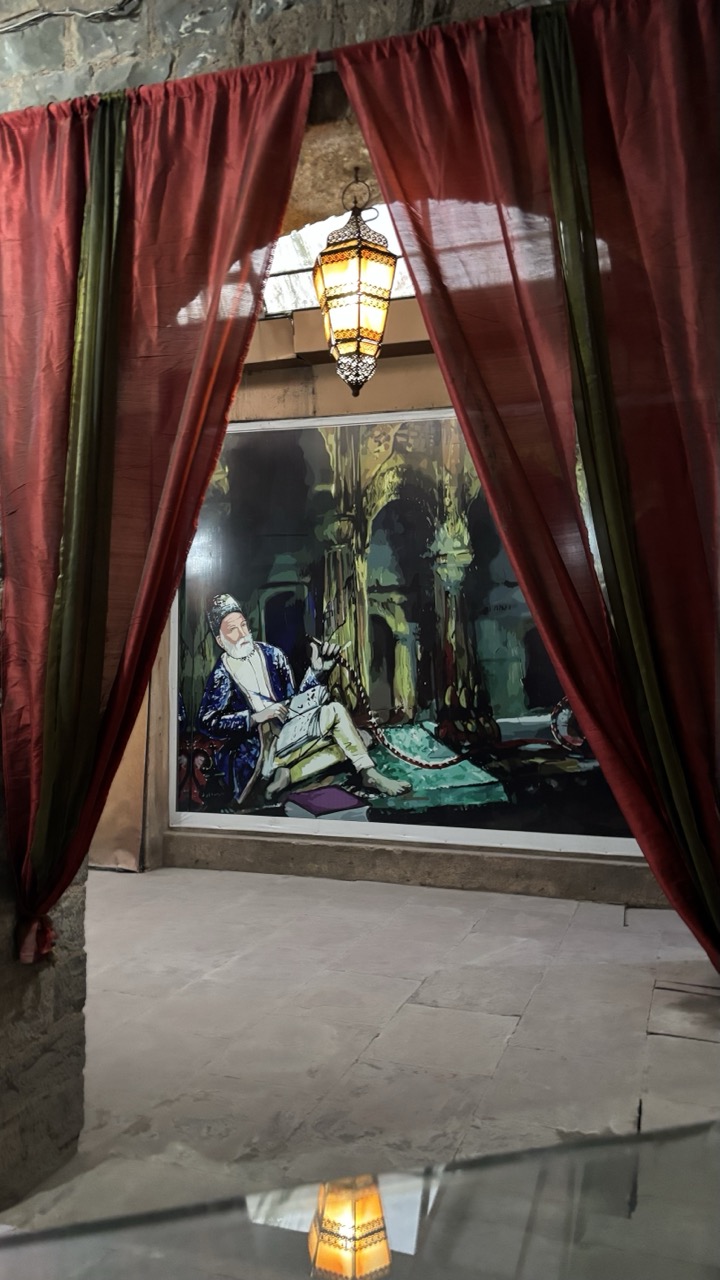
The physical structures of the lane are undoubtedly weathered by time, elements, and neglect, but they continue to speak eloquently. They communicate not through official plaques, tourist pamphlets, or bronze inscriptions, but through the living, breathing memories of residents like Shaheed Hassan. Within these deeply personal recollections, the history of Old Delhi finds a quiet, enduring home, persisting against the steady march of time.