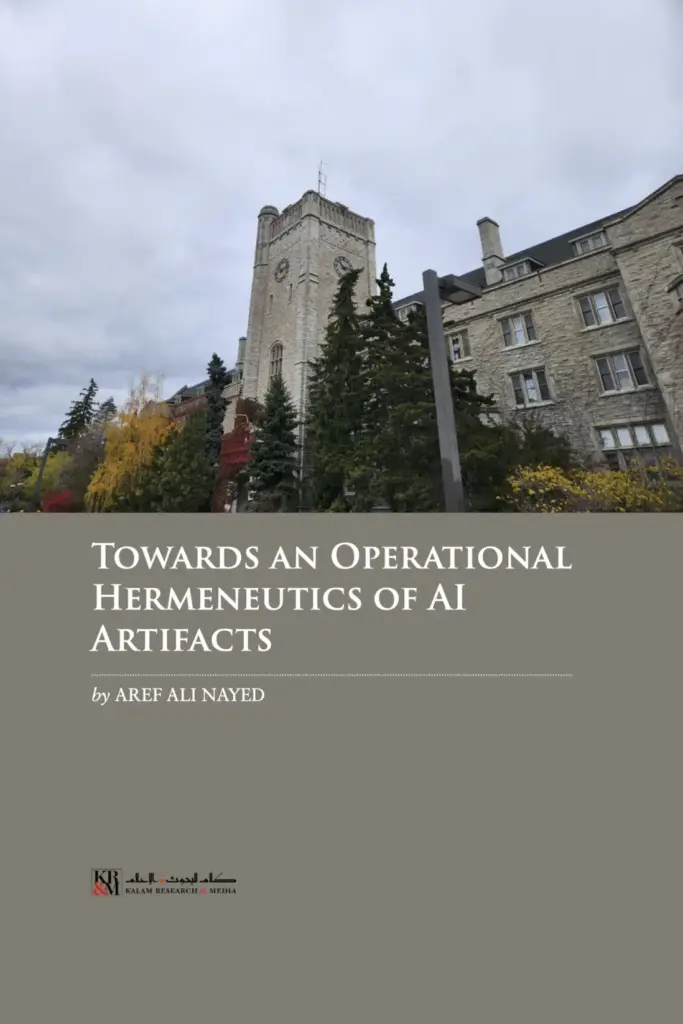
Published in 2025 and spanning 26 pages, a significant new academic monograph by Dr. Aref Ali Nayed offers a profound synthesis of classical philosophy and cutting-edge artificial intelligence research. Drawing upon his pioneering work in Operational Hermeneutics—a theoretical framework originally developed at the University of Guelph during the 1990s—the paper introduces a comprehensive new paradigm for understanding, interpreting, and governing AI-generated outputs in an era of rapid technological advancement.
The publication arrives at a crucial juncture for the global technology sector. As artificial intelligence systems become increasingly sophisticated, generating complex texts, high-resolution images, and intricate computer code, society faces unprecedented interpretive challenges. Traditional paradigms of human communication and artifact creation often fall short when applied to algorithmic generation. Dr. Nayed’s latest research addresses this critical gap by extending established hermeneutic principles into the digital domain, providing scholars, ethicists, and technologists with a robust intellectual toolkit to evaluate what AI systems actually produce.
At the core of the newly published monograph are several key contributions that bridge centuries of philosophical inquiry with modern computer science. Most notably, the paper extends Operational Hermeneutics directly to AI artifacts, treating machine-generated texts, visual media, and software code not merely as data streams or mechanical outputs, but as cultural and operational artifacts that demand sophisticated interpretation. To establish this foundation, the research meticulously traces the philosophical lineage of the concept of "artifacts" from the foundational works of Aristotle through to the modern administrative and design theories of Herbert Simon. By connecting ancient teleological views with modern computational science, the paper grounds contemporary machine learning in deep intellectual traditions.
Furthermore, the monograph proposes four distinct modes of human engagement with AI artifacts: actuating, manipulating, utilizing, and actualizing. These categories offer a nuanced taxonomy of how humans interact with, direct, and derive meaning from artificial intelligence systems, moving beyond simplistic binaries of human control versus machine autonomy. In tandem with these modes of engagement, the paper confronts the pressing domain of AI ethics through the lens of interpretive responsibility. It introduces the innovative concept of "hermeneutic harm" in AI contexts, drawing attention to the potential damages caused by misinterpretation, algorithmic bias, and the propagation of deceptive or poorly contextualized machine outputs.
Beyond its theoretical advancements, the publication announces a major international, collaborative research initiative designed to translate these philosophical frameworks into practical design principles and governance structures. This ambitious interdisciplinary program unites several prestigious academic institutions and specialized research organizations. The participating entities include the University of Guelph in Canada, the Sheikh Mohammed bin Zayed University for the Humanities in Abu Dhabi, the Mohamed bin Zayed University of Artificial Intelligence (MBZUAI) as a dedicated AI university partner, Kalam Research and Media, and Agathon Systems Ltd.
By bringing together traditional humanities scholarship and advanced technical institutions, this collaborative research program aims to bridge the persistent cultural and academic divide between technology development and philosophical ethics. The initiative will focus heavily on developing hermeneutically-informed AI design principles and robust governance frameworks that can guide developers, policymakers, and institutions as they deploy machine learning systems across diverse societal sectors.
Scholars, researchers, and technology professionals interested in examining the complete monograph can access and download the 26-page document directly online by clicking here.