From the grand boulevards of Paris to the historic streets of Milan and the political heart of Tirana, a wave of intense civil unrest has swept across Europe, plunging major cities into chaos. Demonstrators have taken to the streets in numbers not seen in years, confronting riot police, setting fire to barricades and vehicles, and clashing violently with law enforcement as frustration over the escalating cost of living, soaring fuel prices, and deteriorating public services reaches a boiling point.
The widespread demonstrations—encompassing nations from France and Italy to Albania—reflect a deep-seated and synchronized public anger. Citizens across different demographic groups, including students, labor unions, workers, farmers, teachers, parents, and retirees, have united in their grievances against economic hardships and what they perceive as government inaction or heavy-handed policing.
France Gripped by Nationwide Protests and Paris Clashes
In France, the unrest has entered a severe phase, reminiscent of past nationwide uprisings. For the second consecutive day, fierce clashes erupted between demonstrators and riot police in Paris, Lyon, and other major urban centers. The demonstrations were initially called by the resilient "Yellow Vests" movement, but they have quickly swelled into a massive, multi-sector coalition.
In the capital, the demonstration of public frustration took a destructive turn. Protesters engaged in running battles with riot police, erecting blazing street barricades that required urgent intervention from French firefighters. In one dramatic scene captured during the height of the riots, a demonstrator was seen hurling a bicycle onto a burning car amidst chaotic street clashes.
The economic grievances fueling the French protests are broad and deeply felt. Participants are primarily decrying the crippling cost of living and soaring fuel prices that have squeezed household budgets. However, the movement has rapidly expanded to include French high school and university students, teachers, and parents who are demanding urgent government action and better conditions within the national school system. They have been joined by labor unions, industrial workers, farmers, and retirees, all voicing distinct yet overlapping frustrations with the current socio-economic landscape.
The disruption has even touched iconic cultural and tourist landmarks. In Paris, students from the prestigious École du Louvre joined the demonstrations and blocked the entrance to the world-famous Louvre Museum. Their aim was twofold: to express direct solidarity with the high-school student movement and to vocally denounce what they described as excessive police repression against demonstrators. Visitors found themselves stranded outside cordoned-off areas as the cultural hub became an unexpected flashpoint for the social unrest.
Meanwhile, in southeastern France, the city of Lyon witnessed severe property damage. The city’s tourism office was set ablaze during the demonstrations against the high cost of living, leaving a lasting scar on the urban landscape. Elsewhere in the city, municipal employees were dispatched to clean up graffiti from cultural landmarks, such as the historic Bartholdi Fountain in Place des Terreaux, as local authorities scrambled to restore a semblance of order amidst the ongoing turmoil.
Italy Faces Violent Outbursts Over Public Services and Inflation
Italy has not been spared from the contagion of unrest. Major urban centers, most notably Milan, have transformed into theaters of confrontation as citizens took to the streets to protest the deteriorating state of public services and the unrelenting rise in the cost of living.
The demonstrations in Milan quickly escalated beyond peaceful marches. Pavement across commercial and residential streets was left strewn with debris, shattered glass, and the remnants of clashes between law enforcement and angry protesters. Pedestrians navigated past damaged storefronts as authorities worked to contain the chaos. The anger in Italy mirrors the sentiment in France, driven by a growing disillusionment among the populace regarding economic security, inflation, and the government’s ability to maintain adequate public infrastructure and welfare standards.

Albania Witnesses Intense Student-Led Anti-Government Demonstrations
Farther south, Albania became a central focal point of political unrest as students spearheaded massive anti-government protests in the capital city of Tirana. The demonstrations outside key government buildings quickly turned volatile, drawing heavy responses from local law enforcement and riot police.
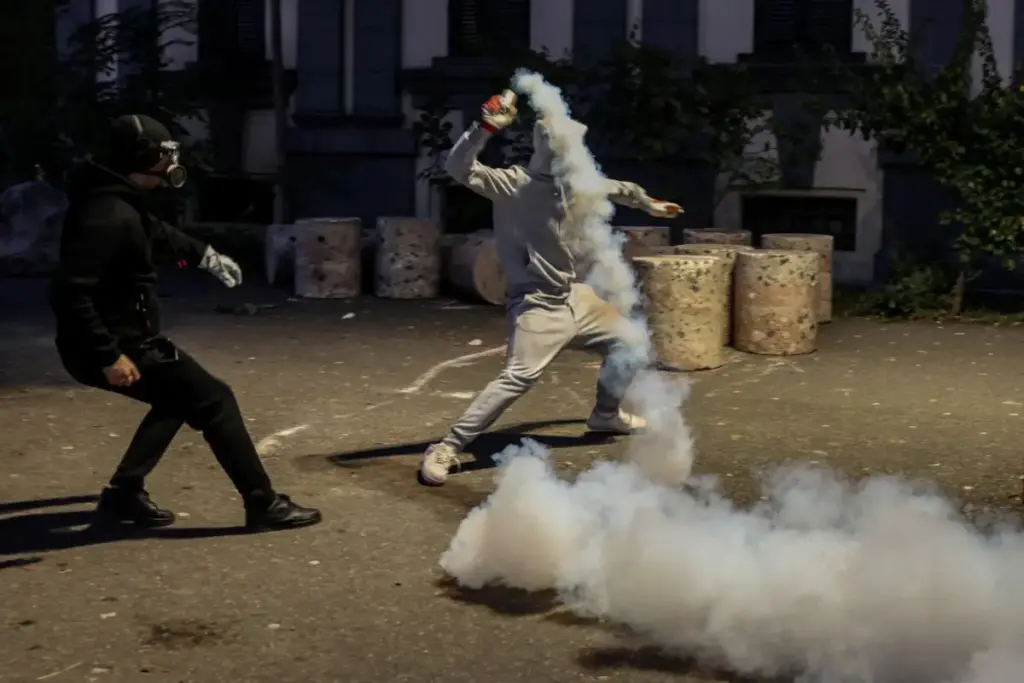
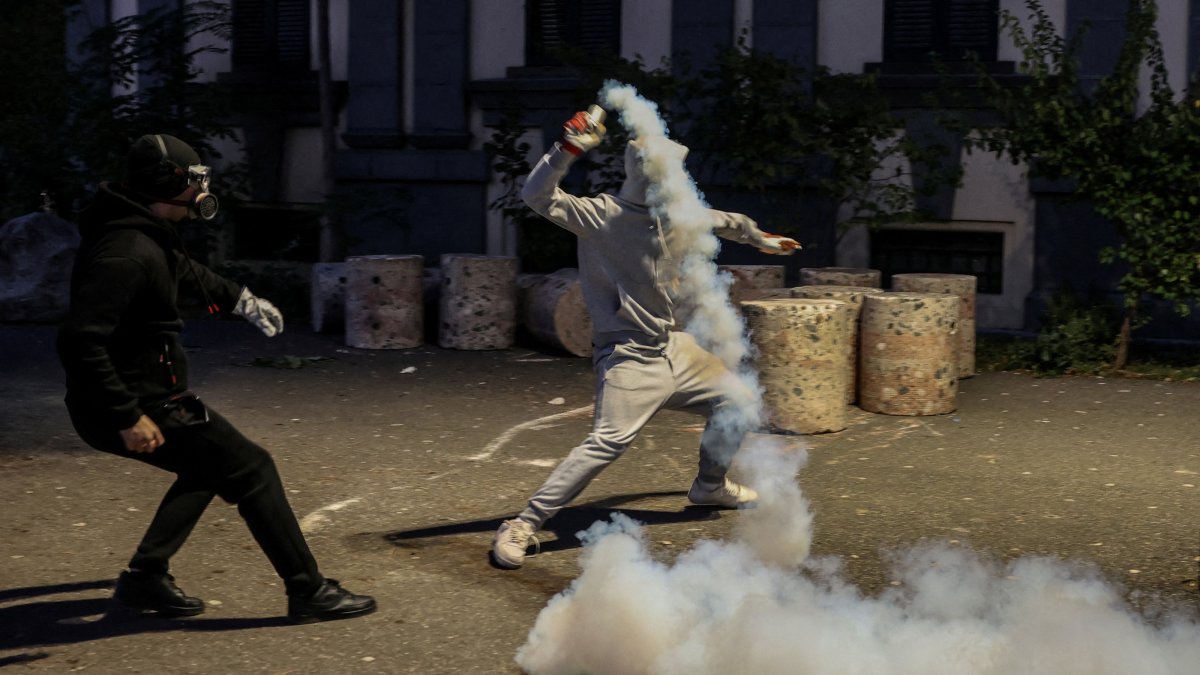
Central Tirana saw dramatic scenes of confrontation as student protesters launched stones and Molotov cocktails toward police lines. Riot police, equipped with protective gear, took cover from the incoming projectiles before launching counter-offensives, chasing protesters down city streets and utilizing tear gas to disperse the angry crowds. In chaotic exchanges captured by international media agencies, protesters were seen hurling tear gas canisters back toward police officers, while riot police responded by kicking the smoking canisters away from their formations.
Despite the heavy security presence—particularly outside the Prime Minister’s office, where one protester was photographed saluting defiantly next to lines of riot police—the demonstrators refused to back down easily. The protests in Tirana highlight a potent mix of economic discontent and political frustration among Albania’s younger generation, who feel alienated by the current governance and economic prospects in the country.
A Continent on Edge
As the wave of demonstrations continues to reverberate across Europe, governments are facing mounting pressure to address the underlying socio-economic catalysts driving citizens to the streets. Whether through targeted economic relief, educational reforms, or renewed dialogue with labor unions and student bodies, authorities across France, Italy, Albania, and beyond are tasked with finding urgent solutions to quell the rising tide of civil disobedience. For now, however, the streets of Europe remain tense, with law enforcement on high alert as the continent grapples with one of its most widespread periods of social unrest in recent memory.