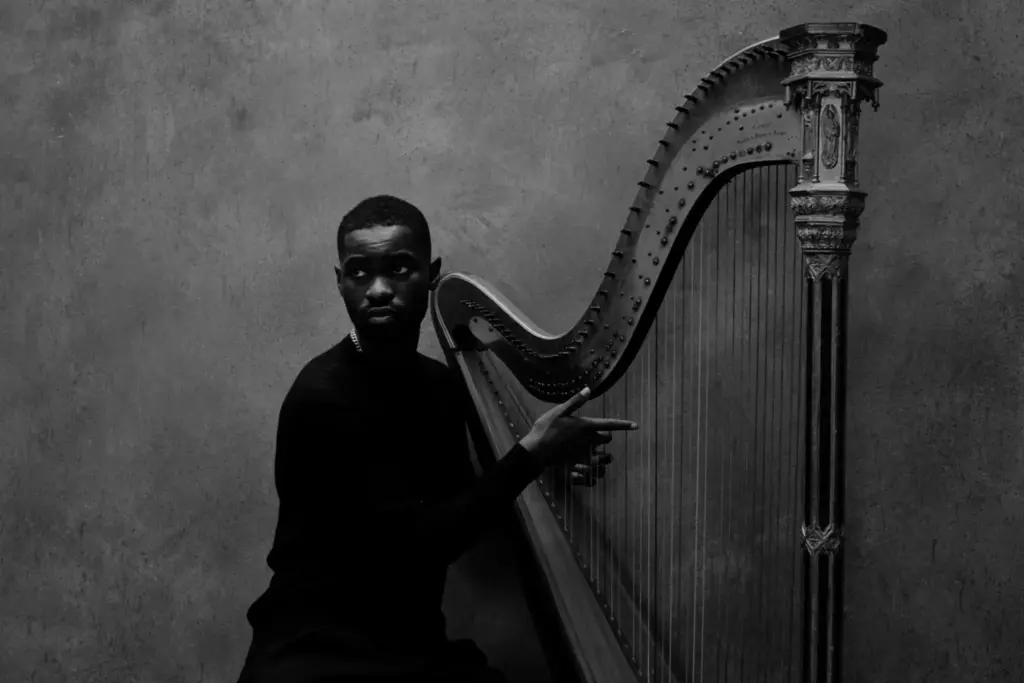
LONDON — Last month at the V&A East Museum, acclaimed filmmaker, director, and photographer Gabriel Moses took the stage for an intimate installment of A Life in the Work of Others, a series dedicated to exploring the people, places, and defining experiences that shape contemporary artists. Sitting down for a comprehensive discussion, Moses pulled back the curtain on a rapidly ascending career that has seen him direct campaigns for major global brands, collaborate with cultural heavyweights like Skepta and Virgil Abloh, and redefine visual storytelling on his own uncompromising terms.
During the evening, Moses shared five foundational inspirations from his life, tracing his trajectory from a creative-minded household in South London to the international stage. Through candid reflections on his upbringing, early breakthroughs, and creative philosophy, the artist offered a masterclass in how authentic personal history can fuel a world-class portfolio.
The Women Who Shaped the Vision: Family, Color, and Archive
Long before he ever picked up a professional camera or stepped onto a commercial film set, Moses was immersed in an environment rich with visual and spatial experimentation. He credits the women in his family as his earliest and most profound artistic influences.

Growing up, the family television was stationed in his sister’s bedroom, drawing Moses in for hours of gaming. More importantly, it exposed him to an environment saturated with editorial references. As a fashion student, his sister routinely papered the walls with torn-out pages from Vogue and Dazed, subconsciously embedding high-fashion aesthetics and layout composition into his daily consciousness.
Simultaneously, his mother maintained a deep-rooted appreciation for art, fashion, and photography, ensuring her children were dressed with intentional style. Her primary hobby, flower arranging, instilled in Moses a lifelong fascination with color theory. She was known for making bold, unconventional choices with palettes, a fearless approach to visual contrast that continues to inform Moses’s photographic framing and film grading to this day.
Documentation was another cornerstone of his upbringing. Family photo books chronicled the generations, preserving images of his grandmother and grandfather in Nigeria, his mother’s early years in the West African nation, and his own siblings growing up. Immersed in these visual archives, Moses developed an early, instinctive love for photography as a means of recording personal history.

Crucially, that domestic environment provided a bedrock of unconditional support. Having moved to the UK from Nigeria at the age of 18, his mother possessed a broad worldview, having witnessed countless individuals navigate London and find their footing. Moses notes that her unwavering confidence in him was absolute. Whether joking about pursuing an everyday job or navigating the high-stakes world of commercial directing, her philosophy remained constant: whatever path he chose, he had to strive to be the best at it.
When Moses dropped out of university following his breakthrough Nike film, the immediate aftermath brought a quiet, uncertain five-month window. Yet, understanding his determination and drive, his mother simply gave him the space to work through his ideas. It is a lesson in communication that he frequently passes on to younger creators, advising them to be proactive and transparent—even if it requires putting together a formal presentation to explain their vision to those around them.
South London Roots and Everyday Role Models
The cultural ecosystem of South London served as Moses’s primary training ground, populated not by distant Hollywood figures, but by accessible local pioneers who proved that major ambitions were achievable. Growing up, athletic and entertainment figures from the local area were a regular presence, bridging the gap between everyday life and global success. Seeing football stars like Rio Ferdinand at the local petrol station provided tangible proof that someone from the neighborhood could reach the pinnacle of professional sport.

Closer to home was Andy Ansah, a local South London legend who transitioned from a professional football career into choreography for major commercial campaigns. To the youth in the neighborhood, Ansah was a genuine celebrity, having shared spaces with global icons like Ronaldinho and Ronaldo. More than just a local hero, Ansah actively included the community by casting local kids as extras in his commercial projects. For Moses, watching Ansah channel his passion for football into a creative career planted the early seeds of possibility.
The Sports Mindset and the Leap into Filmmaking
Despite his current acclaim, Moses initially harbored no grand ambitions of becoming a professional artist or photographer; like many of his peers, his primary aspiration was to play football professionally. That perspective shifted dramatically during his first year at university when his mother shared news of an illness. Driven by a desire to make her proud, Moses took stock of his capabilities and decided to test the waters of visual storytelling.
Drawing inspiration from the iconic, high-energy Joga Bonito commercials he watched avidly as a child, Moses decided to pursue sports-adjacent filmmaking. He reached out to Fikayo Tomori—then playing for Chelsea and now at AC Milan—with a proposal to document his personal journey and background. Spending six hours filming alongside friends in familiar surroundings, Moses edited the footage and uploaded it to YouTube. The simple act of completing a creative project and sharing it with the world provided an unmatched rush of fulfillment. Though he acknowledges today that the film was technically flawed by hindsight standards, the psychological barrier had been broken.

He soon followed up with a similar project focusing on Joe Gomez, who grew up in Catford. Recognizing a young artist trying to carve out his own path, Gomez supported one of Moses’s earliest film projects when the director was just 18 years old.
The independent projects caught the attention of Nike, which soon commissioned Moses to direct a series of commercials for the new Tiempo football boot. Directing major brand campaigns at 18 required a level of bravado. Moses leaned into professional confidence, pitching his ideas forcefully. Because he was essentially the target demographic, he understood precisely what he and his peers wanted to see on screen, executing projects with an authentic vernacular.
This entry into the industry cemented a philosophy rooted in his sporting background. Moses approaches creativity with the same black-and-white logic found on the pitch: excellence cannot be faked, and superior work inevitably yields results.
Mentorship and the Humility of Virgil Abloh
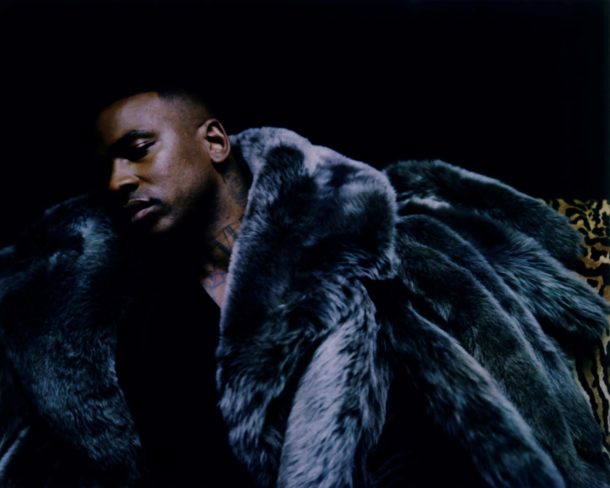
An introduction to photographer Fabien Montique opened the door to a pivotal relationship with the late Virgil Abloh at the Off-White studio. Though Moses was initially unfamiliar with the broader scope of Abloh’s empire, he deeply respected his groundbreaking collaborative work with Nike.
Entering the high-fashion sphere as a 19-year-old with a camera, Moses found himself documenting backstage fittings, shooting runway show films, and photographing elite talent like Bella Hadid. Rather than facing heavy-handed restrictions, he was simply given the space to exist, observe, and grow within a world-class creative environment.
What left the deepest impression on Moses, however, was Abloh’s profound humility. Despite operating at the very zenith of global design and fashion, Abloh maintained an open-door approach to mentorship. A simple text message to the designer would often elicit a prompt, encouraging reply complete with a supportive rocket emoji. For a young creator operating out of London, those small gestures acted as immense catalysts of self-belief, reinforcing the idea that ambition coupled with humility knows no bounds.

Everyday People as the Ultimate Muse
Today, Moses finds his most potent creative fuel in everyday culture and the spontaneous creativity of ordinary people. Whether observing viral skits produced on smartphones or grassroots expressions of youth culture, he remains fascinated by the democratization of stardom on the internet.
This ethos forms the backbone of his commercial work. When commissioned by major global brands, Moses frequently advocates for unconventional casting, introducing everyday people into high-end campaigns to ensure authentic representation. It is a collaborative stance that occasionally requires pushing brands past their comfort zones, but Moses views creative friction as essential to true progress.
Reflecting on his early days with representation, Moses recalls regularly declining projects that did not align with his vision, often trading inflated budgets for creative autonomy. His ultimate goal is to normalize this uncompromising approach, inspiring a new generation of creators to pursue their craft entirely on their own terms over the coming decades.

As he concluded his remarks at the V&A East Museum—followed by a session answering audience questions and signing books—Moses left aspiring creatives with a final, guiding principle: absolute authenticity. By rooting one’s work in genuine personal influences, research, reading, and musical taste become natural extensions of identity, transforming the creative process into a continuous exercise in self-discovery.