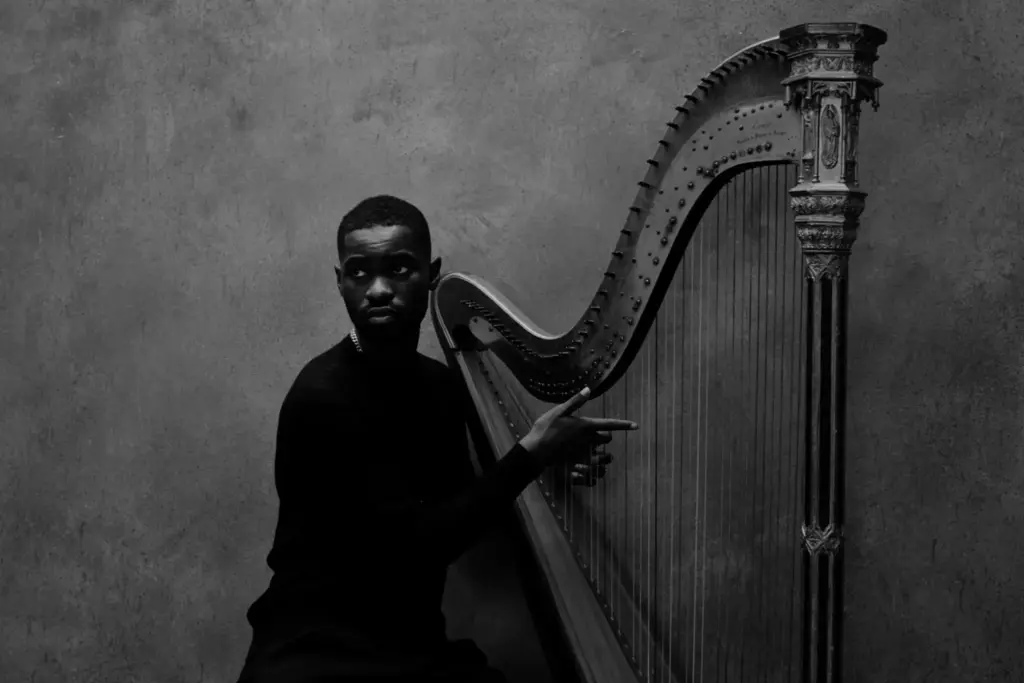
Last month, the V&A East Museum played host to an intimate and revealing evening with acclaimed filmmaker, director, and photographer Gabriel Moses. Sitting down for the museum’s ongoing series A Life in the Work of Others—a programme dedicated to asking contemporary artists to unpack the people, places, and pivotal experiences that have shaped their creative trajectories—Moses offered a masterclass in honesty, ambition, and artistic evolution.
Throughout the evening, Moses reflected on the foundations of his distinctive visual style, tracing a line from his childhood in south London to high-profile collaborations with global brands, elite footballers, and fashion icons like the late Virgil Abloh. Rather than presenting a conventional career retrospective, the conversation focused deeply on the human elements of art-making: the domestic influences of family, the cultural blueprint of south London, and an uncompromising dedication to making good work.
For an artist whose striking imagery has graced magazines, galleries, and major commercial campaigns, the journey did not begin in a prestigious art school or a Hollywood studio. Instead, it started at home, shaped by the women in his family, the vibrant cultural tapestry of his upbringing, and a fierce, self-taught work ethic.

The Domestic Blueprint: Family, Fashion, and Colour
The foundational stages of Moses’s artistic awakening were rooted firmly within his domestic environment, closely tied to the women who surrounded him. Growing up, the household television was located in his sister’s bedroom, drawing him into her space for hours of gaming. However, his sister was also studying fashion, leaving her walls covered with torn-out pages from publications like Vogue and Dazed, turning her bedroom into an impromptu mood board of contemporary style and imagery.
Moses’s mother also exerted a profound influence on his visual sensibilities. With a deep-seated appreciation for art, fashion, and photography, she took an active interest in presentation, ensuring her children were always sharply dressed. Beyond fashion, her primary hobby was flower arranging, an artistic outlet that instilled in her son an intuitive and fearless understanding of colour. Her willingness to make bold, unconventional choices with palettes remains a guiding reference point for Moses whenever he constructs a photographic frame or film sequence today.
Documenting family life was another constant in the household. Moses grew up surrounded by physical archives: photo books preserving images of his grandmother and grandfather in Nigeria, his mother growing up in Nigeria, and his siblings during their early years. Having a rich visual history to look at daily cultivated an early and lasting fascination with documentary photography and image-making.

That family support extended far beyond aesthetic inspiration into the realm of emotional backing. Having immigrated to the United Kingdom at the age of 18, Moses’s mother had witnessed people from diverse backgrounds carve out spaces to thrive in London. Her unwavering belief in her son provided a crucial safety net as he navigated the precarious transition from university student to professional creator. When Moses dropped out of university following his first commercial film project with Nike, the immediate aftermath brought a quiet, uncertain five-month stretch. Yet, his mother understood his drive, allowing him the space to figure out his path without panic. Reflecting on this dynamic, Moses advises younger creatives from all backgrounds to communicate openly with their support systems, even if it requires putting together a presentation to explain why a non-traditional career path makes logical sense.
South London Roots and the Power of Proximity
Growing up in south London provided Moses with a unique cultural education, defined by a vibrant cast of local figures who were breaking boundaries in sports and entertainment. Long before he considered a career behind the lens, seeing familiar faces from the neighbourhood achieve extraordinary things established a subconscious baseline for what was possible. It was common to spot football stars like Rio Ferdinand at the local petrol station, turning elite athletic success from an abstract media concept into a tangible reality grounded in the local geography.
Even more influential was a local figure named Andy Ansah, a south London legend who transitioned from a professional football career into choreographing commercials. Ansah was a genuine celebrity in the area, known for his work alongside global icons like Ronaldinho and Ronaldo. Crucially, Ansah opened doors for the local youth by casting neighbourhood kids as extras in his commercial projects. Moses occasionally featured as an extra and later completed work experience, observing firsthand how someone could harness a lifelong passion for football and translate it into a creative, commercial career.

The Leap Into Filmmaking: Sports, Nike, and an Uncompromising Standard
Despite his early exposure to media production, Moses did not initially envision a career as a photographer or visual artist. Like many young people in his community, his primary ambition was to become a professional footballer. However, during his first year at university, his mother fell ill. The news prompted a profound moment of reflection, during which he sought a way to make her proud, asking himself what skills he might possess that could lead to something meaningful.
Drawing inspiration from the iconic Joga Bonito commercials he watched avidly as a child, Moses decided to try his hand at filmmaking. He reached out to Fikayo Tomori—then playing for Chelsea and now at AC Milan—with a proposal to create a short documentary about his personal journey and backstory. The resulting project was filmed over six hours in familiar environments alongside his friends. Publishing the finished piece on YouTube marked a watershed moment of personal accomplishment, regardless of the view count.
Buoyed by that initial momentum, Moses turned his attention to another footballer, Joe Gomez, who grew up in Catford. Recognizing a young artist trying to build something of his own, Gomez helped fund one of Moses’s early independent films when the director was just 18 years old.

The independent projects quickly caught the attention of Nike, which soon commissioned Moses to direct a series of commercials featuring various players for the launch of the new Tiempo football boot. Directing major commercial campaigns at the age of 18 required a distinct balancing act of youthful intuition and calculated professionalism. Leaning into his own demographic, Moses understood precisely what his peers wanted to see, approaching the projects with absolute confidence and conviction in his creative vision.
Entering the industry with a perspective shaped by sports, Moses applied a strict, black-and-white ethos to his craft. In sports, success cannot be faked; a player who lacks the necessary skill will simply not make it to the Premier League. Moses brought that same uncompromising standard to the creative sector, firmly believing that prioritizing the production of exceptional work is the most reliable engine for long-term progress.
Mentorship, Virgil Abloh, and the Freedom to Exist
A pivotal chapter in Moses’s development unfolded through his association with photographer Fabien Montique, who introduced him to the creative circle surrounding Virgil Abloh at the Off-White studio. While Moses was initially unfamiliar with the full scope of Abloh’s cultural footprint, he was well aware of his groundbreaking work with Nike.
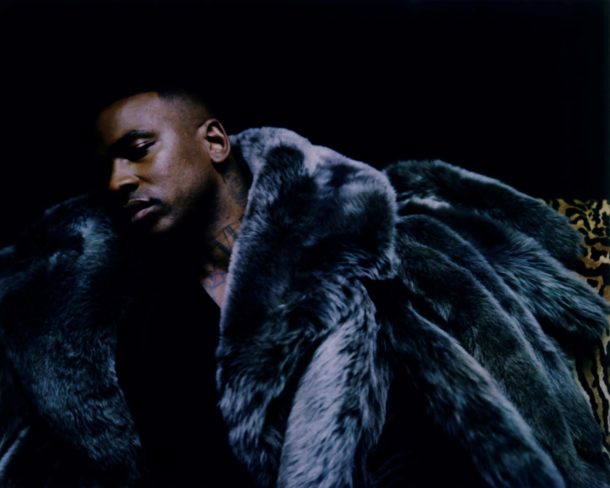
Entering the Off-White environment as a 19-year-old photographer, Moses was given the space to simply exist and create. His responsibilities included capturing backstage fitting photos ahead of major runway shows and producing short fashion films featuring prominent figures like Bella Hadid. Rather than enduring a traditional academic route through institutions like Central Saint Martins, his introduction to high fashion happened organically alongside a pioneering Black creator who was reshaping the global design landscape.
Abloh’s profound humility left a lasting impression on the young photographer. Known for responding to messages promptly—often punctuating encouraging notes with a simple rocket emoji—Abloh fostered a sense of limitless possibility among emerging creatives. For Moses, interacting with someone who had achieved global success while maintaining such openness proved that ambitious creative goals were genuinely attainable. Returning to London, he carried the validation of those early mentorship experiences as a powerful catalyst for his ongoing work.
Everyday People as the Ultimate Muse
Throughout his career, Moses has maintained a deep fascination with everyday culture and the spontaneous creativity of ordinary people. Whether observing internet users crafting inventive content from mobile phones or ordinary individuals transforming into digital superstars, he views grassroots creativity as a vital force. This appreciation directly influences his commercial work, where he frequently advocates for authentic casting, often bringing everyday faces into high-end brand campaigns.

Reflecting on his early days working with talent agencies, Moses recalls frequently turning down projects that did not align with his vision, choosing instead to negotiate smaller budgets in exchange for complete creative control. For him, setting an uncompromising standard early on was essential for establishing a sustainable, authentic artistic voice.
Concluding his reflections at the V&A East Museum, Moses offered a final piece of advice to aspiring young creatives: the importance of remaining rigorously authentic. By cultivating genuine personal influences, artists can train their instincts to recognize what they truly value—whether through books, music, or visual references. For Moses, the practice of recording creative concepts daily serves as a reminder that an artist’s ideas remain their most valuable currency.