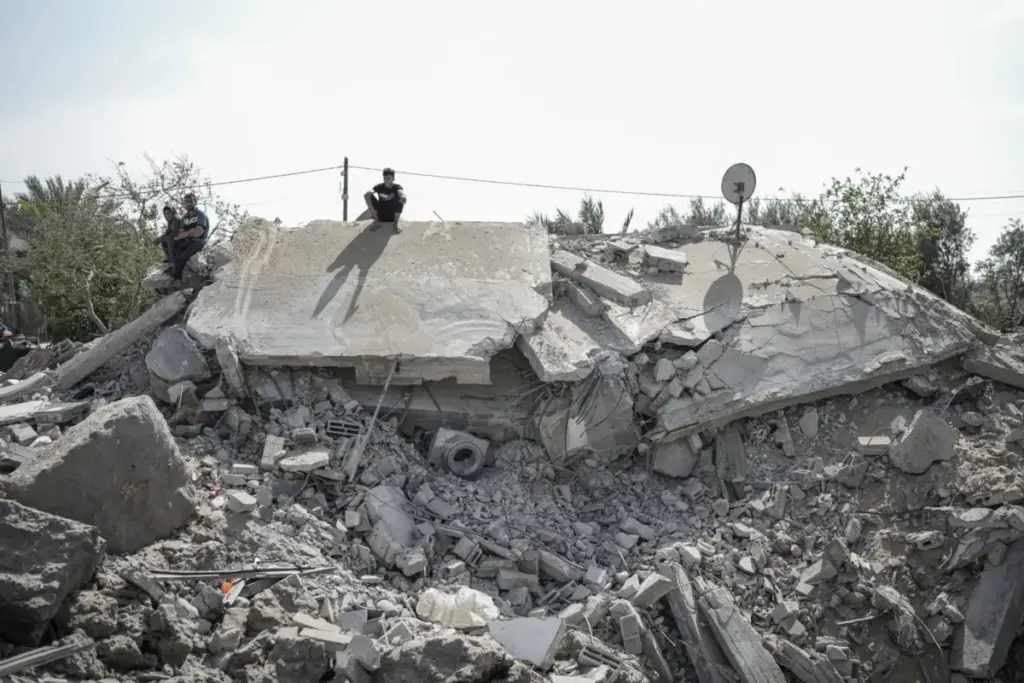
One year after a ceasefire was officially announced across the Gaza Strip, humanitarian workers and local residents say that daily life remains defined by relentless fear, widespread destruction, and acute shortages. According to aid personnel on the ground, the reality of the situation bears little resemblance to a cessation of hostilities, as continuous airstrikes, severe displacement, and an ongoing blockade continue to devastate the enclave.
In recent interviews detailing the humanitarian landscape, two aid workers with Islamic Relief—identified by the pseudonyms Layla and Sameer to protect their safety—shared firsthand accounts of the compounding crises facing communities throughout Gaza. Their testimonies paint a grim picture of a population trapped in a fraction of the territory, struggling against profound psychological distress, starvation, and a lack of essential medical supplies.
The Illusion of a Ceasefire and Persistent Violence
Reflecting on the past year, Layla stated that the ongoing bombardment and military operations make it impossible to characterize the current environment as a ceasefire.
"The current situation here in Gaza, with bombing and airstrikes still ongoing, cannot be called a ceasefire," Layla said. "There is no ceasefire in reality. They target displacement camps and crowded areas, so there is still a lot of fear."
She described an environment where safety is virtually nonexistent. Residents remain terrified to travel by car or on foot, and even the relative shelter of homes offers little reassurance against the constant noise of overhead drones and the looming threat of sudden strikes.
"We cannot say that we are 100% safe. We cannot go into the streets by car or on foot. We are scared to even leave our homes, and of the noise of the drones above us," Layla explained. "Even our homes themselves are unsafe. It’s hard to think you could be next. These are the hardships we’re facing; displacement, fear. The killing is non-stop and we cannot live our lives normally."
Sameer recalled the initial, brief sense of relief that swept through the community when the ceasefire was first announced, coming after years of intense devastation. However, that optimism quickly faded as military actions persisted.
"When we heard the news about the ceasefire, it brought us some relief that we were still alive after what had happened over the 2 years before. But afterwards we saw that it was not a ceasefire from the Israeli side," Sameer said. He noted that a recent attack struck a crowded tent area housing vulnerable women and children.
Overcrowding, Destruction, and Severe Scarcity
The demographic pressure within the Gaza Strip has intensified dramatically. With Palestinians displaced from nearly 70 percent of the territory, more than two million people are now crammed into the remaining 30 percent of the Strip. This extreme concentration has strained the region’s remaining infrastructure to its absolute breaking point.
Most residents are currently sheltering in makeshift tents or dangerously compromised buildings. Sameer highlighted the constant structural hazards posed by these living conditions, recalling an incident weeks prior when a damaged building collapsed on sleeping families and children.
"Because of the attacks, there is no building good enough to live in. Most of us are living in tents and there is a huge issue with drinking water, for example. It’s nearly impossible to find a good drinking water source, or even an electricity source now," Sameer said.
The psychological toll of this environment has become an inescapable part of daily existence. Routine activities, such as walking with children or commuting to work, are fraught with anxiety.
"When I go out walking with my children, any time a car comes up beside us, I fear that there will be an attack. Even when we’re at home, there is fear in every moment," Sameer noted. "Even leaving to go to work… it’s difficult to explain that feeling because it’s become something in our minds, in our lives, in every move we make."
Layla echoed these concerns, expressing constant anxiety for the safety of her family, her colleagues, and her own life. She also pointed out the paradox of seeing limited commercial goods or occasional images of cafes and restaurants on social media, emphasizing that these superficial signs of recovery mask a much deeper, pervasive despair.
"People here are still starving, they still don’t have medical supplies—there is a shortage of diabetic medications and people with chronic diseases cannot find their medicines," Layla said. "The restrictions are very difficult and challenging and we’re still adapting to the situation. We are hoping that, insha’Allah, something will get better."
Aid Delivery Challenges and Local Adaptation
Humanitarian organizations continue to face immense hurdles in bringing vital supplies into Gaza. While specific commercial goods are permitted to cross, many essential items remain strictly blocked. Combined with a severe cash shortage and a lack of employment opportunities, the resulting high prices place basic necessities out of reach for the majority of the population.
To navigate these formidable constraints, organizations like Islamic Relief have adapted their delivery methods. Sameer explained that the implementation of food voucher programs allows families to select what they need most from local shops, thereby restoring a measure of dignity and choice while supporting local economic activity.
These initiatives have also extended to populations that are frequently overlooked in large-scale relief efforts, including individuals with disabilities. Furthermore, Islamic Relief currently supports more than 25,000 orphaned children and their guardians, the majority of whom are enduring desperate conditions inside tents.
However, conducting relief operations remains perilous. Humanitarian workers must constantly monitor security updates, checking for active evacuation orders, bombing reports, or drone activity before attempting to travel or distribute aid.
A Fear of Being Forgotten
Beyond the physical deprivations, humanitarian workers voice a growing concern that Gaza is fading from international headlines and public consciousness. Three years into the broader conflict, the reduction in media coverage and social media mobilization has left many feeling isolated.
"Maybe after 3 years, Gaza is being forgotten. We don’t have the action we used to see on social media and in the news," Layla said. "There is so much going on in the world, maybe Gaza is being forgotten even though the challenges and shortages are still enormous. Maybe the focus has gone because of the partial ceasefire. Maybe we’ll get a headline in the news—one or two people killed by an airstrike—and that’s it. People just move on to the next story. Gaza is maybe seen as just the last big trend…"
Despite the heavy mental and physical toll, aid workers emphasize that a profound sense of duty keeps them moving forward. Recognizing that inaction is not an option when faced with widespread human suffering, personnel continue to take daily risks to bring relief to their communities.
"Even if it’s hard to travel or deliver aid, as humanitarian workers, we cannot just sit by and watch people suffering. We see them suffering and know we can help them, so we take the risk," Layla said. "In Gaza, just living is a big risk! We cannot see the struggles that people are facing and do nothing. It’s not in our nature or in the people of Gaza’s nature."
Acknowledging that their own living conditions—though impacted—may afford them a roof and walls rather than a tent exposed to the elements, staff members express a shared commitment to sustaining their vital operations.
"The humanitarian work must go on. We cannot just stop," Layla added. "Even if our intervention cannot help all 2 million people in Gaza, we can still make a difference in people’s lives, and this is the motivation for humanitarian workers. This is what moves us, this is what encourages us to just keep going, to just bear the hardships we are facing—the mental hardship, the physical, the stress, the exhausting circumstances—and just keep going."