More than two weeks after unprecedented and catastrophic floods struck northern Nepal, rescue teams, humanitarian organizations, and local authorities are still grappling with the staggering scale of destruction. While more than 13,000 people have been successfully rescued since the disaster first unfolded, intense search and recovery operations remain heavily concentrated in rugged northern terrains. Emergency workers are dedicating significant resources to hydropower facilities and subterranean tunnels where individuals are still believed to be trapped beneath tons of debris, mud, and wreckage.
The disaster, which ranks among the most severe weather events to hit the region in recent years, has left an indelible mark on the country’s infrastructure, economy, and population. According to the latest figures released by Nepal’s National Disaster Risk Reduction and Management Authority (NDRRMA), the human toll has been devastating. Confirmed fatalities have risen to 1,367 people, while a harrowing 5,100 individuals remain unaccounted for, leaving families in agonizing suspense as rescue workers push deeper into cut-off areas.
A Displacement Crisis Unfolds
Beyond the immediate loss of life and injuries, Nepal is facing a profound displacement crisis. Thousands of survivors, having watched their homes swept away by rampaging rivers and flash floods, have been forced to seek sanctuary in makeshift environments. Current estimates indicate that more than 3,600 people are currently living across 37 designated displacement camps and temporary holding centres established across the affected regions. Many other survivors have found temporary refuge with host communities, extended relatives, or alternative makeshift arrangements as they try to piece their lives back together.
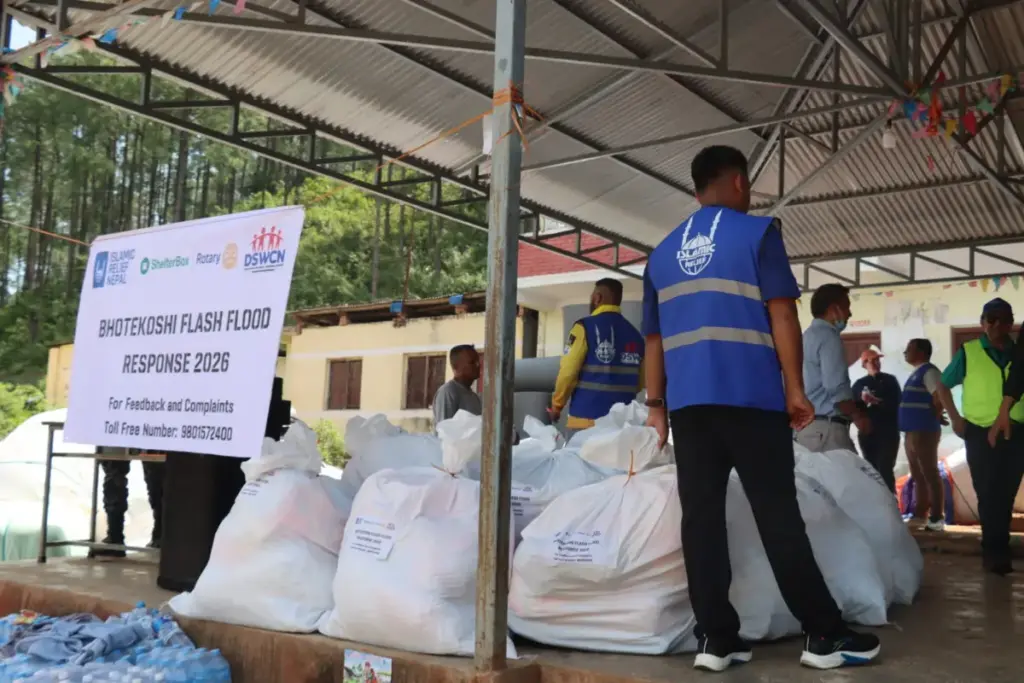
In response to the urgent need for shelter, humanitarian agencies have mobilized significant resources on the ground. Islamic Relief, working in close collaboration with partner organizations such as Shelter Box, has stepped up its relief operations. To date, the organization has successfully delivered close to 1,500 emergency shelter kits to displaced families struggling to survive the elements in the hardest-hit Rasuwa and Nuwakot districts.
These comprehensive shelter kits have been designed to meet the immediate, practical needs of families left with nothing. Each kit contains vital provisions, including durable tarpaulins to protect against ongoing weather threats, robust rope, warm blankets, pillows, and foam mattresses. For families in the Bidur Municipality of the Nuwakot district and surrounding areas, these supplies offer a vital baseline of security and comfort amidst the chaos of displacement.
An Unprecedented Disaster and Widening Repercussions
The wider socio-economic impact of the floods continues to widen day by day. Authorities estimate that more than 1.6 million people have been impacted in some capacity by the disaster, with approximately 84,000 individuals currently in urgent need of humanitarian assistance. The compounding challenges of geography, weather, and ruined infrastructure mean that reaching everyone who needs help remains a formidable daily obstacle for relief coordinators.
Physical isolation continues to hamper recovery efforts in remote areas. The catastrophic force of the floodwaters obliterated numerous bridges and severely damaged vital arterial roads, leaving entire communities stranded and inaccessible to heavy transport vehicles. Furthermore, the destruction of 46 separate water supply systems has crippled local infrastructure, leaving thousands of families without reliable access to safe and clean drinking water, raising serious concerns regarding potential public health risks in the aftermath of the flooding.
The agricultural sector has also suffered a devastating blow, which experts warn will have severe long-term implications for household food security and regional livelihoods. More than 11,000 hectares of productive agricultural land have been severely damaged or washed away, destroying crops just as they approached harvest. Additionally, approximately 292,000 livestock have been affected, either killed by the floods or left without feed, shelter, and veterinary care. For rural families whose survival is inextricably linked to farming and animal husbandry, the loss of these assets threatens economic ruin that will persist long after the floodwaters recede.
More than two weeks after the initial catastrophe, the overall humanitarian situation in Nepal remains acutely critical. As search and rescue teams continue their painstaking work in the tunnels and hydropower sites of northern Nepal, and as relief agencies work tirelessly to expand shelter and water access to the displaced, the demand for sustained international and domestic support remains higher than ever. Humanitarian organizations continue to appeal for urgent resources to sustain operations and deliver life-saving aid to the thousands of families whose lives have been irrevocably upended by the disaster.