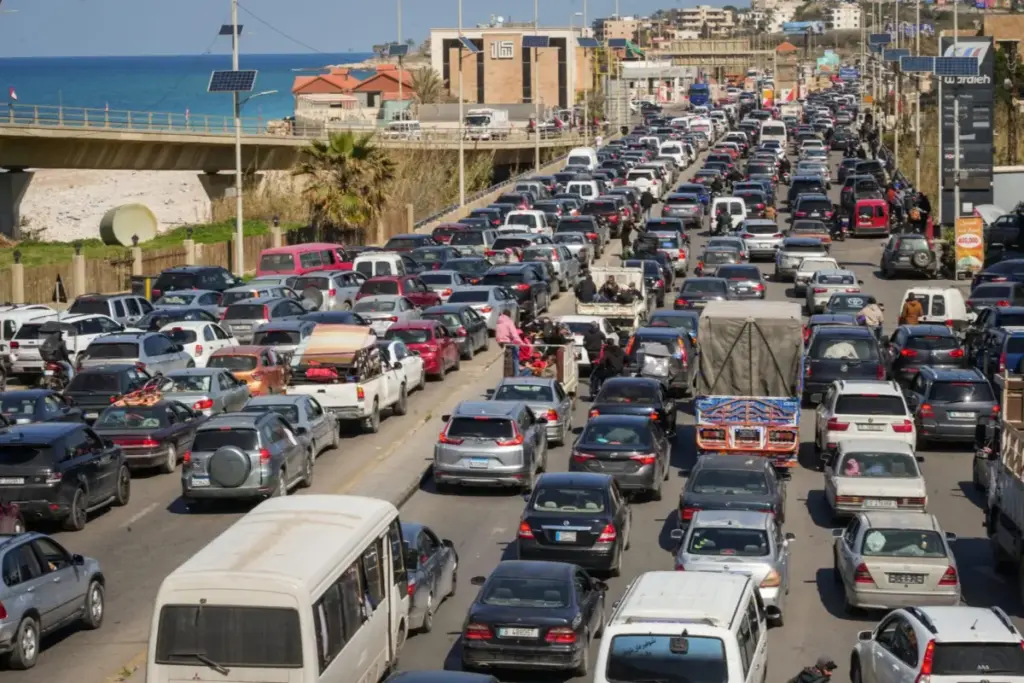
As Lebanon marks a grim milestone in its ongoing conflict, humanitarian workers are warning that the physical destruction of infrastructure and the visible casualties of war tell only a fraction of the story. Beneath the headlines of airstrikes, structural damage, and displacement lies a profound psychological crisis—one that is steadily eroding the mental health, stability, and future of an entire generation.
Sana Basim, the head of programmes for Islamic Relief in Lebanon, emphasizes that the true devastation of the three-year escalation extends far beyond what can be captured by cameras or measured in rubble. While the world routinely bears witness to the traditional imagery of war—soldiers, weaponry, bloodshed, and physical injuries—it frequently overlooks the invisible, psychological scars carried by civilians enduring protracted conflict.
These hidden casualties manifest in countless ways across daily life. They are present in the sudden spike of terror a parent feels when an airstrike warning sounds or evacuation orders are suddenly issued late at night. They are mirrored in the wide, uncertain eyes of children forced from their homes into cramped, unfamiliar communal spaces. They reflect the quiet helplessness of breadwinners struggling against impossible odds just to secure basic food, and the profound vulnerability of elderly citizens and people with disabilities who find themselves cut off from essential medicines amid severe resource shortages.
The crisis has upended ordinary routines in harrowing ways. Pregnant women have been forced to endure exhausting 14-hour journeys in search of safety, occasionally finding themselves sheltering in open parking lots or along the coastline with nowhere else to turn. Meanwhile, children as young as ten have developed a grim expertise, easily recognizing the distinct sound of drones humming overhead. Families bury their loved ones while consumed by the terrifying question of who might be targeted next. For many, the desperate query of "will this ever end?" has transformed into a much darker fear: the sinking realization that they may never feel safe again.
While these psychological wounds do not leave visible marks, humanitarian experts stress that the trauma they inflict is enduring, deeply entrenched, and capable of rippling across generations. In contemporary Lebanon, this acute state of psychological distress has regrettably become an inescapable facet of everyday existence.
Tired of Uncertainty
Perhaps one of the most profound and corrosive consequences of a prolonged conflict is how it fundamentally alters a society’s relationship with uncertainty.
Even amidst ongoing turmoil, human desires remain fundamentally ordinary. People still yearn to celebrate milestones, gather with friends, enjoy a shared meal, attend university, fall in love, make long-term plans, and live normal, predictable lives. Yet in Lebanon, these basic human pursuits are perpetually vulnerable. A sudden, loud noise can instantly shatter an evening of normalcy, instantly reigniting the terror of an incoming airstrike. Even fleeting moments of happiness are invariably shadowed by the heavy awareness that peace and safety may be entirely temporary.
For the younger demographic, this relentless climate of uncertainty has begun to dictate the trajectory of their lives. Many young people report severe physiological and psychological symptoms, including chronic difficulties with sleep, eating, and concentration. A pervasive sentiment among youth is that their futures have been arbitrarily placed on hold. Basic pursuits—such as staying home, doomscrolling through news feeds, connecting with friends, attending university, or simply allowing oneself to dream about tomorrow—feel like impossible luxuries when survival demands every ounce of immediate energy.
Fear and trauma alter neurological responses, forcing individuals to develop defensive coping mechanisms. Some people slip into a state of hypervigilant alertness, constantly scanning for the next threat, while others experience emotional numbness. A significant portion of the population attempts psychological denial simply because confronting the full reality of their situation is too overwhelming to process.
Many individuals report that they have completely abandoned the practice of saving for the future, opting instead to live entirely day by day. This shift does not stem from a lack of ambition or dreams, but rather from a profound lack of faith in a stable future where those dreams could realistically be fulfilled.
One Islamic Relief staff member recounted a harrowing conversation with her daughter during an evening meal at a displacement shelter. The young girl expressed a weariness that no child should ever feel, stating that if another escalation was inevitable, it should happen immediately just to end the continuous cycle of stress and fear. Another young person noted that the conflict has forced their entire generation to mature prematurely, stripping away the basic assumption that tomorrow is guaranteed and safe.
Romanticising Resilience
The stories emerging from communities across Lebanon are heavy with hopelessness, anxiety, frustration, grief, and moral injury—a deep sense of injustice stemming from witnessing profound suffering while possessing little power to alter the outcome.
Evacuation orders frequently arrive in the dead of night, giving families mere minutes to flee into the dark without a clear destination, sometimes resulting in families sleeping along the shoreline as a last resort. Yet, when external observers describe populations enduring such extreme conditions, a single word is frequently invoked: resilience.
Humanitarian workers argue that the narrative surrounding resilience must be critically examined. There is a distinct danger in romanticizing the endurance of the Lebanese people, as what appears outwardly to be extraordinary resilience is often nothing more than basic survival. When communities are forced to weather crisis after crisis, they adapt by abandoning long-term planning because tomorrow is never guaranteed. They learn to hyper-concentrate on the present moment, celebrating small victories and cherishing loved ones because the future is entirely unknown.
However, praising communities endlessly for their ability to endure carries a significant risk. It shifts the focus toward celebrating human endurance rather than interrogating why civilians are being forced to withstand such immense suffering in the first place.
What Safety Truly Means
Discussions surrounding psychological trauma in protracted crises often focus narrowly on material and physical losses. However, true safety encompasses far more than the simple absence of active violence. Real safety creates an environment where an entire generation feels empowered to imagine tomorrow.
While the instinct to protect loved ones and carve out islands of normality remains strong, mere survival must not be mistaken for actual living. True safety means a young person can pursue higher education without fearing that their studies will be abruptly truncated. It means a family can make long-term plans without calculating emergency evacuation routes. It means a child can hear a sudden loud noise without instinctively bracing for an explosion.
Safety is ultimately the freedom to imagine a future. Protracted conflict does not only destroy physical infrastructure and human lives in the immediate term; it risks teaching an entire generation to stop dreaming altogether, fostering a deep-seated belief that their futures, aspirations, and lives no longer matter.
Yet, despite pervasive fear, grief, and uncertainty, the fundamental human desire to live, create, contribute, and enjoy an ordinary, peaceful life persists. That underlying aspiration defines the ultimate meaning of safety: the freedom to believe that one’s life matters, that tomorrow belongs to them, and that they retain the fundamental right to dream of what comes next.
Islamic Relief continues to stand in solidarity with vulnerable communities across Lebanon throughout this ongoing crisis, providing vital assistance on the ground. To support these critical relief efforts and help sustain vital community programs, donations can be made directly to the Islamic Relief Lebanon Emergency Appeal.