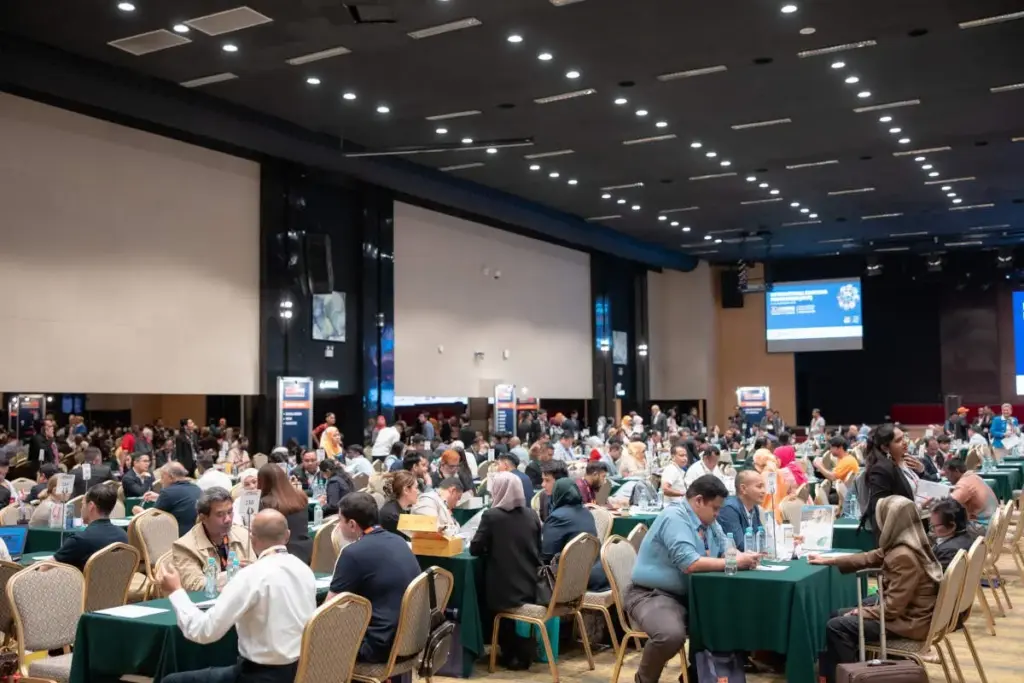
The intensive matchmaking sessions are being organized through the International Sourcing Programme (INSP), a flagship initiative held in conjunction with the Malaysia International Halal Showcase (MIHAS) 2026. This year’s INSP has successfully connected approximately 450 carefully vetted international buyers with 600 export-ready Malaysian enterprises. The participating buyers represent an expansive geographical footprint spanning 58 economies worldwide, with 50 of them classified as elite, high-volume premium buyers.
The sheer scale and structured format of the programme offer a clear measure of how the commercial side of MIHAS has evolved over the years. Rather than leaving local exporters to compete for fragmented attention across a crowded exhibition floor, the INSP model proactively brings buyers and suppliers together into pre-arranged, one-on-one business meetings tailored precisely to specific sourcing requirements.
For Malaysian companies—particularly small and medium-sized enterprises (SMEs) seeking to break into unfamiliar or distant international markets—this strategic distinction is profoundly significant. In modern global trade, the economic value of participating in a major international exhibition is ultimately determined less by the raw volume of foot traffic passing a booth than by how many of those initial encounters successfully develop into tangible commercial relationships and long-term supply contracts.
According to the Malaysia External Trade Development Corporation (MATRADE), the international buyers participating in this year’s INSP were rigorously pre-vetted. They were engaged through MATRADE’s extensive network of overseas offices to establish their exact product specifications, volume needs, and sourcing requirements long before stepping foot into the venue, ensuring that every pairing with a Malaysian company had a strong foundation for commercial viability.
Expanding Horizons Beyond Conventional Products
The structure of the programme also reflects how broadly the modern halal economy has come to be defined by global markets. While traditional halal trade was once viewed almost exclusively through the narrow lens of food and beverage products, today’s buyers are casting a much wider net into sophisticated, high-growth sectors.
During this year’s INSP, international procurement teams are actively looking beyond conventional consumables into highly specialized fields, including specialized food ingredients, cutting-edge biotechnology, Islamic finance, specialized logistics, and education. Furthermore, the sourcing scope covers a vast array of industries ranging from pharmaceuticals, cosmetics, and modern textiles to information and communications technology, industrial machinery, advanced packaging, and diverse financial services.
This remarkable breadth is of paramount importance for Malaysia, a nation that has spent decades methodically building a comprehensive national ecosystem centered around rigorous halal standards, trusted certification processes, and seamless global market access. The central challenge for the country’s economic planners and business leaders has now shifted from building this foundational infrastructure to successfully converting it into sustained, high-volume international business.
The geographic composition of this year’s buyer delegation points encouragingly in that direction. While traditional regional strongholds such as Northeast Asia and the Association of Southeast Asian Nations (ASEAN) remain critically important markets for Malaysian exporters, participation from the African continent is rapidly expanding, signaling new frontiers for halal trade.
Tapping Emerging Markets and Strengthening Global Ties
MATRADE Chairman Datuk Seri Reezal Merican Naina Merican has repeatedly identified Africa as an increasingly vital growth market for Malaysian halal businesses, pointing specifically to the continent’s booming population demographics, rising disposable incomes, and fast-expanding consumer markets. This strategic focus is clearly visible on the ground at MIHAS 2026, where Senegal has dispatched the largest African delegation to the showcase, while nations such as Rwanda and Comoros are participating in the programme for the very first time.
This growing African presence forms an integral part of a broader, deliberate national effort to diversify Malaysia’s export markets rather than relying predominantly on established, traditional trading partners. By establishing footholds in emerging economies across Africa and other developing regions, Malaysian exporters are future-proofing their businesses against regional economic fluctuations.
The commercial gravitas of the buyer group is further underscored by their immense financial capacity. MATRADE noted that the 50 premium buyers participating in the INSP boast a combined annual revenue of nearly RM700 billion, with procurement interests extending far beyond basic retail goods into advanced industrial and service sectors.
However, for Malaysian exporters participating in the thousands of scheduled sessions, these initial meetings represent only the beginning of a longer commercial journey. Industry veterans emphasize that a scheduled appointment on a trade floor does not automatically constitute a purchase order, nor does an initial discussion guarantee the immediate signing of a distribution agreement.
Instead, the true and more meaningful measure of success will emerge in the months following MIHAS, when international buyers evaluate their options, decide whether to proceed with trial purchases, formally appoint new suppliers, or establish deeper, long-term strategic partnerships.
A Long-Term Horizon and Proven Track Record
Fortunately, that extended time horizon is already deeply embedded into the operational framework of the INSP. Recognizing that international trade negotiations require time to mature, the programme was designed with both physical and virtual dimensions.
The high-intensity physical matchmaking sessions took place on September 23 at the Malaysia International Trade and Exhibition Centre (MITEC) in Kuala Lumpur. Meanwhile, the complementary virtual component of the INSP runs continuously from April through November 30, allowing for ongoing digital engagement. Up to 150 international buyers are expected to participate through this extended online programme, ensuring that networking and deal-making opportunities do not end when the physical exhibition closes.
The INSP has been a cornerstone of the MIHAS ecosystem since its early years, proving its worth over two decades of facilitation. According to MATRADE figures, the programme has generated more than RM20.62 billion in cumulative export sales since its inception in 2004. Over that period, the initiative has successfully brought together nearly 8,000 international buyers, 10,600 Malaysian sellers, and facilitated an astounding 67,200 structured business meetings.
This year’s edition unfolds as MIHAS itself seeks to broaden its overarching role far beyond that of a conventional trade exhibition. The 22nd edition of the showcase, held from September 23 to 26, brings together approximately 1,700 exhibiting companies spread across 2,000 booths, with event organizers setting an ambitious target of generating RM5 billion in total sales value.
Even as exhibition halls bustle with activity and headline figures capture public attention, trade officials acknowledge that the most consequential measures of the event may ultimately be found away from the spotlight. The true impact will be discovered in the quiet conversations that continue long after international buyers return to their home countries—in finalized purchase orders, newly onboarded suppliers, freshly signed distribution agreements, and foreign markets penetrated for the very first time.
For Malaysia’s ambitious halal exporters, the 4,000 structured meetings held this week represent a vital opportunity to turn institutional market access into concrete commercial success. For the broader global halal economy, they provide a compelling glimpse of how increasingly international, interconnected, and sophisticated cross-border trade has truly become.