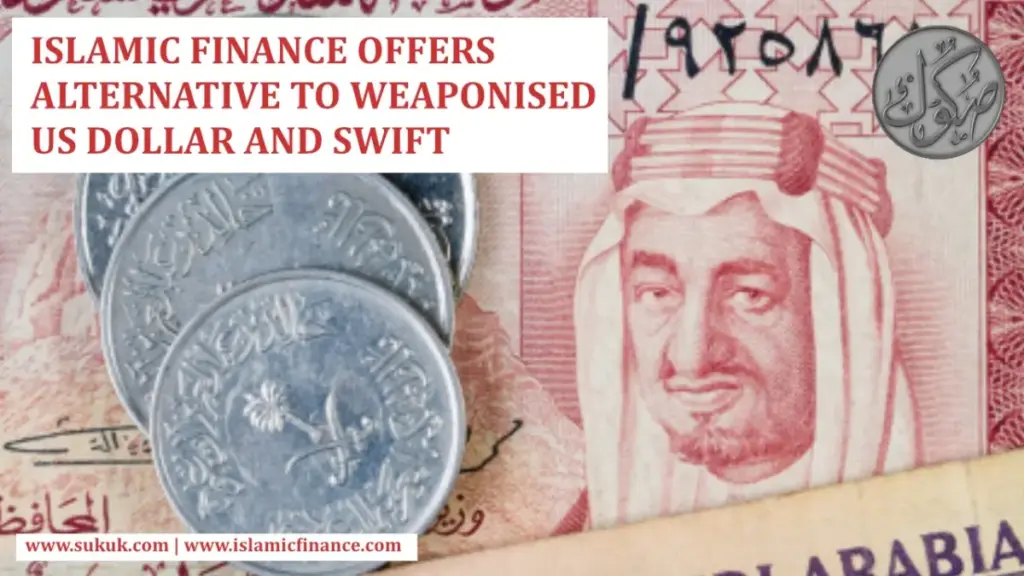
The aggressive weaponization of the US dollar and the international payment messaging system known as SWIFT has triggered a profound shift in global commerce. As trust steadily wanes in the greenback and the traditional Western-dominated financial architecture, emerging economies, regional powers, and multilateral organizations are accelerating efforts to establish viable alternatives. Governments and financial authorities worldwide are increasingly exploring local currencies, precious metals, and Islamic finance instruments to safeguard their sovereign trade corridors against unilateral economic coercion.
This growing global discontent was brought to the forefront by Turkish President Recep Tayyip Erdogan, who strongly advocated for the expansion of Islamic finance mechanisms to bypass traditional Western-dominated channels. Emphasizing the pressing need for reform, Erdogan stated that trade in national currencies has gained urgency, adding that nations should first of all put the issue of Islamic finance on their agenda. The Turkish leader has consistently called on the international community to end what he terms the "monopoly" of the US dollar in global trade relations.
These mounting concerns are not entirely lost within Washington. Acknowledging the shifting sentiment in international financial markets, US Treasury Secretary Steve Mnuchin previously admitted that if policymakers are not careful, people will look at using other currencies. This rare acknowledgment from the highest levels of American fiscal administration underscores the long-term risks that aggressive sanctions regimes pose to the dominant global status of the US dollar.
Iranian Banks Removed from SWIFT
The catalyst for many of these defensive economic maneuvers has been the aggressive application of US secondary sanctions. The targeted removal of Iranian banks from the SWIFT international payment system severely crippled Tehran’s ability to conduct routine foreign trade and integrate into the formal global banking network. This heavy-handed measure demonstrated to many nations outside the Western sphere of influence that reliance on a single, centralized payment infrastructure leaves their entire national economies dangerously vulnerable to the geopolitical whims of Washington.
Similar extraterritorial sanctions have already begun to impact European economic interests, most notably disrupting major commercial projects involving German firms working directly on the vital Russian-German energy pipeline. Faced with the constant threat of punitive financial measures, targeted nations and their commercial partners have found compelling incentives to decouple their bilateral economic engagements from US jurisdiction.
In response to these systemic vulnerabilities, major powers such as Russia and China have taken decisive, practical steps to insulate their mutual commerce. Moscow and Beijing successfully established their own dedicated bilateral payment systems, allowing them to trade directly with one another while completely avoiding the use of the dollar and eliminating exposure to Western financial oversight.
Increased Use of Gold and Local Currencies
The movement away from the greenback extends well beyond individual bilateral arrangements, finding institutional backing within major regional blocs. The eight-nation Shanghai Cooperation Organization (SCO), which includes prominent members such as China, Pakistan, and Russia, collectively represents nearly a quarter of the entire global gross domestic product. Recognizing their substantial economic weight, SCO member states have aggressively increased their sovereign gold holdings and foreign exchange reserves, which now amount to nearly $4 trillion USD.
This coordinated accumulation of hard assets culminated during a high-level finance ministers meeting in Moscow, where the SCO formally reached a decisive agreement to conduct bilateral trade and investment entirely in local currencies. By cutting out the US dollar as an intermediary currency for regional exchange, these nations aim to reduce transaction costs, protect their foreign reserves from exchange rate volatility, and insulate their domestic markets from external political shocks.
Use of Gold in Islamic Cultures
In tandem with the push for local currency settlements, precious metals have re-emerged as a cornerstone of alternative financial planning. Gold has long remained an attractive asset class and a deeply trusted store of wealth, passed carefully down through generations across various Asian cultures. Capitalizing on this cultural familiarity and trust, countries like Turkey and Malaysia have positioned themselves firmly at the forefront of Islamic financial gold banking and the development of gold-backed currency systems.
Practical implementations of these concepts are already visible at regional levels. The Malaysian states of Kelantan and Perak notably introduced traditional gold dinar and silver dirham coins as an alternative means of payment and local trade. Meanwhile, in the Turkish banking sector, the Islamic lender Kuveyt Türk began offering specialized gold banking services in 2007. By July 2019, the institution had successfully collected over 26 tons of physical gold, valued at approximately $1.2 billion, seamlessly integrating these idle traditional assets into the broader Turkish economy. Current initiatives building upon this foundation include exploring Islamic finance gold-based cryptocurrencies to better facilitate secure and efficient cross-border trade without relying on Western correspondent banking networks.
Islamic Finance Gold Standard
The institutional credibility of gold-based financial instruments received a massive boost in 2016, when the World Gold Council and the Accounting and Auditing Organisation for Islamic Financial Institutions (AAOIFI) jointly approved a comprehensive sharia standard for gold-based products. The primary strategic objective of this landmark standard was to significantly increase the legitimate use of physical bullion within Islamic finance and pave the way for the creation of innovative financial instruments that comply with both religious jurisprudence and modern commercial demands.
The standardized framework carefully addressed complex financial mechanisms, including the proper use of collateral, as well as the strict protocols required for the exchange of gold in both spot and deferred transactions. By establishing clear, transparent, and globally recognized rules for gold trading under Islamic law, the standard has provided the necessary regulatory foundation for banks, governments, and commercial entities to expand bullion-backed financial products on an international scale.