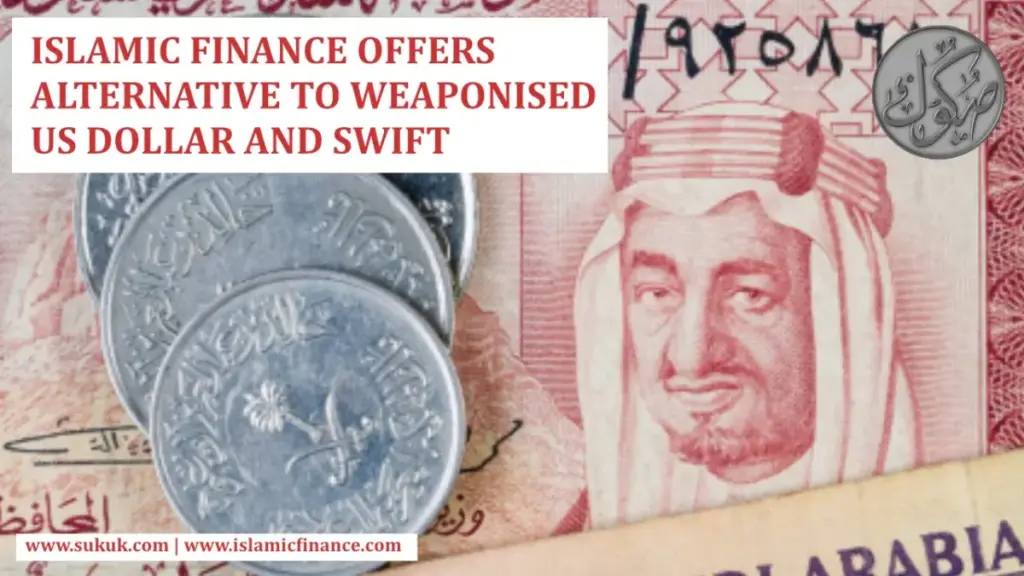
The growing utilization of the United States dollar and the SWIFT international payment system as tools of geopolitical leverage has triggered a profound shift in global commerce. As trust in the greenback and Western-dominated financial infrastructure wanes, nations across the globe are actively seeking alternative mechanisms to conduct international trade, safeguard their economies, and insulate themselves from unilateral sanctions.
This widespread disillusionment with traditional financial hegemony has brought alternative monetary frameworks to the forefront of international diplomacy. In response to these mounting pressures, Turkish President Recep Tayyip Erdogan has increasingly championed the adoption of Islamic finance principles and alternative settlement mechanisms. Emphasizing the urgency of the matter during international forums, President Erdogan noted that trade in national currencies has gained unprecedented urgency, asserting that nations must prioritize the integration of Islamic finance instruments onto the global economic agenda.
The Turkish leader has previously urged international partners to dismantle what he characterizes as the absolute monopoly of the dollar in cross-border trade. These concerns are not entirely dismissed within Western capitals. Former US Treasury Secretary Steve Mnuchin previously acknowledged the inherent risks of aggressive financial statecraft, conceding that if policymakers are not careful, international actors will increasingly look toward utilizing alternative currencies and payment networks.
Iranian Banks Removed from SWIFT
The catalyst for many of these defensive economic maneuvers lies in the aggressive deployment of economic sanctions by the United States. The utilization of restrictive measures has resulted in the systematic removal of Iranian financial institutions from the Society for Worldwide Interbank Financial Telecommunication (SWIFT) network. This unprecedented exclusion has severely crippled Iran’s capacity to conduct traditional foreign trade, restricting its access to global liquidity and foreign exchange markets.
The repercussions of these punitive financial measures have extended far beyond targeted adversaries, occasionally straining diplomatic and economic relations with key Western allies. Similar secondary sanctions and regulatory pressures have directly impacted European enterprises, notably affecting German firms involved in the construction of the Russian-German energy pipeline. These sweeping interventions have demonstrated to emerging economies and developing nations alike that reliance on Western-centric financial infrastructure carries systemic vulnerabilities.
In direct defiance of these financial restrictions, other major global powers have begun constructing parallel networks. Russia and China have successfully established their own sovereign bilateral payment systems, allowing them to trade directly with one another while completely bypassing the US dollar and Western clearing houses. These alternative channels serve as a blueprint for other nations seeking to shield their domestic banking sectors from external political interference.
Increased Use of Gold and Local Currencies
The movement away from the dollar is further underscored by the strategic realignments within the Shanghai Cooperation Organization (SCO). Comprising eight member states, including economic powerhouses such as China, Russia, and Pakistan, the SCO collectively represents nearly a quarter of global gross domestic product. Recognizing the fragility of the current international monetary architecture, members of the bloc have steadily accumulated substantial foreign exchange and gold reserves, which now total nearly four trillion US dollars.
This strategic accumulation of tangible assets culminated during a high-level finance ministers meeting in Moscow, where the SCO formally resolved to transition bilateral trade and investment away from Western currencies. Instead, member nations committed to conducting transactions using local currencies, effectively creating regional trading blocs that operate independently of traditional Western financial dominance. This collective push mirrors a broader international trend toward de-dollarization, as developing economies seek to protect their sovereign wealth from foreign currency fluctuations and sudden policy shifts in Washington.
Use of Gold in Islamic Cultures
Parallel to the de-dollarization efforts led by major geopolitical coalitions, several nations have looked to historical monetary assets rooted in cultural traditions. Gold has long remained an attractive asset class and a trusted store of wealth passed down through generations across various Asian and Middle Eastern cultures. Capitalizing on this deep-seated cultural affinity, Turkey and Malaysia have emerged at the forefront of Islamic financial gold banking and the development of gold-backed currency systems.
In Malaysia, regional initiatives have seen the introduction of gold dinar and silver dirham coins as alternative mediums of exchange and instruments for trade, particularly within specific state jurisdictions such as Kelantan and Perak. These initiatives seek to reintroduce tangible, commodity-backed money into modern commercial practices.
Meanwhile, the Turkish banking sector has embraced gold integration on a massive scale. Kuveyt Türk, a prominent Turkish Islamic bank, pioneered modern gold banking initiatives in 2007. By allowing customers to deposit, trade, and manage physical gold through formal banking channels, the institution successfully mobilized vast amounts of private wealth. By July 2019, the bank had accumulated over 26 tons of physical gold, valued at approximately 1.2 billion US dollars, seamlessly integrating these idle assets into the broader Turkish economy. Building upon this physical foundation, contemporary financial innovators are exploring the creation of Islamic finance gold-based cryptocurrencies designed to facilitate secure and efficient cross-border trade.
Islamic Finance Gold Standard
The integration of precious metals into modern Islamic finance received a significant institutional boost with the formal establishment of industry-wide standards. In 2016, the World Gold Council and the Accounting and Auditing Organisation for Islamic Financial Institutions (AAOIFI) jointly approved comprehensive Sharia standards for gold-based financial products.
The primary objective of this milestone regulatory framework was to encourage the expanded use of physical bullion within the Islamic finance sector while paving the way for the creation of innovative financial instruments. The newly established guidelines provided precise legal and religious clarity regarding complex financial mechanics, specifically addressing the appropriate use of gold as collateral as well as the regulatory parameters governing the exchange of gold in both spot and deferred transactions. By bridging traditional Islamic jurisprudence with contemporary bullion banking, these standards have provided a credible foundation for nations and institutions seeking to utilize gold-backed instruments as a stable alternative in international commerce.