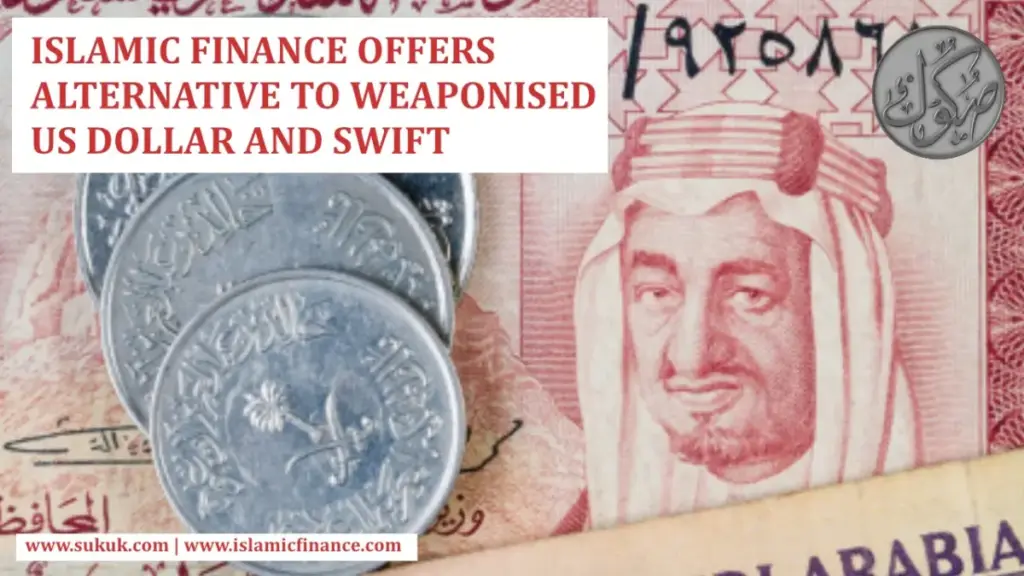
The growing weaponization of the US dollar and the international payment architecture centered around the SWIFT network has triggered a profound shift in global trade dynamics. As international trust wanes in the greenback and the financial systems tied to it, nations around the world are actively seeking viable alternatives to conduct cross-border commerce. This systemic friction has placed traditional reserve currencies under unprecedented scrutiny, paving the way for alternative financial mechanisms to enter the mainstream economic discourse.
In response to these mounting geopolitical pressures, Turkish President Recep Tayyip Erdogan has strongly advocated for the broader adoption of Islamic finance principles, emphasizing the urgency of moving away from traditional dominant currencies. Addressing the necessity for structural change, President Erdogan noted that trade in national currencies has gained remarkable urgency, suggesting that the international community should prioritize putting the issue of Islamic finance firmly on the global agenda.
President Erdogan’s recent statements echo his ongoing advocacy for dismantling what he has frequently characterized as a global monopoly held by the US dollar in international trade. This sentiment is not entirely lost on Western financial authorities. Former US Treasury Secretary Steve Mnuchin previously acknowledged the inherent risks of aggressive financial policies, conceding that if the United States is not careful, international actors will increasingly look at using other currencies to conduct their global business.
Iranian Banks Removed from SWIFT
The vulnerabilities of relying on a centralized, Western-dominated financial infrastructure have been sharply highlighted by aggressive economic sanctions. Measures enforced by the United States have effectively removed major Iranian banks from the SWIFT payment system, severely crippling the nation’s ability to engage in foreign trade and participate seamlessly in the global economy. This high-profile disconnection served as a stark wake-up call for numerous emerging markets and sanctioned states alike, demonstrating how financial messaging systems can be leveraged as geopolitical leverage.
The reach of these restrictive measures has extended far beyond the Middle East, occasionally frictioning traditional diplomatic and economic partnerships among Western allies. Similar extraterritorial sanctions have directly impacted European firms, including German companies involved in collaborative energy infrastructure projects such as the Russian-German pipeline.
Faced with the constant threat of exclusion from dollar-denominated networks, major economic powers have begun establishing parallel financial structures. Notably, Russia and China have taken concrete steps by setting up their own independent bilateral payment systems. These mechanisms allow Moscow and Beijing to trade directly with one another, completely bypassing the dollar and insulating their bilateral commerce from external political interference.
Increased Use of Gold and Local Currencies
The movement toward alternative financial architectures is gaining institutional backing through major multilateral organizations. The eight-nation Shanghai Cooperation Organization (SCO), which includes prominent global players such as China, Pakistan, and Russia, collectively represents nearly a quarter of the global gross domestic product. Member states of the SCO have steadily increased their sovereign gold holdings and foreign exchange reserves, which now total an impressive scale of nearly four trillion US dollars.
Recognizing their combined economic weight and shared vulnerability to external currency shocks, the member states took definitive action during a finance ministers meeting held in Moscow. The bloc officially decided to systematically conduct bilateral trade and investment utilizing local currencies rather than routing transactions through the US dollar. This coordinated push aims to reduce exchange rate risks, enhance regional economic integration, and diminish the overarching influence of Western monetary policy on non-Western economies.
Use of Gold in Islamic Cultures
Beyond local currency swaps, precious metals have re-emerged as a foundational asset class for international trade and wealth preservation. Gold has historically remained an attractive asset class and an enduring store of wealth, passed down seamlessly through generations across various Asian cultures. In contemporary economic policymaking, Turkey and Malaysia have positioned themselves at the forefront of Islamic financial gold banking and the development of gold-backed currencies.
The practical application of these concepts is already visible at the regional level. The Malaysian states of Kelantan and Perak took innovative steps by introducing the gold dinar and silver dirham coins as alternative mediums of exchange and for localized trade. These initiatives reflect a deep cultural and religious alignment with tangible, asset-backed money systems that transcend fiat currency volatility.
Similarly, the Turkish Islamic bank Kuveyt Türk, known as Kuwait Turkish Bank, pioneered a major institutional gold banking initiative when it began offering specialized services in 2007. By July 2019, the bank had successfully collected over 26 tons of physical gold from the public, translating to an estimated value of roughly 1.2 billion US dollars. This substantial reserve has been successfully integrated into the broader Turkish economy, serving as a stabilizing cushion. Current institutional initiatives are even exploring the integration of Islamic finance with gold-backed cryptocurrencies to better facilitate frictionless cross-border trade in the digital age.
Islamic Finance Gold Standard
The institutional credibility of gold-based financial instruments received a major boost in 2016. The World Gold Council, in collaboration with the Accounting and Auditing Organisation for Islamic Financial Institutions, commonly known as AAOIFI, officially approved a comprehensive sharia standard for gold-based products.
The primary objective of this landmark approval was to substantially increase the practical use of physical bullion within Islamic finance and to encourage the creation of innovative financial instruments that comply with religious jurisprudence. The newly established standard carefully addressed critical structural complexities, including the proper use of gold as collateral and the exact regulatory parameters governing the exchange of gold in both immediate spot transactions and deferred delivery agreements. By bridging traditional Islamic commercial law with modern bullion markets, these standards provide a transparent and reliable framework for nations seeking to trade outside the traditional dollar paradigm.