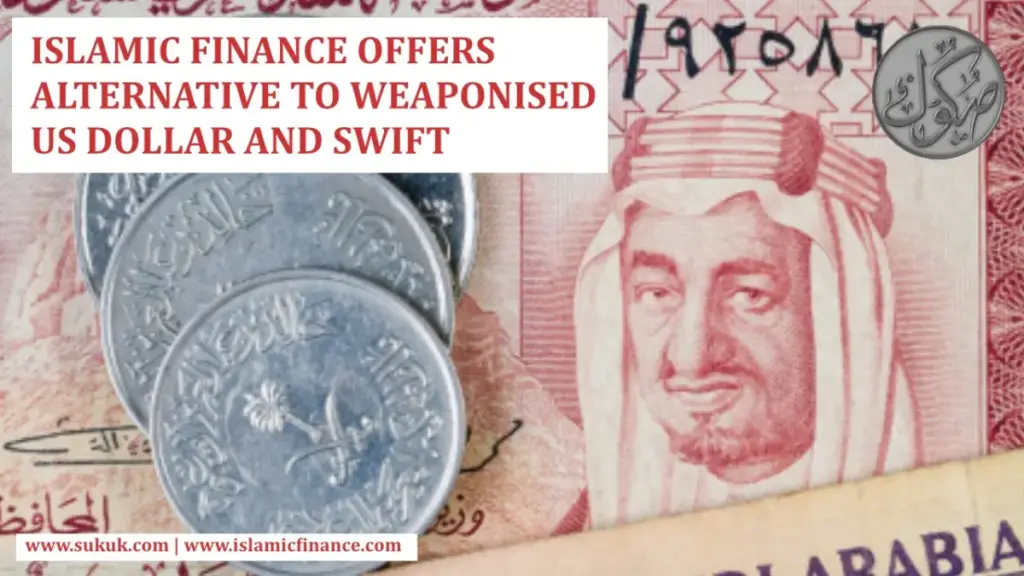
The growing weaponization of the US dollar and the international payment infrastructure of SWIFT has prompted an unprecedented global push for financial alternatives. As geopolitical tensions mount and unilateral sanctions isolate key economies, trust in the greenback and its associated payment systems has steadily waned among emerging and developing nations.
In response to these systemic vulnerabilities, Turkish President Recep Tayyip Erdogan has strongly advocated for the broader adoption of Islamic finance mechanisms, emphasizing that moving away from dominant Western currencies has become an urgent priority for modern trade. Speaking on the matter, President Erdogan noted that the international community must prioritize Islamic finance frameworks as trade in national currencies gains critical momentum.
The Turkish leader has previously called upon other nations to challenge and ultimately dismantle the monopoly of the US dollar in global commerce. These concerns are not entirely dismissed within Western financial circles. Former US Treasury Secretary Steve Mnuchin previously acknowledged the inherent risks of overusing financial sanctions, admitting that if policymakers are not careful, global actors will increasingly look at utilizing alternative currencies and settlement systems to protect their economic sovereignty.
Iranian Banks Removed from SWIFT
The urgency behind finding alternatives to the dollar-dominated global architecture stems largely from aggressive economic measures deployed by Washington. Most notably, sweeping US sanctions have removed major Iranian banks from the Society for Worldwide Interbank Financial Telecommunication (SWIFT) network. This unprecedented exclusion has severely crippled Iran’s ability to conduct routine foreign trade, settle international accounts, and integrate smoothly into the global financial grid.
Similar extraterritorial sanctions and economic pressures have also impacted European entities, including German firms working on critical cross-border energy infrastructure such as the Russian-German pipeline projects. These punitive measures have demonstrated to international capitals that reliance on a single, politically vulnerable payment clearinghouse exposes sovereign states and private enterprises alike to immense economic collateral damage.
Driven by these shared vulnerabilities, major non-Western economies have begun taking concrete steps to insulate their trade relationships. Russia and China, both frequent targets of Western economic pressure, have successfully established their own bilateral payment systems. These alternative mechanisms allow Moscow and Beijing to trade directly with one another in local currencies, effectively bypassing the SWIFT network and avoiding the use of the US dollar entirely.
Increased Use of Gold and Local Currencies
The movement toward de-dollarization extends far beyond individual bilateral agreements, encompassing major multilateral institutions as well. The eight-nation Shanghai Cooperation Organization (SCO), which includes powerhouse economies such as China, Pakistan, and Russia, currently represents nearly a quarter of global Gross Domestic Product.
Member states of the SCO have systematically increased their collective gold holdings and foreign exchange reserves, which now amount to nearly four trillion US dollars. Recognizing their combined economic weight and shared desire for financial independence, the SCO made a decisive move during a finance ministers meeting in Moscow. The bloc officially resolved to conduct a significantly larger share of bilateral trade, commerce, and long-term investment using local currencies rather than relying on western exchange mediums.
This regional push is designed to shield developing economies from the volatility of Western monetary policy and insulate critical supply chains from external political interference. By deepening local currency swap lines and expanding national reserves, SCO members are systematically constructing a parallel financial framework that operates independently of traditional Western clearing mechanisms.
Use of Gold in Islamic Cultures
Beyond local currency settlements, tangible assets with intrinsic value—most notably gold—are playing an increasingly central role in reshaping trade networks. Gold has long remained an attractive asset class and a traditional store of wealth handed down through generations across various Asian and Middle Eastern cultures. Building upon this cultural foundation, nations like Turkey and Malaysia have positioned themselves at the forefront of Islamic financial gold banking and the development of gold-based currencies.
Demonstrating the practical application of these concepts, the Malaysian states of Kelantan and Perak previously introduced gold dinar and silver dirham coins as an alternative means of payment and commercial exchange. Meanwhile, Turkish Islamic institutions have taken systemic steps to integrate precious metals back into the formal financial architecture. Kuveyt Türk, a prominent Turkish Islamic bank, began pioneering gold banking initiatives in 2007. By July 2019, the institution had successfully collected over 26 tons of physical gold, valued at approximately 1.2 billion US dollars, seamlessly integrating these bullion reserves into the broader Turkish economy.
Current financial innovations in the region are building upon these milestones, with modern initiatives exploring the creation of Islamic finance gold-based cryptocurrencies. Proponents argue that such blockchain-enabled, gold-backed digital assets could vastly improve the efficiency and security of cross-border trade among Islamic nations, offering a stable medium of exchange that remains immune to traditional currency devaluation and geopolitical sanctions.
Islamic Finance Gold Standard
The integration of precious metals into modern Islamic finance received a major institutional boost in 2016, when the World Gold Council and the Accounting and Auditing Organisation for Islamic Financial Institutions (AAOIFI) jointly approved a comprehensive sharia standard for gold-based products.
The primary objective of this standardized framework was to encourage the expanded use of physical bullion within Islamic finance and pave the way for the creation of sophisticated new financial instruments compliant with religious jurisprudence. The newly established standard carefully addressed complex commercial issues, including the proper utilization of gold as collateral, as well as the regulatory mechanics governing the exchange of gold in both immediate spot transactions and deferred payment arrangements.
By bridging traditional Islamic commercial principles with modern bullion markets, these regulatory standards have provided the necessary legal and structural foundation for nations seeking to expand gold-backed financial instruments, further diversifying the tools available to nations looking beyond the US dollar.