Says Ali Babacan**
The fundamental principles of Islamic finance extend far beyond religious parameters, offering a universal framework for ethical investment, sustainable wealth generation, and economic stability that can benefit all of humankind regardless of an individual’s personal faith. This perspective was notably underscored by former Turkish Deputy Prime Minister Ali Babacan during a high-level discussion hosted by the International Monetary Fund (IMF) in Washington, D.C.
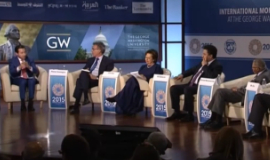
Speaking to an international audience of financial leaders, policymakers, and economists, Babacan emphasized that the core tenets of Sharia-compliant finance—which prohibit excessive speculation, eliminate the collection and payment of interest, and mandate asset backing for financial transactions—are inherently designed to promote fairness, transparency, and social responsibility in the global marketplace. His remarks shed light on the growing mainstream recognition of Islamic finance not merely as a niche religious alternative, but as a robust, resilient system capable of addressing modern economic challenges for both Muslim and non-Muslim customers alike.
The discussion at the IMF platform highlighted how traditional financial systems have often been plagued by systemic vulnerabilities, excessive risk-taking, and detachment from the real economy. In contrast, Islamic finance anchors every financial contract to tangible assets and productive economic activity. This intrinsic connection between finance and the real economy ensures that investments serve a constructive purpose, fostering long-term wealth growth through steady, ethical avenues rather than rapid, speculative gains.
For individual investors looking to build wealth gradually and sustainably—a concept often summarized by the adage of getting rich slowly through disciplined, ethical choices—Islamic finance provides a compelling blueprint. Halal investments preclude sectors associated with excessive uncertainty, gambling, pornography, alcohol, and weapons, steering capital instead toward socially responsible enterprises, infrastructure, real estate, and green energy initiatives. This value-driven approach resonates strongly with the contemporary global demand for sustainable and responsible investing, a movement that has seen conventional investors increasingly adopt environmental, social, and governance criteria that closely parallel the ethical pillars of Islamic jurisprudence.

Babacan’s intervention at the IMF event served to bridge the gap between traditional macroeconomic governance and alternative financial models. As a key architect of Turkey’s economic stabilization programs in the 2000s, his insights carried significant weight among international financial regulators. He pointed out that the risk-sharing ethos inherent in Islamic banking—where financier and entrepreneur share both profits and losses—creates a naturally stabilizing environment that protects participants from systemic shocks. This cooperative framework encourages prudence and meticulous due diligence, discouraging the reckless leveraging that has historically triggered global financial crises.
The universality of these financial principles means that institutions offering Islamic financial products have successfully expanded across major global financial hubs, including London, New York, Frankfurt, and Kuala Lumpur. Non-Muslim retail and institutional clients increasingly utilize Islamic banking accounts, sukuk bonds, and equity funds because these instruments offer competitive returns coupled with strong ethical guarantees. By demanding that every financial transaction be backed by a real economic asset, the system eliminates toxic financial derivatives and abstract instruments that bear little relation to actual human productivity or community needs.
As global markets continue to navigate complex economic landscapes, inflationary pressures, and shifting regulatory environments, the dialogue around ethical wealth growth and halal investments remains deeply relevant. The core message articulated by financial leaders like Babacan is that the wisdom embedded in Islamic finance offers practical solutions for ethical wealth accumulation that transcend cultural and religious divides. By prioritizing fairness, transparency, asset backing, and shared responsibility, this financial paradigm continues to demonstrate its broad applicability and enduring value for the global community at large.