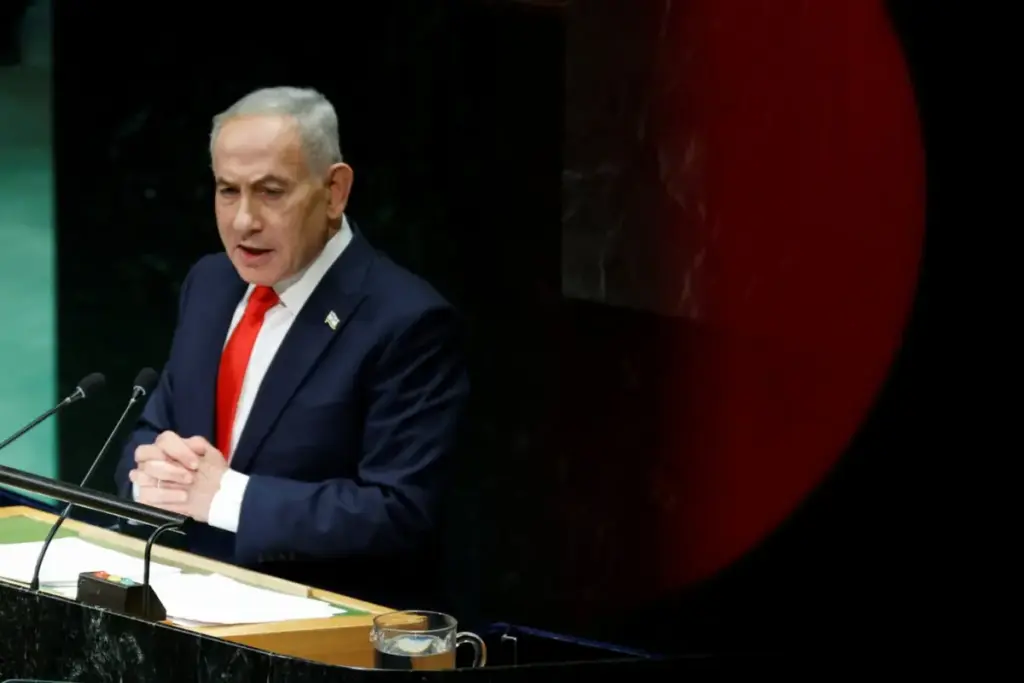
Israeli Prime Minister Benjamin Netanyahu made an unannounced visit to Abu Dhabi on Sunday, where he met with United Arab Emirates President Sheikh Mohammed bin Zayed Al Nahyan, according to a senior Israeli official familiar with the matter. The high-stakes diplomatic trip brings the Israeli leader face-to-face with a key regional partner at a time of intense domestic political pressure and lingering questions regarding pre-war intelligence warnings.
As of Sunday, neither Netanyahu’s office nor the UAE’s foreign ministry had immediately issued official comments regarding the surprise meeting, according to reports by Reuters. The lack of immediate public announcements underscores the sensitive nature of bilateral engagements between Jerusalem and Abu Dhabi, particularly given the complex geopolitical and domestic realities currently facing both nations.
The unannounced visit follows a contentious report published earlier this month by the Israeli newspaper Haaretz. According to that report, UAE President Sheikh Mohammed warned Prime Minister Netanyahu approximately a week and a half before the devastating October 7, 2023, attacks that Hamas was actively planning a major, large-scale operation against Israel. Furthermore, the Haaretz report alleged that this crucial warning failed to properly reach Israel’s formal intelligence agencies or the Israel Defense Forces (IDF), leaving the country dangerously unprepared for the subsequent incursions.
The allegations have struck a heavy blow against Netanyahu, who has vehemently denied the report’s accuracy. In response to the publication, the Israeli prime minister threatened to file a libel lawsuit against the newspaper. The controversy arrives at an exceptionally vulnerable time for Netanyahu politically, as he navigates a tough and uncertain re-election campaign. Prominent Israeli opposition leaders and security analysts have repeatedly blamed the prime minister for the sweeping intelligence and security failures that preceded the October 7 Hamas incursions from the Gaza Strip, framing the lapses as among the most catastrophic security breaches in the nation’s history.
While the UAE government has declined to issue public statements addressing the specifics of the Haaretz report, Emirati officials have emphasized that the UAE and Israel have consistently maintained open and direct lines of communication ever since the two nations formally established diplomatic relations under the landmark 2020 Abraham Accords.
Previously, a UAE source told Reuters that while the Gulf state frequently discusses sensitive regional security matters with various international partners through relevant diplomatic and security entities, these communications are typically not conducted directly at the level of national leaders in the manner described by certain media accounts.
This tension over high-level visits is not entirely unprecedented. Earlier this year, the UAE publicly denied that President Sheikh Mohammed had met with Netanyahu after the Israeli prime minister’s office asserted in May that Netanyahu had secretly visited the Gulf country to hold talks with the Emirati leader. Sources closely familiar with the matter later clarified that those discussions allegedly took place on March 26 in Al-Ain, an oasis city located within the emirate of Abu Dhabi directly along the country’s border with Oman.
The broader strategic relationship between Israel and the UAE was cemented through the U.S.-brokered Abraham Accords in 2020, an agreement that also saw Bahrain normalize ties with Israel. Over the subsequent years, Abu Dhabi has significantly strengthened its geopolitical and economic relationships with both the United States and Israel. For the UAE, the official partnership with Israel serves as a valuable diplomatic lever for expanding regional influence while simultaneously providing a unique, highly influential channel for communication with Washington.