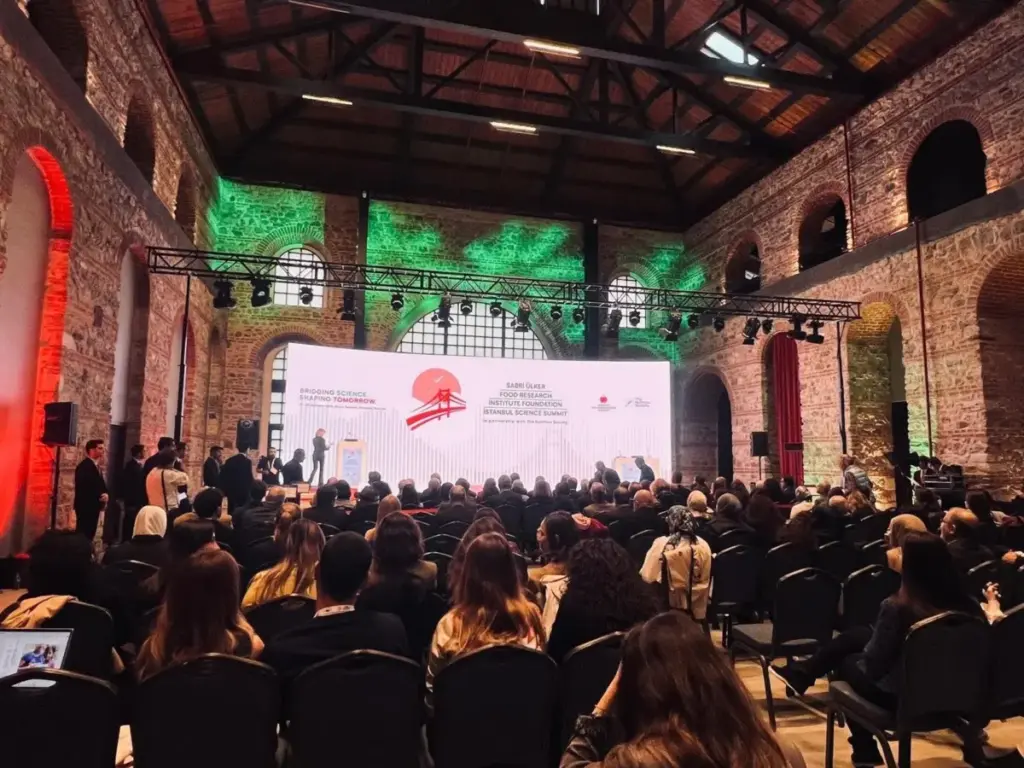
ISTANBUL — Leading scientists, public health experts, researchers, and international delegates converged in Istanbul for the Istanbul Science Summit 2026, launching a critical two-day dialogue on October 19-20 aimed at confronting the dual global crises of childhood malnutrition and obesity.
The high-level summit was hosted by the Sabri Ülker Food Research Institute Foundation in strategic collaboration with The Nutrition Society. By uniting voices from public health sectors, nutrition research institutions, and global organizations, the event sought to foster actionable strategies to secure healthier futures for the world’s youngest populations.
Opening the summit, Yahya Ülker, chair of the foundation, emphasized the ultimate purpose of academic inquiry in his welcoming address.
"The true value of scientific knowledge is revealed through its contribution to children’s lives," Yahya Ülker stated, setting a tone centered on practical application and humanitarian impact. "We aim to support children’s healthy development by strengthening scientific expertise through international collaboration and translating scientific knowledge into tangible benefits for society."
The gathering also drew prominent political figures, highlighting the intersection of scientific research and public policy. Among the attendees was Binali Yıldırım, Türkiye’s last prime minister and the 28th speaker of the Parliament, who delivered remarks during the opening sessions.
Taking the podium, Yıldırım drew international attention to the persistent disparities in how children across the globe access adequate nutrition, framing the issue as an urgent moral imperative.
"Every child has the same needs, regardless of the country they live in or their family’s financial circumstances," Yıldırım asserted. "Whether born into poverty or in a less developed country, all children deserve equal opportunities. Ensuring this is a shared global responsibility."
In a pointed critique of the current global governance framework, Yıldırım questioned the operational efficacy of major international humanitarian organizations, specifically mentioning UNICEF. He argued that these bodies have increasingly devolved into forums for endless discussion rather than executing timely and meaningful interventions on the ground.
The urgency of the dialogue was further reinforced by stark statistical evidence presented by Turkish Deputy Health Minister Şuayip Birinci. Referencing data compiled by the World Health Organization (WHO), Birinci revealed alarming metrics detailing the scope of childhood developmental challenges. According to the WHO data, 150 million children under the age of 5 experienced stunted growth, while an additional 43 million suffered from wasting in the year 2024.
Birinci noted that these sobering figures underscore the immense global burden of childhood malnutrition, pointing out that modern societies face the complex challenge of managing undernutrition and overnutrition simultaneously. While millions struggle with developmental delays due to a lack of basic nutrients, rising rates of childhood obesity present an equally devastating threat to long-term public health.
Designed to address these multifaceted crises, the summit’s comprehensive agenda covers a broad spectrum of critical topics. Sessions are dedicated to examining the vital importance of the first 1,000 days of life, the promotion and protection of breastfeeding, maternal and child health frameworks, the implementation of balanced school meals, and the expansion of community-level nutrition education.
Further discussions delve into broader systemic challenges, including food insecurity, the prevention of childhood obesity, and the delivery of targeted nutrition interventions during humanitarian emergencies and crises. To foster a rigorous exchange of ideas, the program features a dynamic mix of plenary sessions, thematic symposia, panel discussions, and oral research presentations where investigators share their latest findings.
The Istanbul Science Summit 2026 marks a continuation of long-term efforts by the Sabri Ülker Food Research Institute Foundation, which is actively expanding its international collaborations. Building upon nearly two decades of dedicated scientific research spanning food science, nutrition, and public health, the foundation is working to solidify its global footprint. By forging deeper partnerships with international organizations and independent researchers worldwide, the institution aims to bridge the gap between laboratory discoveries and real-world health outcomes.