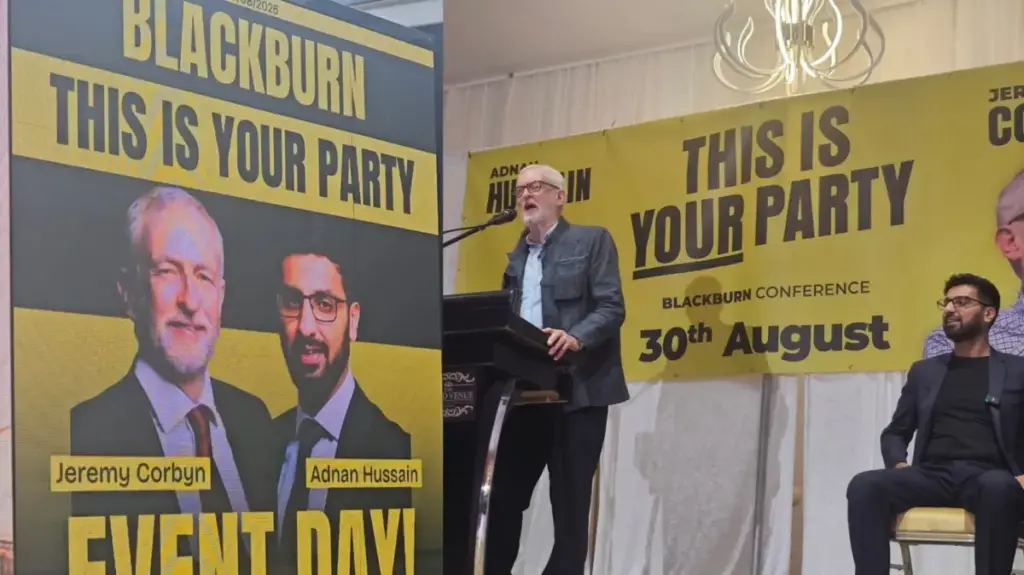
Over a thousand people packed into a venue in Blackburn yesterday for the first official regional meeting of “Your Party,” a new left-wing political movement spearheaded by independent MPs Jeremy Corbyn and Zarah Sultana. Chaired by Blackburn MP Adnan Hussain, the event marked the movement’s high-profile debut in the North West of England, drawing a diverse crowd of all ages, genders, and faiths, with the vast majority being non-Muslim attendees.
The gathering was characterized by high energy, passionate speeches, and a dual focus on domestic economic struggles—such as housing, poverty, homelessness, and tuition fees—alongside intense solidarity with Palestine. However, the event also highlighted lingering political tensions surrounding leadership, definitions of Zionism, and the party’s long-term strategy to challenge the traditional British political establishment.
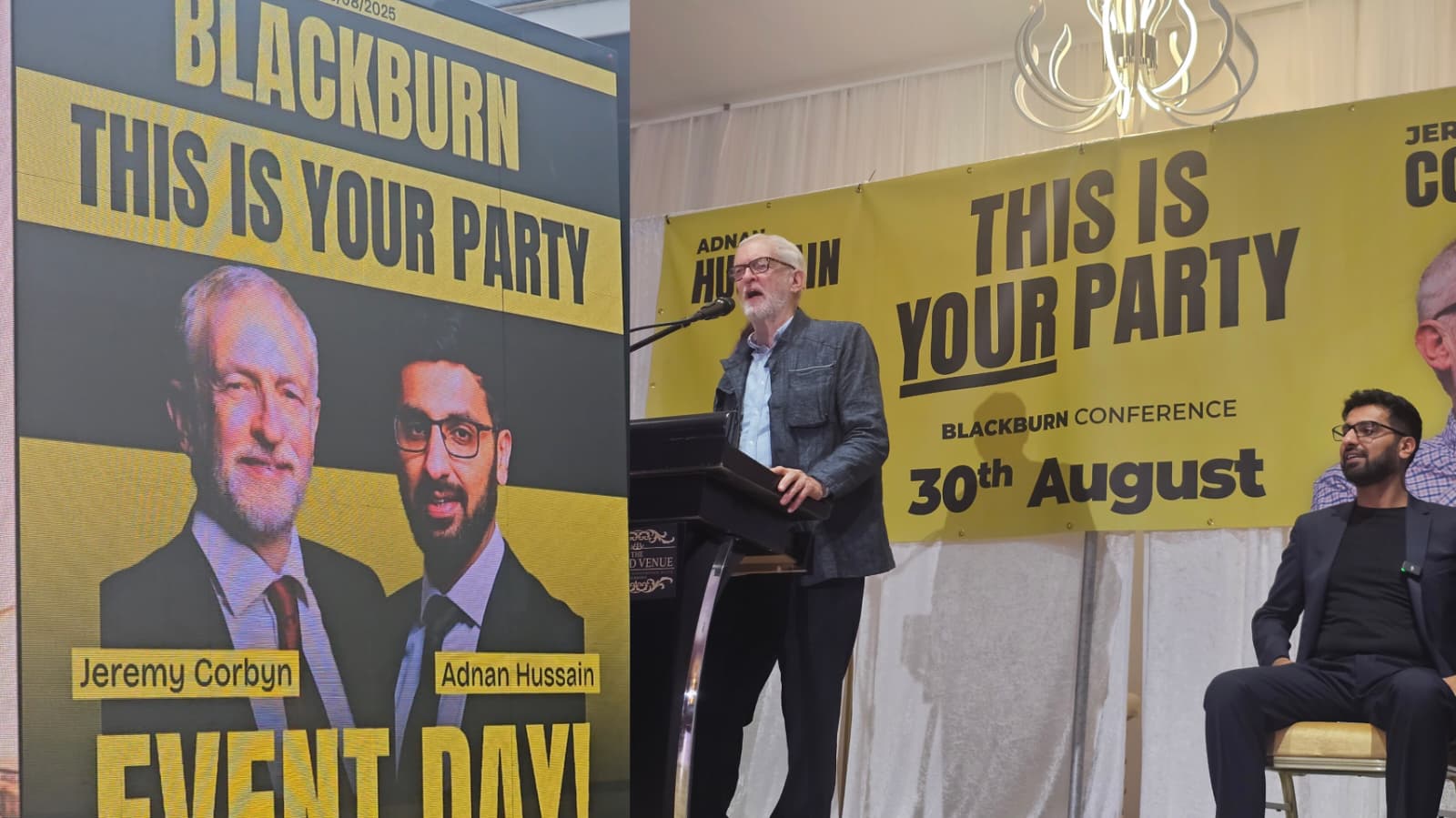
The meeting commenced in the North West with opening remarks from Adnan Hussain, who reflected deeply on his personal background. Speaking to the packed hall, Hussain shared the story of his parents’ migration to Britain and explained how their working-class struggles fundamentally shaped his political worldview and commitment to public service.
Framing Your Party as a vital alternative for ordinary people who feel abandoned by both major political parties, Hussain pulled no punches regarding the movement’s target demographic. "Today, as I’ve said, I’m proud to join my colleagues in introducing Blackburn, Lancashire, the North West, to a new political movement," Hussain told the enthusiastic audience. "It stands, as I’ve already said, not for the elite, not for the wealthy, but for you, the working class."
Hussain emphasized that the nascent party must remain anchored in collective principles rather than being defined by a single personality. Yet, his speech still produced one of the loudest ovations of the afternoon when he asked the crowd to "Imagine a United Kingdom with Jeremy Corbyn as the Prime Minister." Quickly tempering the focus on individuals, he added, "It’s not about the individual. It’s about his vision. It’s about what he stands for. It’s about what he is bringing to the table."
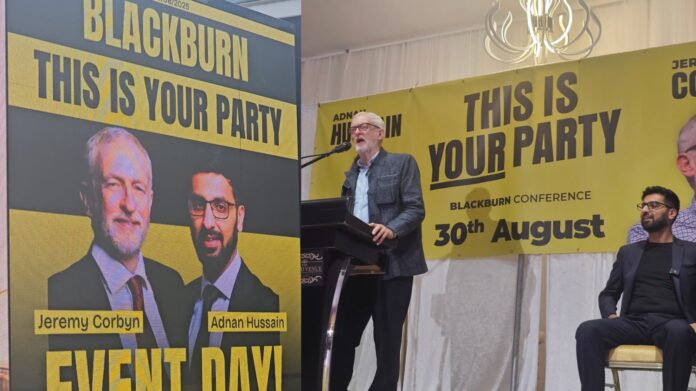
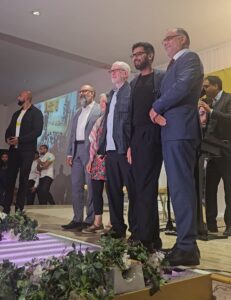
Birmingham MP Ayoub Khan, who has also aligned himself with Your Party, took to the stage to praise the substantial turnout and the demographic breadth of the crowd. Highlighting the unity within the room, Khan noted that nothing causes more anxiety among career politicians than seeing a broad-based, grassroots movement of this scale. Attendees were frequently reminded by speakers to look around the room, with the phrase "this is the UK" echoed to emphasize the party’s ambition to represent a multi-ethnic, multi-faith modern Britain.
Amid the discussions on domestic policy, international solidarity played a central role throughout the conference. Professor Marion Roberts, representing Jewish Voice for Labour (JVL), addressed the audience to tackle sensitive issues surrounding antisemitism and Zionism. Her remarks were widely interpreted as an effort to confront past controversies that dogged Corbyn’s tenure as leader of the Labour Party.
"Members of the bloc have and will have different electoral and political allegiances," Roberts told the audience. She went on to explain the origins of her organization, stating, "The group I belong to, JVL, was set up to support Jeremy once he became leader and to counter the false accusations of antisemitism which were intended to protect Israel from criticism."

As Jeremy Corbyn finally stepped up to the podium, the atmosphere intensified. The room erupted into chants of "Free Palestine," reflecting the deep resonance of the Middle East conflict among the attendees. As the speech progressed, some sections of the crowd escalated the slogans, chanting "Death, death to the IDF," underscoring the raw passions present in the hall regarding the ongoing military campaigns in Gaza and the West Bank.
Corbyn’s address sought to bridge domestic grievances with foreign policy, arguing that ordinary Britons suffering from housing shortages, systemic poverty, homelessness, and crippling tuition fees are victims of the same structural priorities that fund foreign wars and global inequality. Turning specifically to the situation in the Middle East, Corbyn delivered a sharp critique of Israeli policy. "We are always coming up against the Israeli expansionism led by the Zionist ideology, that they have a right to occupy Gaza and the West Bank," he declared to sustained applause.
Beyond specific policy areas, Corbyn outlined the overarching democratic ethos of the new movement. "We want this party to be open. We want it to be inclusive. We want it to be democratic and above all community and grassroots-based," he told the crowd.
Your Party’s Stance on Anti-Zionism
The Blackburn conference took place against a backdrop of increasing public scrutiny regarding Jeremy Corbyn’s personal stance on Zionism. Just days prior to the event, video footage circulated widely showing Corbyn repeatedly refusing to answer direct media questions regarding whether he considers himself anti-Zionist. This public hesitation contrasted sharply with fellow Your Party founder Zarah Sultana, who has previously and openly declared herself to be anti-Zionist, marking a visible nuance between the movement’s prominent figures.
Adding to the controversy of the day, organizers did not open the floor to public questions or a floor debate during the conference. Critics were quick to point out that avoiding a question-and-answer session shielded the platform leadership from having to address difficult, complex, and potentially divisive inquiries from attendees or the press.
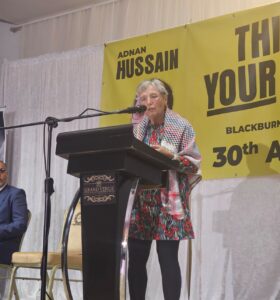
At the conclusion of the event, 5Pillars approached Adnan Hussain to ask whether members and candidates associated with Your Party would face internal scrutiny or disciplinary measures regarding their personal positions on Zionism and Israel.
Hussain firmly dismissed the notion of such policing, responding, "Nobody should be penalised against a genocide, the killing of innocent children. They must be protected and anyone who is opposed to that must never be penalised."
While the Blackburn conference successfully showcased significant grassroots energy, local enthusiasm, and a large multi-faith turnout, it also brought to the surface deep-seated questions. The event illuminated ongoing debates over ideological definitions, leadership messaging, and whether Your Party can successfully carve out a distinct, permanent space in British politics separate from the legacy of the Labour Party.